


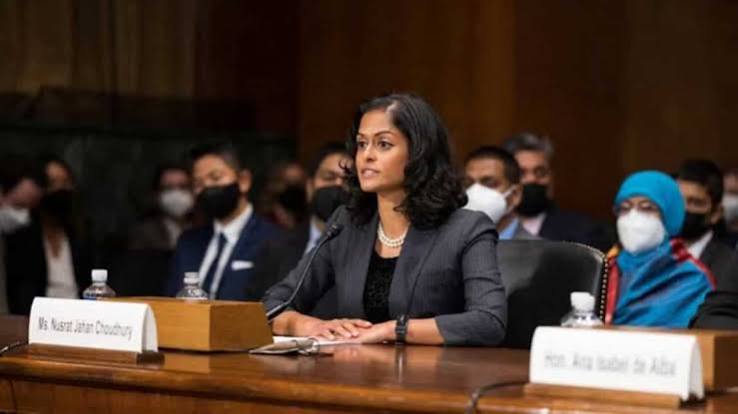

The daughter of Bangladeshi immigrants, Nusrat Jahan Choudhury made history as the first Muslim American woman and the first Bangladeshi American to become a federal judge in the United States. Her journey from a family shaped by courage and sacrifice to one of the most respected positions in the American judicial system is a story of education, perseverance, equality, and the power of opportunity.
In the United States, becoming a federal judge is an extraordinary achievement. It requires years of education, extensive legal experience, professional integrity, and a rigorous appointment process. For Nusrat Jahan Choudhury, however, the significance of reaching the federal bench went far beyond a personal career milestone. Her appointment represented a historic breakthrough for Muslim Americans and the Bangladeshi American community.
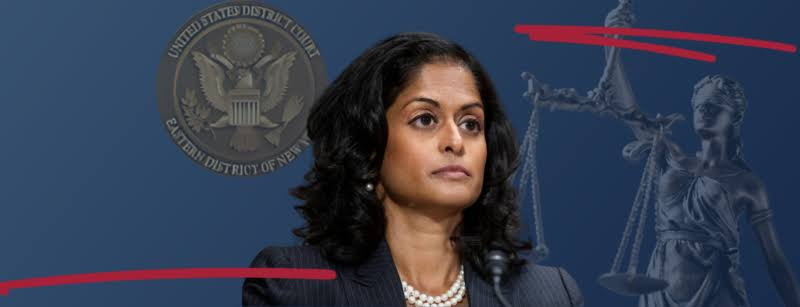
On June 15, 2023, the United States Senate confirmed Choudhury to serve as a judge of the U.S. District Court for the Eastern District of New York. With that decision, she became the first Muslim American woman and the first Bangladeshi American ever to serve as a federal judge in the country.
Her achievement was particularly meaningful because of the journey that had brought her there. Born in Chicago to parents who had left their homeland in search of new opportunities, Choudhury grew up in a family that valued education, service, generosity, and responsibility toward others. Her father’s remarkable journey from rural Bangladesh to becoming a physician in America would become one of the defining influences on her life.
Today, her story is not simply about reaching a powerful position. It is also about how the opportunities created by one generation can open doors for the next—and how those who break barriers can help make the path easier for others.
A Family Journey That Began in Bangladesh
Nusrat Jahan Choudhury was born in Chicago, Illinois, in 1976. Although she grew up in the United States, her family history was deeply connected to Bangladesh.
Her parents had made the difficult decision to leave their homeland and build a new life in America. Their journey was shaped by ambition, determination, and a belief in the possibilities that education could create.
One of the most remarkable parts of this family story was the journey of her father.
Growing up in rural Bengal during the period when the region was still part of British India, he faced the limitations and stereotypes often imposed on people from disadvantaged backgrounds. Yet he was determined to pursue an education. He left home to attend school, sometimes staying with his teachers, and eventually made his way to medical school in Dhaka.
His academic ability and dedication opened an extraordinary door. According to Choudhury’s own account, he became the first person from the territory that is now Bangladesh to receive a Fulbright grant.
In 1957, he travelled to the United States with that grant and began working as a doctor at a hospital in St. Louis. It was a major step, but it also meant leaving behind family, friends, and everything familiar. Communication across continents was difficult in those days, and he deeply missed the people he had left at home.
Nevertheless, he continued pursuing his medical career. He later specialised in neurology, the branch of medicine concerned with the brain and nervous system. His professional journey also took him to London and Glasgow for further study before he eventually settled in Chicago.
For more than four decades, he treated patients from different backgrounds in hospitals across the city. He also taught medicine at the University of Illinois Chicago and cared for American veterans at the city’s Veterans Affairs hospital.
His professional success was accompanied by a strong sense of community responsibility.
When relatives and other Bangladeshis needed help adjusting to life in America, Choudhury’s parents offered advice, encouragement, meals, and sometimes a place to stay. Their home became a welcoming place for people trying to find their footing in a new country.
Her father also maintained a strong connection with Bangladesh. During family visits, people would sometimes gather outside the house where he was staying, hoping to receive medical advice from the doctor who had returned from America. Even during holidays, he patiently attended to those who needed his help. According to his daughter, he sometimes paid for medicines himself when he knew a patient could not afford them.
Her mother played an equally important role in sustaining the family and supporting the wider community. She raised three children, worked hard, and helped relatives establish their lives in the United States.
Looking back, Choudhury has described her parents as people who understood that opportunities came with responsibilities. Her father showed her what it meant to become the first person from a community to achieve something significant. Both parents taught her that success should not be measured only by individual accomplishment, but also by what a person does to help others.
That lesson would become central to her understanding of justice and public service.
Growing Up Between Cultures
Growing up in Chicago as the daughter of Bangladeshi immigrants gave Choudhury a perspective shaped by more than one cultural experience.
She belonged to a family that carried the memories, traditions, and values of Bangladesh while building its future in the United States. Her parents’ experiences gave her an early understanding of the challenges faced by immigrant families, including the difficulties of adapting to a different society and finding opportunities in an unfamiliar environment.
Her family’s home was not simply a private household. It was also a place where members of the Bangladeshi community gathered for support and guidance. Through these experiences, she witnessed how much a helping hand could matter to someone trying to build a new life.
Her parents also made considerable sacrifices to ensure that their children received educational opportunities. They believed that learning could open doors that had once seemed inaccessible.
This environment helped shape Choudhury’s understanding of equality and human dignity. She grew up seeing that people from different backgrounds could contribute to society and that everyone deserved to be treated with respect.
The values she learned at home would later influence her decision to pursue a career devoted to civil rights and equal justice.
Education at Columbia, Princeton and Yale
Choudhury’s academic journey took her to three of America’s most recognised institutions of higher education: Columbia University, Princeton University, and Yale Law School.
She attended Columbia University in New York City, where she studied history and graduated summa cum laude in 1998. The Latin distinction summa cum laude is awarded to students graduating with exceptionally high academic honours.
Her interest in history and government helped her understand how societies develop, how political institutions function, and why constitutional principles matter.
After completing her undergraduate education, she continued exploring ways to contribute to society. She later studied at Princeton University’s School of Public and International Affairs, earning a Master of Public Affairs degree in 2006, with distinction in international development.
That same year, she graduated from Yale Law School with a Juris Doctor degree, the professional qualification required to practise law in the United States.
Her education brought together several important fields: history, public policy, international development, and law. Rather than following a narrow academic path, she developed a broader understanding of the institutions and principles that shape people’s lives.
During her law school years, she also gained international exposure through internships and professional experiences. These included work connected with human rights and international justice in Bosnia and Herzegovina, India, and the International Criminal Court in The Hague, Netherlands.
Such experiences allowed her to see legal and human rights issues from different perspectives. They also helped prepare her for a career that would involve defending the rights of people whose voices were not always heard.
Finding Her Path: From Public Service to Civil Rights Law
Before becoming a federal judge, Choudhury explored several ways of helping people whose lives were affected by poverty, inequality, and the justice system.
After completing her undergraduate degree, she worked with community-based organisations in New York that supported women and children facing difficult circumstances. Some of the people she encountered were struggling with poverty, addiction, and the consequences of involvement with the criminal justice system.
These experiences gave her a closer look at how unequal access to resources and legal representation could affect people’s lives.
She began to recognise that the promise of equal justice under the law did not always translate into equal treatment in practice. People with financial resources could often obtain experienced legal representation, while those without money sometimes struggled to make their voices heard.
This strengthened her determination to pursue a career in law.
Her interest in public service also took her beyond the United States. During her legal education, she gained experience through different international organisations and institutions.
In Bosnia and Herzegovina, she worked on peace and conflict resolution. In India, she was involved in documenting human rights violations through CARE India. She also worked with the Office of the Prosecutor at the International Criminal Court in The Hague, Netherlands, where she gained exposure to international criminal justice.
These experiences broadened her understanding of the relationship between law, human rights, and society.
Rather than seeing law simply as a profession, she increasingly viewed it as a way to protect people and strengthen the institutions responsible for safeguarding their rights.
A Career Dedicated to Equal Justice
After graduating from Yale Law School in 2006, Choudhury began building her professional career through judicial clerkships.
She first worked as a law clerk for Judge Denise L. Cote of the U.S. District Court for the Southern District of New York. She then served as a clerk for Judge Barrington D. Parker Jr. of the U.S. Court of Appeals for the Second Circuit.
These positions provided valuable insight into how federal courts operate, how judges analyse legal arguments, and how judicial decisions are developed.
In 2008, she joined the American Civil Liberties Union (ACLU), a prominent American organisation that works to defend constitutional rights and civil liberties.
Her work at the ACLU would become one of the most important chapters of her professional life.
Over nearly 14 years, she worked on legal matters involving racial justice, national security, immigration, policing, and the constitutional rights of disadvantaged communities.
She represented people who often had little financial ability to defend themselves in court. Her clients included immigrants, people of colour, women, poor families, and individuals whose constitutional rights had allegedly been violated.
Her work was not limited to writing legal arguments. It involved investigating cases, preparing evidence, conducting negotiations, arguing before courts, and working with communities affected by government policies.
At the ACLU, she held several positions, including Staff Attorney in the National Security Project, Senior Staff Attorney in the Racial Justice Program, and eventually Deputy Director of that programme.
In 2020, she became the Legal Director of the ACLU of Illinois.
In that position, she led a legal team responsible for cases involving policing, criminal justice reform, and conditions in detention facilities.
Her work reflected a consistent belief: constitutional protections should apply to everyone, regardless of wealth, race, religion, ethnicity, or immigration background.
Standing Up for People Whose Voices Were Overlooked
Several cases from Choudhury’s legal career demonstrate the practical importance of her work.
One significant area involved challenges to racial profiling and policing practices.
In Collins v. Milwaukee, she represented people who argued that the city’s stop-and-frisk practices disproportionately affected people of colour. The case was resolved through a settlement in 2018 that required changes to policing policies, improved data collection, and better training for officers.
Another important part of her work involved people who were imprisoned because they could not afford to pay fines.
In cases involving people jailed over unpaid traffic tickets and other fines, she challenged practices that could deprive financially disadvantaged individuals of their liberty without adequate consideration of their ability to pay or access to proper legal procedures.
She also worked on cases involving immigrants held in detention facilities and people facing difficulties challenging their placement on the federal government’s No Fly List.
These cases addressed important constitutional questions, including due process, equal protection, freedom of religion, and protection against unreasonable searches and seizures.
Not every legal challenge resulted in a victory for her clients. Litigation is a complex process, and courts do not always accept the arguments presented by either side. Nevertheless, her work contributed to important discussions about constitutional rights and government accountability.
In her 2024 Princeton address, Choudhury explained that many of the people she represented were not primarily seeking financial compensation. They wanted their constitutional rights to be respected and wanted to prevent similar violations from happening to others.
She also described how legal action sometimes led to broader reforms beyond the individual cases, improving practices in different states and benefiting large numbers of people.
Her career demonstrated that public-interest law could be both challenging and meaningful.
Breaking Barriers in American Judicial History
In January 2022, President Joe Biden nominated Nusrat Jahan Choudhury to serve as a judge on the U.S. District Court for the Eastern District of New York.
The nomination was historic, but it was not the end of the process.
Under the American system, presidential nominations to federal judicial positions require confirmation by the U.S. Senate. The process includes scrutiny of a nominee’s professional qualifications, legal experience, judicial philosophy, and public record.
Choudhury’s nomination went through this process amid considerable political disagreement.
Her confirmation eventually came on June 15, 2023, when the Senate voted 50–49 in her favour.
The vote made her the first Muslim American woman and the first Bangladeshi American to serve as a federal judge.
Her achievement was significant for several reasons.
First, she broke a barrier that had existed throughout the history of the American federal judiciary. Although Muslim Americans had previously served as federal judges, no Muslim American woman had held such a position before her confirmation.
Second, she became the first person of Bangladeshi American heritage to join the federal judiciary.
Third, her appointment brought a new personal and cultural perspective to a judicial institution whose members are responsible for interpreting and applying the law.
On July 5, 2023, she received her judicial commission and officially began serving as a U.S. District Judge.
Her appointment was widely recognised as a historic milestone by civil rights organisations, Muslim American groups, and members of the Bangladeshi American community.
The significance of her achievement also extended beyond those communities. It demonstrated that people from immigrant families and historically underrepresented backgrounds could reach positions of substantial responsibility in the country’s public institutions.
What Does a Federal Judge Do?
To understand the significance of Choudhury’s position, it helps to understand the American federal court system.
The United States has a federal judicial system that operates alongside the judicial systems of individual states. Federal courts deal with cases involving federal laws, the U.S. Constitution, disputes between states, certain matters involving the federal government, and other issues within their jurisdiction.
The U.S. District Courts are the trial courts of the federal system. They hear many types of civil and criminal cases.
A district judge may oversee trials, consider legal arguments, interpret federal statutes, evaluate evidence, issue rulings, and ensure that legal proceedings follow the Constitution and applicable laws.
The Eastern District of New York, where Choudhury serves, is one of the federal judicial districts in New York State. Its headquarters are in Brooklyn, and it also serves other parts of the district.
As a district judge, Choudhury is responsible for deciding cases brought before her court in accordance with the law.
Her role is not to represent a particular community or political interest. A federal judge must remain independent and impartial, considering the evidence and legal arguments presented in each case.
This distinction is important. Choudhury spent much of her earlier career representing individuals and communities in civil rights litigation. As a judge, however, she must evaluate cases impartially, regardless of who brings them before her.
Her previous experience gives her an understanding of how the legal system affects ordinary people, but her judicial responsibility is to apply the law fairly to everyone.
A Lifetime Appointment and a Historic Responsibility
Unlike many government positions, a federal district judgeship is generally a lifetime appointment.
Article III of the United States Constitution provides that federal judges hold office during good behaviour. This means that they do not serve a fixed term like elected politicians or many other public officials.
They may continue serving until they retire, resign, die, or are removed through the constitutional impeachment process.
The purpose of this arrangement is to help protect judicial independence. Judges should be able to make decisions based on the law and evidence without worrying about losing their positions because of unpopular rulings.
For Choudhury, receiving a lifetime judicial commission represented the culmination of years of education and public service. It also brought a responsibility that she described in deeply personal terms.
In her 2024 address at Princeton University, she reflected on the oath she had taken as a federal judge: to uphold and defend the Constitution, treat rich and poor equally, and ensure that every case was decided fairly and impartially.
She explained that this responsibility would guide her work throughout her judicial career.
It was a message that connected her professional achievement to the values she had learned from her parents.
Returning to Princeton: A Message to the Next Generation
On May 26, 2024, Choudhury returned to Princeton University, where she had earned her master’s degree, to deliver the Baccalaureate address to the graduating Class of 2024.
It was a particularly meaningful occasion. She was speaking at a university that had once seemed beyond the expectations of someone from her background.
In her address, she reflected on the sacrifices her parents had made to build a life in the United States. She spoke about her father’s journey from rural Bangladesh, his medical education in Dhaka, and his achievement of receiving the first Fulbright grant awarded to someone from the territory that is now Bangladesh.
She also remembered how her parents had supported other immigrants and members of their community.
But perhaps the most important part of her speech was not about her professional achievements. It was about what people should do with the opportunities they receive.
She explained that her parents had taught her that being the first to achieve something in a community also brings responsibilities. Those responsibilities include treating others with dignity, sharing knowledge, and making the path easier for people who come later.
Her message was especially relevant to young people preparing to enter universities and professional life.
She encouraged graduates to approach different opinions and perspectives not as threats, but as opportunities to learn.
She also spoke about how people working in public-interest law could develop the skills necessary to serve their country in important positions, including the federal judiciary.
Her journey offered a powerful example of how a career dedicated to helping others does not have to limit professional ambition. Instead, meaningful public service can build the experience, knowledge, and judgment required for leadership.
Lessons Young People Can Learn from Her Journey
Nusrat Jahan Choudhury’s life offers several lessons that young people can take into their own education and future careers.
1. Your Background Does Not Define Your Limits
Choudhury was born into an immigrant family whose story began thousands of miles away from the country where she would eventually make history.
Her parents’ experiences show that a person’s starting point does not have to determine how far they can go. With education, opportunity, and determination, people can build lives that once seemed unimaginable.
2. Education Is More Than a Qualification
Her academic journey through Columbia, Princeton, and Yale was not simply a collection of prestigious degrees.
She used education to understand history, public policy, human rights, and the law. More importantly, she applied that knowledge to real problems affecting people’s lives.
Her example reminds students that education becomes especially valuable when it helps them think critically, understand others, and contribute to society.
3. Success Is Not Only About Personal Achievement
Her parents helped establish a supportive Bangladeshi community in Chicago. They welcomed people, shared resources, and helped others adjust to a new country.
Choudhury carried these values into her legal career.
Her story suggests that professional success becomes more meaningful when it also creates opportunities for others.
4. Stand Up for Fairness and Equal Rights
During her years at the ACLU, she worked with people who faced legal and social disadvantages.
Her work showed that justice is not only an abstract principle written in a constitution. It must also be reflected in how people are treated in everyday life.
Young people can learn the importance of fairness, respect, and standing up for the rights of others.
5. Explore Different Paths Before Choosing Your Own
Choudhury’s experiences in history, public policy, international development, and law helped her discover the kind of work she wanted to pursue.
Her international internships and community-based experiences also exposed her to different challenges and perspectives.
Young people do not always need to know exactly what they want to become at an early age. Exploring different subjects, opportunities, and experiences can help them discover their strengths and interests.
6. Being a Pioneer Comes with Responsibility
Perhaps the most distinctive lesson from her story comes from her parents.
They taught her that being the first person from a community to achieve something important should not be the end of the journey.
Instead, it should create opportunities for others.
Choudhury’s appointment has already provided inspiration to many young Muslim Americans and Bangladeshi Americans who may now see professional possibilities that once appeared distant.
Her example reminds us that breaking a barrier is meaningful not only because of who crosses it first, but also because of who can follow.
A Journey That Continues to Inspire
Nusrat Jahan Choudhury’s journey began with the courage of parents who left Bangladesh to build a new life in America. Her father’s determination to pursue medical education and her mother’s commitment to family and community helped create the foundation on which she built her future.
Through education, international experiences, and years of civil rights work, she developed a career devoted to the principles of equality and justice.
Her confirmation as a federal judge in 2023 marked a historic moment in American judicial history. But the significance of her story goes beyond a first, a title, or a prestigious position.
It is a story about the relationship between opportunity and responsibility. It shows how the sacrifices of one generation can create possibilities for another, and how individual achievement can become a source of encouragement for an entire community.
For young people, particularly those who come from immigrant families or communities that have historically been underrepresented, her life offers an important reminder: where your journey begins does not have to determine where it ends.
And when you reach a position that once seemed out of reach, you can use that opportunity to make the journey easier for those who come after you.
Quick Facts About Nusrat Jahan Choudhury
Full Name: Nusrat Jahan Choudhury
- Birth Year: 1976
- Birthplace: Chicago, Illinois, United States
- Heritage: Bangladeshi American
- Undergraduate Education: Columbia University, 1998
- Master’s Degree: Princeton University, 2006
- Law Degree: Yale Law School, 2006
- Former Organisation: American Civil Liberties Union (ACLU)
- Judicial Nomination: January 19, 2022
- Senate Confirmation: June 15, 2023
- Judicial Commission: July 5, 2023
- Court: U.S. District Court for the Eastern District of New York
- Historic Achievement: First Muslim American woman and first Bangladeshi American to serve as a federal judge in the United States
Timeline of Her Life and Career
- 1976: Born in Chicago, Illinois.
- 1998: Graduated summa cum laude from Columbia University.
- 2006: Earned a Master of Public Affairs degree from Princeton University and a Juris Doctor degree from Yale Law School.
- 2006–2008: Served as a law clerk for two federal judges.
- 2008: Joined the American Civil Liberties Union.
- 2013: Returned to the ACLU’s Racial Justice Program.
- 2018: Became Deputy Director of the ACLU’s Racial Justice Program.
- 2020: Appointed Legal Director of the ACLU of Illinois.
- January 19, 2022: Nominated by President Joe Biden for a federal judgeship.
- June 15, 2023: Confirmed by the U.S. Senate, becoming the first Muslim American woman and first Bangladeshi American federal judge.
- July 5, 2023: Received her judicial commission.
- May 26, 2024: Delivered the Baccalaureate address at Princeton University’s graduation celebrations.
Frequently Asked Questions
1. Who is Nusrat Jahan Choudhury?
Nusrat Jahan Choudhury is a Bangladeshi American federal judge serving on the U.S. District Court for the Eastern District of New York. She made history in June 2023 as the first Muslim American woman and the first Bangladeshi American to become a federal judge.
2. Is Nusrat Jahan Choudhury the first Muslim woman federal judge in the United States?
Yes. She became the first Muslim American woman to serve as a federal judge when the U.S. Senate confirmed her appointment on June 15, 2023.
3. Where was Nusrat Jahan Choudhury born?
She was born in Chicago, Illinois, in 1976. Her parents were immigrants from the territory that is now Bangladesh.
4. What is her educational background?
She graduated from Columbia University in 1998, earned a Master of Public Affairs degree from Princeton University in 2006, and received her law degree from Yale Law School in the same year.
5. What did Nusrat Jahan Choudhury do before becoming a judge?
She spent nearly 14 years working as an attorney at the American Civil Liberties Union and its affiliates. Her work focused on civil rights, racial justice, national security, immigration, and constitutional protections.
6. Who was her father?
Her father was a Bangladeshi physician and neurologist who received a Fulbright grant in 1957. According to Choudhury, he was the first person from the territory that is now Bangladesh to receive such a grant. He later settled in Chicago and worked as a physician for more than four decades.
7. When did she become a federal judge?
The U.S. Senate confirmed her on June 15, 2023. She received her judicial commission on July 5, 2023.
8. Which court does Nusrat Jahan Choudhury serve?
She serves on the United States District Court for the Eastern District of New York, a federal trial court based in Brooklyn, New York.
9. Is her position a lifetime appointment?
Yes. Federal district judges generally hold office during good behaviour under Article III of the U.S. Constitution. They do not have a fixed term of office.
10. What makes her story inspirational for young people?
Her journey demonstrates how education, perseverance, public service, and a commitment to fairness can open doors to extraordinary opportunities. It also highlights the importance of using personal success to create opportunities for others.