



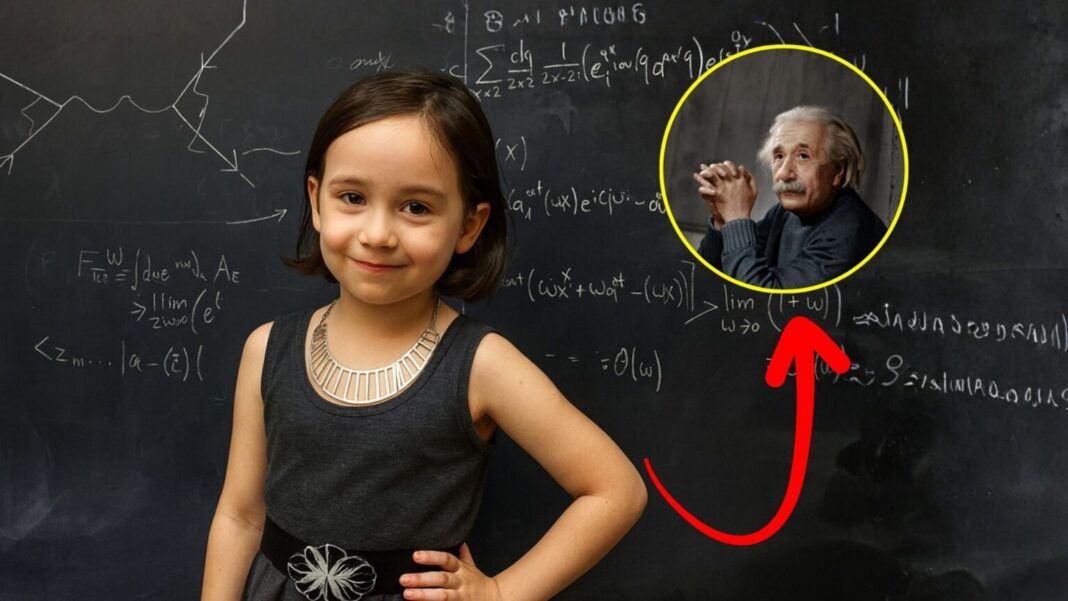
Long before she became an internationally recognised theoretical physicist, Sabrina Gonzalez Pasterski was a teenager with an extraordinary ambition: to build an airplane of her own. What followed was a remarkable journey from a Chicago workshop to the world of advanced physics.
A Teenager with an Extraordinary Dream
Most teenagers spend their afternoons studying, playing sports, meeting friends or thinking about what they might want to become in the future. Sabrina Gonzalez Pasterski, however, had a rather different ambition. She wanted to build an airplane.
And she did not want to build a model aircraft or a small toy that could fly across a room. She wanted to construct a real, full-sized aircraft that could take to the skies.
It was an ambition that would have sounded almost impossible for someone so young. Yet Sabrina was not interested in what people generally considered possible for a teenager. She was interested in understanding how things worked, learning the science behind them and finding out whether she could make something extraordinary with her own hands.
Born in Chicago, Illinois, in 1993, Sabrina developed an early fascination with aviation and aerospace engineering. Her curiosity gradually turned into a serious interest in flying and aircraft construction.
At just nine years old, she began taking flying lessons. While many children that age were still discovering their favourite hobbies, Sabrina was already becoming familiar with aircraft, flight controls and the principles of aviation.
Her interest was not simply about the excitement of flying. She wanted to understand the engineering behind an aircraft. How was it designed? How did its components work together? What made it capable of flying?
These questions would eventually lead her towards a project that would attract attention far beyond her hometown.
Her Family and Early Education
Behind Sabrina Gonzalez Pasterski’s extraordinary achievements was a family that recognised the importance of curiosity, education and ambition.
Born on June 3, 1993, Sabrina grew up in the United States in a family of Cuban and Polish heritage. Her parents, Mark Pasterski and Maria Gonzalez, played an important role in encouraging her interests and supporting her ambitions.
Her father, in particular, encouraged her to explore her interests, pursue her dreams and give her best in whatever she chose to do. Rather than limiting her to conventional expectations, her family supported her natural curiosity and enthusiasm for learning.
Sabrina’s intellectual abilities became apparent at a remarkably young age. When she was five, she enrolled at the Edison Regional Gifted Center in Chicago, a school designed to serve academically gifted students. It provided an environment where her abilities could be developed and her curiosity encouraged.
She later attended the Illinois Mathematics and Science Academy (IMSA), a specialised residential high school in Aurora, Illinois, known for its focus on mathematics, science and technology.
Her education at IMSA helped strengthen her interest in scientific subjects and prepared her for the challenges of higher education. She graduated from the academy in 2010, before moving on to the Massachusetts Institute of Technology.
Her early educational journey reflected something that would become a defining characteristic of her life: an eagerness to learn, a willingness to explore unfamiliar subjects and an ambition to go beyond what was ordinarily expected of someone her age.
The Girl Who Built Her Own Airplane
Sabrina’s fascination with aviation became more ambitious as she grew older.
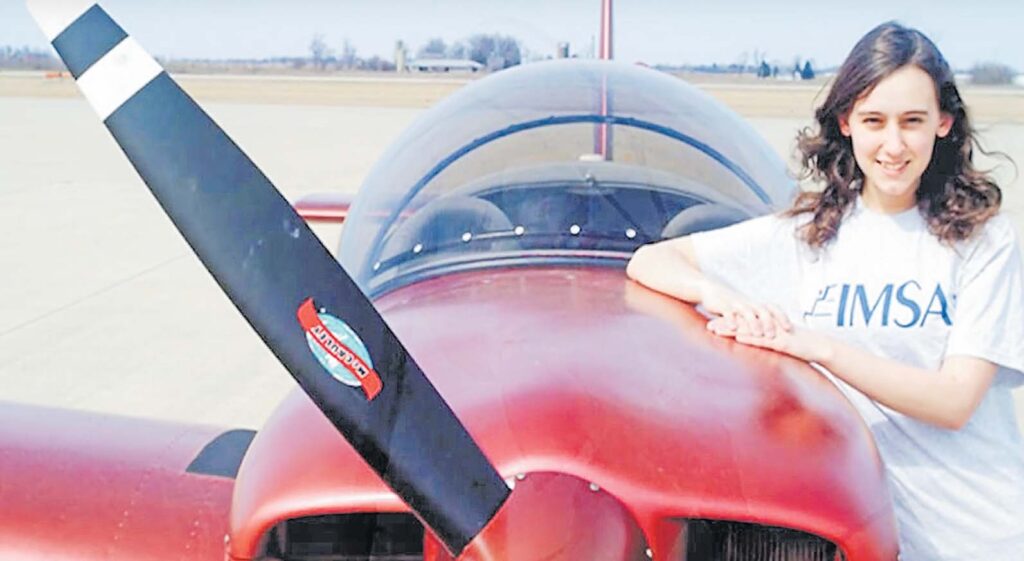
In 2005, when she was around 12, she began working on a homebuilt aircraft project. The aircraft was based on a Zenith Zodiac CH-601XL kit, but she was not content simply to assemble it without understanding the engineering involved.
She named her aircraft the Sabrina Mark 1.
Building an aircraft is an enormous undertaking, even for experienced adults. It requires patience, technical understanding, careful planning and attention to detail. Every component must work as intended, because aviation leaves little room for careless mistakes.
Sabrina spent countless hours working on the project. Her father supported her ambition and helped her along the way. Her workshop became a place where she could turn her curiosity into something tangible.
The project demanded more than enthusiasm. It required her to learn about aerodynamics, aircraft structures, mechanical systems and the technical standards involved in making an aircraft airworthy.
By 2008, at just 14 years old, Sabrina had completed the construction of her aircraft and achieved an important milestone: it received an airworthiness certificate from the US Federal Aviation Administration (FAA).
This was an extraordinary achievement for a teenager.
However, receiving an airworthiness certificate did not mean she could immediately fly the aircraft alone. US aviation regulations placed age restrictions on solo flights, and Sabrina still had to wait and meet the necessary requirements.
She continued learning, working and preparing.
On August 24, 2009, at the age of 16, she finally made her first solo flight in the aircraft she had built.
For Sabrina, it was the culmination of years of effort. The airplane was no longer simply a project in a workshop. It had become a flying achievement.
Her story demonstrated something remarkable: a teenager could do far more than simply dream about engineering. With curiosity, knowledge, persistence and support, she could actually build something extraordinary.
From Aircraft Engineering to the World of Physics
For Sabrina, building an airplane was not the end of her intellectual journey. It was the beginning of something much bigger.
Her curiosity had always extended beyond aviation. She wanted to understand the fundamental principles governing the natural world. The more she learned about engineering, mathematics and science, the more fascinated she became with physics.
After completing her studies at the Illinois Mathematics and Science Academy (IMSA), she entered the Massachusetts Institute of Technology (MIT) in 2010, at the age of 17.
MIT is widely regarded as one of the world’s leading universities for science, technology and engineering. For a young student with an unusual background in aircraft construction, it offered an opportunity to explore her growing interest in physics at a much deeper level.
Sabrina approached her studies with the same determination she had demonstrated while building her airplane.
She completed her undergraduate degree in physics in just three years, graduating in 2013 with a perfect GPA of 5.00 out of 5.00.
That achievement placed her at the very top of MIT’s physics programme. She also received the Joel Matthew Orloff Award, recognising the highest graduating GPA in the department.
Her academic performance attracted considerable attention. But what made her particularly interesting was that she was not simply an outstanding student who excelled in examinations. She was developing into a researcher interested in some of the most challenging questions in modern physics.
A New Challenge at Harvard University
After graduating from MIT, Sabrina continued her academic journey at Harvard University, where she began pursuing a PhD in physics in 2014.
At Harvard, she worked under the supervision of renowned theoretical physicist Andrew Strominger at the university’s Center for the Fundamental Laws of Nature.
Her research took her into the complex world of high-energy theoretical physics, particularly the relationship between gravity, quantum mechanics and the mathematical structures underlying our universe.
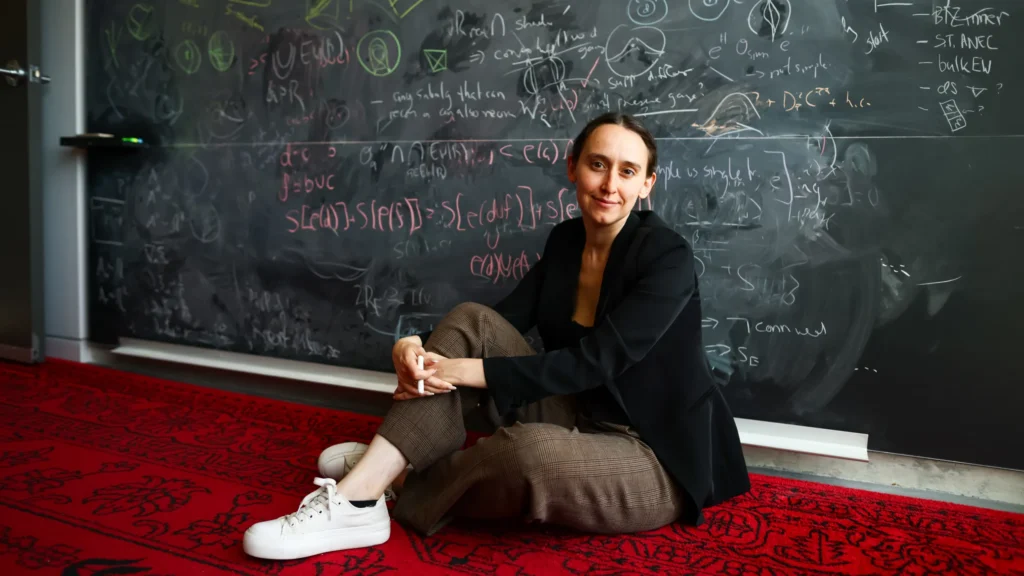
These are subjects that can be difficult even for experienced scientists to understand.
One of the areas in which she made important contributions was the study of gravitational memory effects.
To appreciate why this matters, it helps to understand a little about gravitational waves.
According to Einstein’s general theory of relativity, massive objects accelerating through space can produce ripples in spacetime. These ripples are known as gravitational waves.
Scientists have developed ways to detect these waves and use them to investigate some of the universe’s most powerful events.
Sabrina’s research explored how gravitational waves and other physical processes can leave lasting effects that carry information about what happened.
Working with Andrew Strominger and Alexander Zhiboedov, she contributed to research associated with what became known as the Pasterski–Strominger–Zhiboedov (PSZ) triangle.
Her work on the spin memory effect helped advance the theoretical understanding of gravitational physics.
Some of this research attracted the attention of the wider scientific community, including Stephen Hawking, whose work cited research connected to the emerging ideas in this field.
In 2019, Sabrina completed her PhD in physics at Harvard University.
The teenager who had once spent thousands of hours working on an airplane had now become a highly accomplished theoretical physicist.
Recognition Beyond the University
Sabrina’s achievements did not go unnoticed outside academic circles.
She was included in the Forbes 30 Under 30 list in the Science category in 2015. In 2017, she was also recognised in Forbes’ 30 Under 30 All-Star list.
In 2016, she received MIT’s Physics Rising Star Award.
These recognitions reflected the growing interest in her research and her potential contribution to theoretical physics.
However, Sabrina’s story also attracted attention because she challenged familiar assumptions about what young people, particularly young women, could accomplish in fields traditionally dominated by men.
She had demonstrated an interest in aerospace engineering at an unusually young age, excelled academically at MIT and moved on to advanced theoretical research at Harvard.
Her journey was not simply a story of academic success. It was also a reminder that scientific curiosity can take many forms and that a person’s interests do not have to remain confined to a single subject.
Exploring the Universe Through Celestial Holography
After completing her PhD in 2019, Sabrina joined the Princeton Center for Theoretical Science as a postdoctoral researcher.
She continued working on fundamental questions about gravity, spacetime and quantum physics.
In 2021, she joined the Perimeter Institute for Theoretical Physics in Waterloo, Ontario, Canada, as a research faculty member.
The Perimeter Institute is an internationally recognised centre for theoretical physics, bringing together researchers who investigate some of the deepest questions about the universe.
At Perimeter, Sabrina founded the Celestial Holography Initiative, an ambitious research programme focused on a fascinating question:
Could the information describing our three-dimensional universe be encoded in a theory living on a two-dimensional boundary?
This idea is connected to the broader holographic principle, an important concept in modern theoretical physics.
It may sound like science fiction, but it is a serious area of mathematical and theoretical research. Scientists are investigating whether ideas from holography can help explain the relationship between gravity, quantum mechanics and the structure of spacetime.
Sabrina’s work involves exploring mathematical frameworks that could help connect these different areas of physics.
She also became Deputy Director of the Simons Collaboration on Celestial Holography in 2023.
Her work now involves collaborating with other researchers, developing new theoretical approaches and helping advance a field that may contribute to our understanding of the fundamental laws of nature.
What Is Sabrina Doing Today?
As of 2026, Sabrina continues to work as a research faculty member at the Perimeter Institute for Theoretical Physics.
Her work remains focused on quantum fields, string theory, celestial holography and the fundamental relationship between gravity and quantum mechanics.
She is not simply researching established scientific ideas. Much of her work involves investigating questions for which scientists do not yet have complete answers.
In April 2026, MIT published a feature about her continuing research, highlighting her efforts to understand how general relativity and quantum mechanics might be brought together into a consistent picture of the universe.
Her recent research publications also demonstrate that she remains actively involved in the international scientific community.
For someone who once dreamed of building an airplane to get noticed by aerospace engineers, her journey has taken a fascinating turn. She has moved from exploring the skies above her hometown to investigating the mathematical structure of the universe itself.
And perhaps the most interesting part is that she is still asking questions.
Quick Facts About Sabrina Gonzalez Pasterski
| Category | Details |
|---|---|
| Full name | Sabrina Gonzalez Pasterski |
| Birth year | 1993 |
| Birthplace | Chicago, Illinois, USA |
| Nationality | American |
| Heritage | Cuban-American |
| Profession | Theoretical physicist |
| School | Illinois Mathematics and Science Academy |
| Undergraduate degree | Physics, MIT |
| Graduation year | 2013 |
| Doctoral degree | PhD in Physics, Harvard University |
| PhD year | 2019 |
| Current institution | Perimeter Institute for Theoretical Physics |
| Research interests | Quantum fields, string theory, celestial holography |
| Notable achievement | Built an aircraft at 14 and made her first solo flight in it at 16 |
A Timeline of Her Remarkable Journey
- 1993: Born in Chicago, Illinois.
- 2002: Began flying lessons at approximately nine years old.
- 2005: Started working on her own aircraft project.
- 2008: Completed her aircraft and obtained FAA airworthiness certification at age 14.
- 2009: Made her first solo flight in her aircraft at age 16.
- 2010: Entered MIT at age 17.
- 2013: Graduated from MIT with a perfect 5.00 GPA in physics.
- 2014: Began her PhD studies at Harvard University.
- 2015: Named to Forbes 30 Under 30 in Science.
- 2016: Received MIT’s Physics Rising Star Award.
- 2017: Recognised in Forbes 30 Under 30 All-Star list.
- 2019: Completed her PhD at Harvard.
- 2021: Joined the Perimeter Institute and founded its Celestial Holography Initiative.
- 2023: Became Deputy Director of the Simons Collaboration on Celestial Holography.
- 2026: Continues her research in theoretical physics at the Perimeter Institute.
Frequently Asked Questions
1. What made Sabrina Gonzalez Pasterski famous?
She first attracted widespread attention for building her own aircraft as a teenager. She later became known for her outstanding academic achievements at MIT and Harvard and her contributions to theoretical physics.
2. How old was Sabrina when she built her airplane?
She was 14 years old when her aircraft received FAA airworthiness certification in 2008.
3. Did she fly the airplane at age 14?
No. Although she completed the aircraft at 14, she made her first solo flight in it on August 24, 2009, when she was 16.
4. Where did Sabrina study?
She studied at the Illinois Mathematics and Science Academy, earned her undergraduate degree in physics from MIT and completed her PhD at Harvard University.
5. Where does Sabrina work now?
She is a research faculty member at the Perimeter Institute for Theoretical Physics in Canada.
6. What does Sabrina research?
Her research focuses on theoretical physics, including quantum fields, string theory, gravity and celestial holography.
More Than an Extraordinary Academic Record
There is something particularly interesting about Sabrina Gonzalez Pasterski’s journey.
When she was a teenager, she did not wait until adulthood to begin exploring her interests. She did not simply dream of becoming an aerospace engineer or imagine what it might be like to fly an airplane. She started learning, working and building towards that ambition while she was still a child.
Her story also demonstrates that intelligence is not limited to academic grades or examination results. It can be seen in curiosity, creativity, problem-solving and the determination to understand how the world works.
Sabrina’s achievements did not happen overnight. Building an aircraft required years of effort. Excelling at MIT and Harvard required dedication to learning. Becoming a theoretical physicist required her to keep asking difficult questions and exploring subjects that even established scientists find challenging.
Today, she is working on questions about the universe that may take many more years of research to answer.
The little girl from Chicago who once looked towards the sky and dreamed of building an airplane has grown into a scientist who studies the very fabric of the universe.
Her journey offers a powerful message to young people everywhere: You do not have to wait until you grow up to start doing something extraordinary. Sometimes, the most remarkable journeys begin with a question, a dream and the courage to take the first step.