



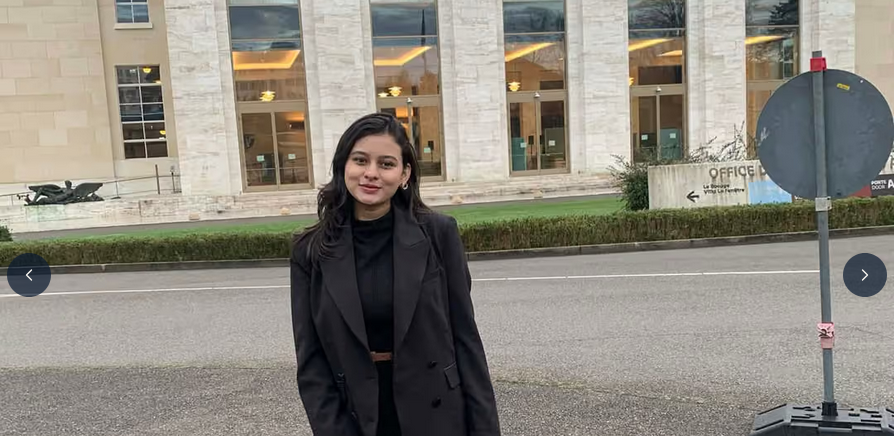
There is a common stereotype that groundbreaking scientific discoveries belong only to silver-haired professors in high-tech, futuristic labs. But 26-year-old Marjana Akter just completely shattered that glass ceiling.
By becoming the youngest Bangladeshi ever to be featured in the prestigious Asian Scientist 100 (2026) list and the first-ever Bangladeshi woman selected for the UN Young Women for Biosecurity Fellowship (2025), Marjana has written a new chapter in Bangladesh’s scientific history. For teenagers across the nation dreaming of changing the world through a microscope, Marjana is the ultimate proof that age—and circumstances—are just numbers.
Here is an exclusive look into her roots, her incredible struggle, and her historic rise to the global stage.
The Roots: A Dream Born in Sylhet
Marjana’s journey began far from the glamorous global stage. Raised in a traditional household in Sylhet, her upbringing was grounded in curiosity and resilience. From a young age, she possessed an analytical mind, constantly questioning how the living world operates. While most teenagers viewed biology as a subject of mere memorization, Marjana saw it as a massive puzzle waiting to be solved.
Supported by her family, who valued education above all else, she grew up determined to make a tangible difference in the real world rather than just following a conventional career path.
The Spark: Academic Excellence
Marjana’s academic journey is a brilliant roadmap of dedication. She stepped into the world of higher education by enrolling at the Shahjalal University of Science and Technology (SUST), majoring in Biochemistry and Molecular Biology. At SUST, she wasn’t just a student aiming for good grades; she was an active explorer in the lab, spending hours mastering the fundamentals of molecular science.
Hungry for deeper specialization, she later moved to the Bangladesh Agricultural University (BAU) for her Master’s degree in Microbiology and Hygiene. It was during her time at BAU, under the mentorship of Professor Dr. Md. Golzar Hossain, that her potential shifted from academic excellence to groundbreaking real-world impact.
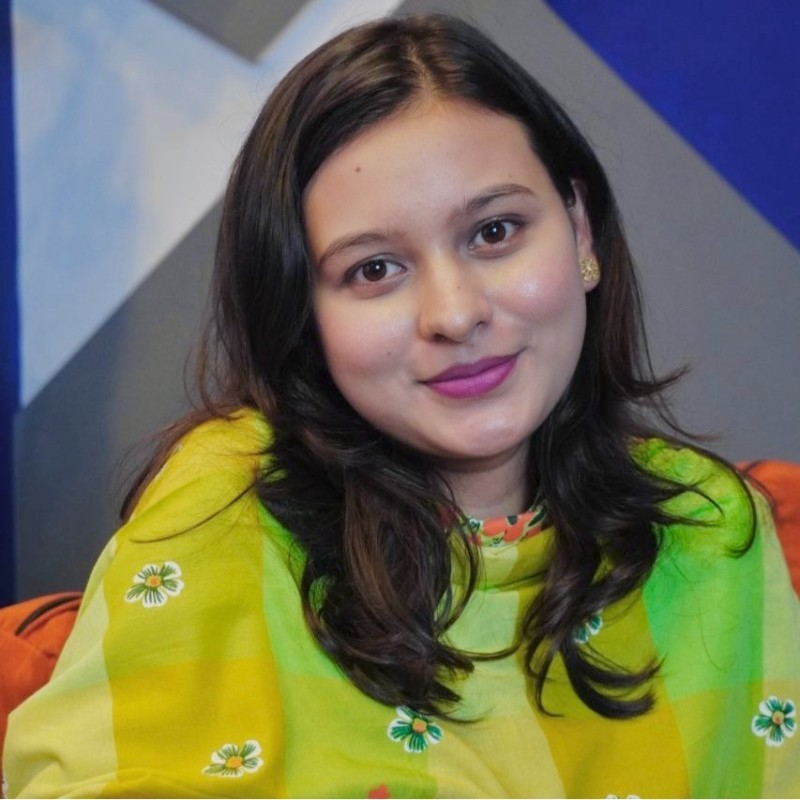
“To me, this list is not just my personal success. It is the international recognition of science in Bangladesh, and proof that a researcher entirely educated at Bangladeshi universities can conquer the global stage.”
— Marjana Akter
The Breakthrough: Rewriting Avian Virology
Marjana didn’t just study viruses; she solved a massive national problem. Her research took a historic turn when she became the first author to successfully isolate and characterize the Genotype IIIb chicken anemia virus (CAV) in Bangladesh.
For the average teenager, this might sound like dense scientific jargon, but its real-world impact is massive. The poultry industry is a major source of protein and livelihood for millions in Bangladesh. By identifying this specific, devastating virus variant, Marjana gave farmers and scientists the exact tools needed to develop effective vaccines, saving the economy millions of dollars and protecting food security. Her brilliance didn’t stop there—she has published over 12 international scientific papers, including features in top-tier journals like The Lancet Microbe and Microbiology Spectrum, investigating global threats like Covid-19, Dengue, and Lumpy Skin Disease.
ICU to Thesis Defense: The Ultimate Grit
What makes Marjana’s story truly legendary is the battle she fought behind the laboratory doors. During the peak of her groundbreaking research and master’s thesis preparation, Marjana was pregnant. She faced severe health complications and had to be admitted to the Intensive Care Unit (ICU) due to critical respiratory distress.
Giving up would have been the easiest choice. But Marjana is made of different mettle. Defying all odds, she bounced back, balanced the daunting responsibilities of newfound motherhood, and successfully defended her Master’s thesis with her newborn child by her side. It is a powerful reminder to every teenager that true strength lies in pushing forward when the obstacles seem insurmountable.
┌────────────────────────────────────────────────────────┐
│                   MARJANA'S FAST FACTS                 │
├────────────────────────────────────────────────────────┤
│ • Age: 26 years old (Youngest Bangladeshi on AS100)    │
│ • UN Fellowship: 1 of only 10 women selected globally   │
│   out of 193 UN member nations.                        │
│ • Publications: 12+ international research papers.     │
│ • New Role: Official Judge for the global iGEM         │
│   Competition (2026).                                  │
└────────────────────────────────────────────────────────┘
Stepping Onto the Global Stage
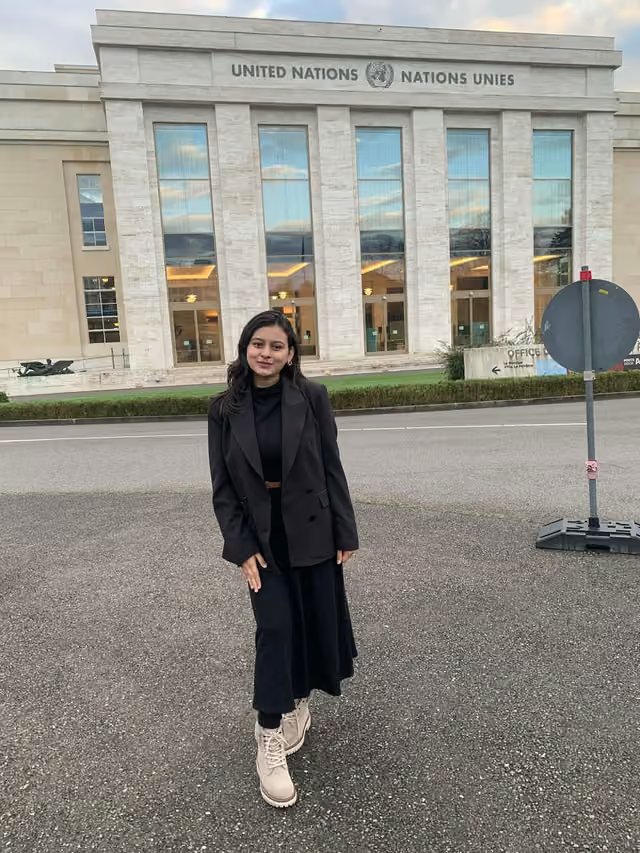
Her brilliant work caught the eyes of global watchdogs. She achieved a historic milestone by being selected for the United Nations Young Women for Biosecurity Fellowship 2025, organized by the UN Office for Disarmament Affairs (UNODA) to mark the 50th anniversary of the Biological Weapons Convention. Out of thousands of applicants from 193 member states, Marjana was one of only 10 young women chosen globally—and the first-ever from Bangladesh.
Balancing motherhood and microbiology: How Marjana Akter became Bangladesh’s first UN Biosecurity Fellow
Marjana has been selected as one of just 10 young women from 193 UN member countries. The main objective of this fellowship is to turn them into biosafety and biosecurity experts
Soon after beginning her master’s in Microbiology at Bangladesh Agricultural University (BAU) in 2024, Marjana Akter became pregnant with her first child.
Balancing pregnancy and postgraduate studies was anything but easy for her; she had to attend classes in the morning, work in the lab in the afternoon, and write her thesis at night — all while enduring physical discomfort.
Yet, Marjana not only successfully passed that challenging period, but also made a name for herself through her research work.
She was recently selected as the first Bangladeshi to receive the UN Biosecurity Fellowship. Among candidates from 193 UN member countries, only 10 young women were chosen.
“That period tested every bit of my strength. In the sixth month of my pregnancy, I suddenly suffered severe respiratory distress and was admitted to the ICU for five days. Breathing was difficult, and I was unsure if I could continue my research or even return to normal life. Still, even from the hospital bed, I kept thinking about my thesis work and the unfinished experiments waiting for me,” she said.
“My husband, Yusha Araf, was pursuing his PhD at the University of Auckland in New Zealand during that time. Yet he supported me constantly from afar,” Marjana added.
When her daughter Anaiza was born, she became Marjana’ biggest inspiration, the reason she kept going on. Just a few weeks after Anaiza’s birth, Marjana successfully defended her MSc thesis. That moment symbolised not just academic success but triumph over every obstacle life had placed before her.
“It feels like a dream come true. It is one of the greatest honours of my life. This achievement is a reflection of years of hard work, sacrifice and faith. When I think about the days I spent in the ICU, struggling to breathe, and now realise that I will represent Bangladesh on a global platform, it feels deeply emotional and empowering,” Marjana said.
Marjana’s love for microbiology
Marjana earlier earned her BSc in Biochemistry and Molecular Biology from Shahjalal University of Science and Technology (SUST). From the beginning, she was fascinated by how tiny, unseen organisms can have such massive effects on life, health, and the environment.
“Studying Biochemistry and Molecular Biology at SUST opened my eyes to how science can be used to solve real-world problems. Later, during my MSc at BAU, working with viruses and pathogens made me realise how powerful microbiology is; it connects human health, food systems, and global security. I fell in love with this field because every discovery, no matter how small, can save lives,” she said.
Marjana’s research focuses on virology and infectious diseases, combining molecular biology, genomics, and public health. During her MSc under the guidance of Professor Dr Md Golzar Hossain, she worked on Chicken Infectious Anemia Virus (CIAV) and identified Bangladesh’s first Genotype IIIb strain, which was published in Microbiology Spectrum. She also helped sequence its complete genome, later published in Microbiology Resource Announcements.
Beyond CIAV, she has contributed to studies on Covid-19, dengue, Hepatitis B, and lumpy skin disease (LSD), exploring viral mutations, co-infection risks, and their public health implications. In total, she has nine international publications, including one in The Lancet Microbe, which discussed the impact of climate change on dengue outbreaks in Bangladesh.
“Through these projects, my goal has been to strengthen virological research, biosafety practices, and biosecurity awareness, linking science in the lab to real-world disease prevention and global health security,” she said.
A prestigious fellowship
The Young Women for Biosecurity Fellowship is organised by the United Nations Office for Disarmament Affairs (UNODA) to mark the 50th anniversary of the Biological Weapons Convention (BWC). It aims to promote the peaceful use of biological sciences and raise global awareness of biosecurity.
It’s a three-month long fellowship. During October and November, they will receive online training, and in December, there will be a five-day-long in-person training session in Geneva, Switzerland. Foreign ministers, policymakers, and prominent political leaders from 193 countries will be present there.
“During my MSc at BAU, working with viruses and pathogens made me realise how powerful microbiology is; it connects human health, food systems, and global security. I fell in love with this field because every discovery, no matter how small, can save lives.”
Marjana said that the application process was quite rigorous. It required applicants to be under 35 years old and have at least a Master’s degree in a relevant field. Along with academic transcripts and a reference letter, she had to write about her motivation, research background, and how she plans to apply this experience to benefit her country.
They evaluated candidates based on published research papers, hands-on experience with pathogens, years of laboratory work, and leadership potential. They also looked at how each applicant’s journey reflects commitment to responsible bioscience and the goals of the Biological Weapons Convention (BWC).
“The main objective of this fellowship is to turn the 10 of us, who have been selected as young scientists, into biosafety and biosecurity experts.”
“The idea is that, in the future, we will be able to represent our country in different parts of the world and train the army or naval forces of those countries on biosafety and biosecurity. For instance, if a biological weapon — or a virus — suddenly emerges, like Covid-19 did, we should know how to respond effectively.
“Our role will be to train and guide the military and administrative structures of those countries on the initial steps they should take to handle such situations. We will also share knowledge and provide guidelines on biosafety—such as how laboratories can safely work with pathogens and how to respond efficiently if a biological attack or outbreak occurs,” Marjana explained.
Inspiring women scientists in Bangladesh
Marjana believes that Bangladesh has immense potential in research and innovation, but that potential often remains untapped due to the lack of opportunities and role models for women in science.
That is why her vision goes beyond personal success — it reflects a commitment to building an inclusive scientific community where women are equally represented and empowered.
“I aim to work for the advancement of women in science in Bangladesh. I want to use my experience and this fellowship to inspire and mentor young female researchers so they can pursue scientific careers with confidence,” she said.
“I envision to strengthen biosafety, biosecurity, and research capacity in the country by encouraging more women to take leadership roles in laboratories and public health sectors. My long-term goal is to build a strong network for women scientists in Bangladesh where collaboration, mentorship, and innovation can thrive,” Marjana added.
The momentum didn’t stop there. Asian Scientist Magazine recognized her alongside legendary Bangladeshi veterans—like icddr,b’s Executive Director Dr. Tahmeed Ahmed—naming her in the Asian Scientist 100 (2026). Furthermore, she has expanded her global footprint by becoming an official judge for the prestigious iGEM Competition 2026, the premier global event for synthetic biology.
A Vision for the Future
Marjana Akter’s career is just getting started, but she has already paved a highway for young Bangladeshi girls in STEM (Science, Technology, Engineering, and Math). Moving forward, she aims to combine science with policy. Her dream is to work in Science Diplomacy and train national administrative and military structures on how to respond to biosecurity and biosafety threats.
Her message to every teenager reading this is simple: You don’t need decades of experience or a foreign degree to make an international impact. You just need relentless curiosity, a willingness to get your hands dirty in the lab, and the unstoppable grit to turn your challenges into your greatest victories.