
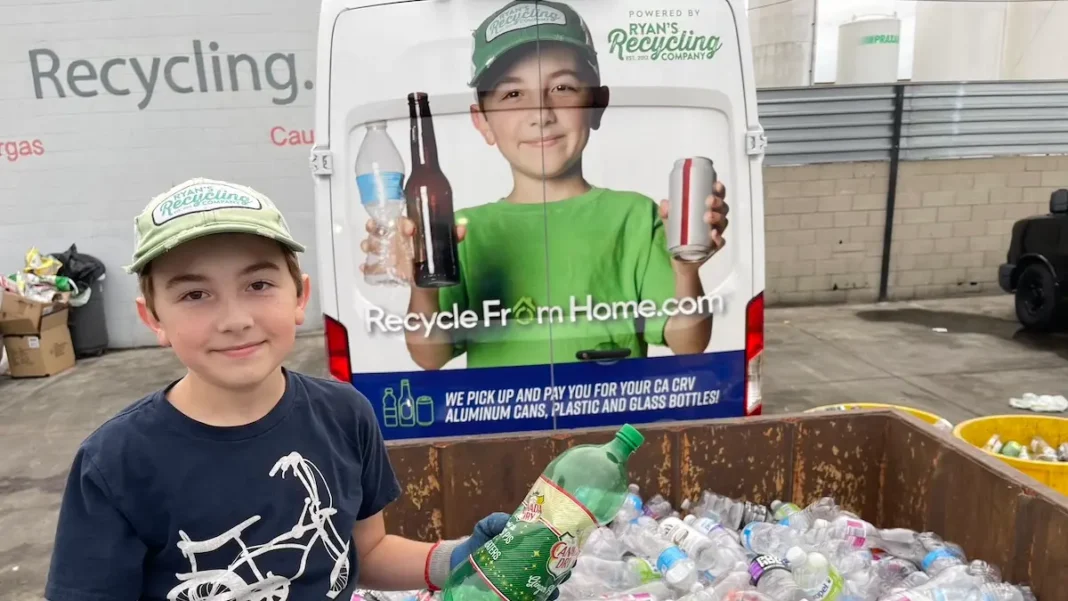
In the sunlit, coastal communities of Southern California, where the Pacific Ocean meets manicured suburban cul-de-sacs, environmentalism is often discussed in city council chambers, academic lectures, and corporate boardrooms. Yet one of the most influential voices in modern waste reduction did not emerge from a policy institute or a Fortune 500 sustainability department. Instead, he began his career in 2012 while still small enough to be carried in one arm by his father, clutching a few plastic bags of empty soda cans and water bottles.
By late 2026, at just 16 years old, Ryan Hickman had transformed a toddler’s fascination with sorting machines into a multi-tiered environmental enterprise. Having personally recycled nearly 2.5 million cans and bottles, founded a thriving local business, launched an international nonprofit, co-founded a residential pickup service serving more than 15,000 households, and shared his message on some of the world’s largest television stages, Hickman has redefined what youth entrepreneurship and grassroots activism look like in the twenty-first century.
This is the comprehensive biography of Ryan Hickman—how a three-year-old boy from San Juan Capistrano sparked a global recycling movement, navigated overnight fame, and built a lasting legacy dedicated to keeping the world’s oceans clean.
Early Life and Upbringing in Orange County
Ryan Hickman was born on July 7, 2009, in California, and grew up in San Juan Capistrano, a historic city in southern Orange County. Raised by his parents, Damion and Andrea Hickman, Ryan’s early childhood looked much like that of any other suburban toddler. He loved playing with toy garbage trucks, bouncing on his bed, and spending time outdoors near the California coast.
From a very young age, however, Ryan’s parents noticed a distinct trait in their son: an intense love for order, categorization, and mechanics. As his father Damion later recalled in interviews, Ryan simply liked sorting things. Whether it was toys on his bedroom floor or items around the house, he had a natural inclination to organize objects by shape, size, and material.
Equally formative was his proximity to the Pacific Ocean. Growing up minutes away from beaches like Dana Point and Laguna Beach, marine wildlife was a visible part of daily life. Even as a young child, Ryan developed a deep empathy for sea lions, seals, dolphins, and seabirds. When he began learning that litter from neighborhood streets frequently washes through storm drains and ends up in the ocean—where marine animals mistake plastic for food or become entangled in debris—the connection became deeply personal. For Ryan, picking up a discarded bottle was never an abstract ecological concept; it was a direct act of saving an animal’s life.
The 2012 Spark: A Visit That Changed Everything
The defining turning point in Ryan’s life occurred in 2012, when he was three and a half years old. One afternoon, his father Damion decided to take a few small bags of empty cans and bottles from their house to a local recycling center, bringing young Ryan along for the errand.
For most adults, visiting a municipal or commercial recycling facility is a mundane chore. For three-year-old Ryan, it was magic. Held in his father’s arms so he could reach the openings, Ryan watched in fascination as aluminum cans and plastic bottles disappeared into the sorting machines, clattering down chutes while a counter tallied their California Redemption Value (CRV). At the end of the visit, the attendant handed Ryan roughly five dollars in cash for his efforts.
The experience left an immediate and indelible mark. The very next day, Ryan announced to his parents that recycling was going to be his new business. Damion and Andrea initially smiled at what they assumed was a passing childhood phase—the kind of declaration toddlers make after seeing a fire truck or visiting a zoo. They quickly realized, however, that Ryan was entirely serious.
Ryan asked his parents for boxes of plastic bags. Determined to build his inventory, he walked around his San Juan Capistrano cul-de-sac with his parents, knocking on neighbors’ doors and handing out the bags. His pitch was simple and disarming: he asked his neighbors to put their empty cans, plastic bottles, and glass containers into the bags so he could pick them up and recycle them.
Touched by the toddler’s enthusiasm, the neighbors eagerly agreed. Before long, those neighbors began telling their friends, who told their coworkers, and soon Ryan’s parents’ colleagues were bringing bags of recyclables to the Hickman family. Before he even turned four years old, Ryan’s Recycling Company was officially born.
Building Ryan’s Recycling: How the Operation Worked
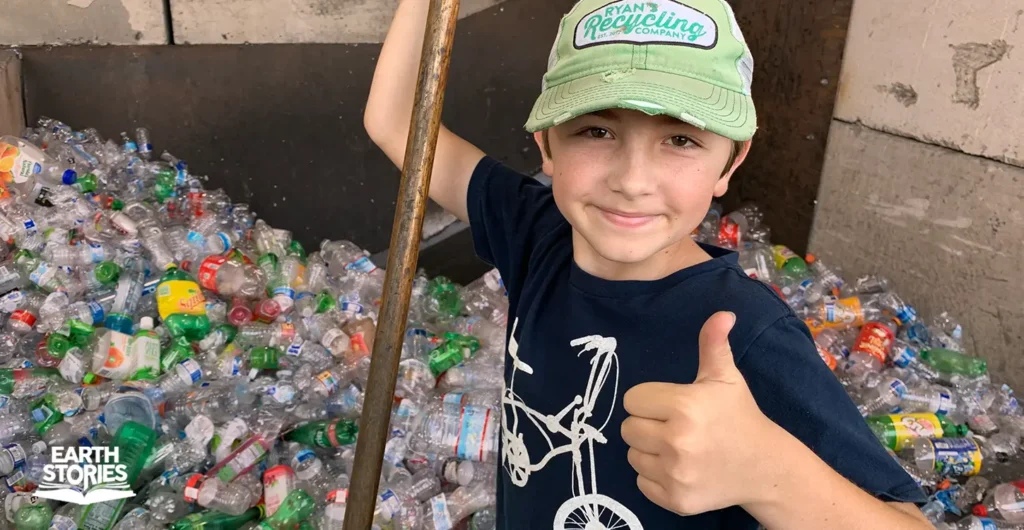
What began on a single cul-de-sac rapidly scaled into a structured, weekly operation that consumed the family’s garage and weekends. Unlike many ventures associated with young children where parents quietly do the heavy lifting behind the scenes, Ryan insisted on being hands-on at every stage of the process.
The Weekly Routine
Throughout his elementary and middle school years, Ryan’s routine remained remarkably consistent:
- Collection: After school and on weekends, Damion and Andrea would load Ryan into the family vehicle and drive routes across San Juan Capistrano and neighboring Orange County cities to pick up bags left on porches and driveways by regular customers.
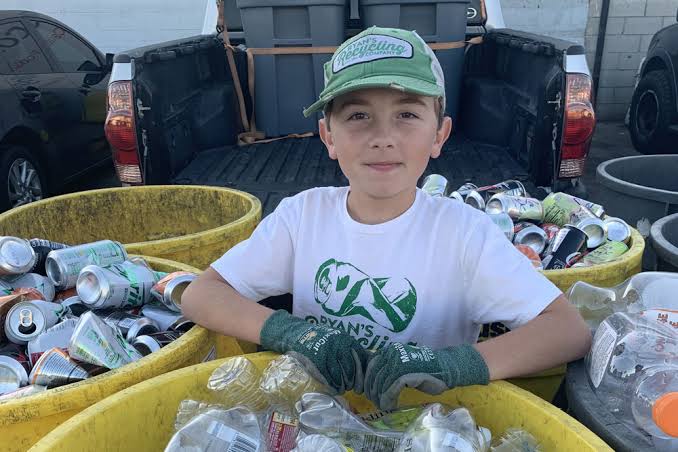
- Sorting: Back in the family’s driveway and garage, Ryan personally dumped out the bags and sorted every single container by material—separating aluminum cans, clear PET plastics, colored plastics, and glass bottles. He removed caps, flattened boxes, and organized the recyclables into large bins.
- Redemption: Once the bins were full, the family loaded them into the car and drove to the local recycling center, where Ryan weighed the materials and cashed them in.
Financial Discipline and Philanthropy
From the beginning, Ryan’s parents used the business as a practical classroom for financial literacy and generosity. Ryan divided his earnings into distinct categories:
- College Savings: A substantial portion of the money went straight into a savings account earmarked for his future college education. By the time he was eight years old, he had already saved more than $21,000.
- Reinvestment: Early on, Ryan joked in interviews that he was saving up to buy his own full-sized garbage truck—a dream that eventually evolved into investing in practical gear, bins, and company T-shirts.
- Charitable Giving: In 2015, Ryan designed bright green T-shirts featuring the Ryan’s Recycling logo to thank friends and neighbors who saved bottles for him. When strangers began asking to buy the shirts, Ryan decided that 100% of the proceeds from T-shirt sales would be donated directly to the Pacific Marine Mammal Center (PMMC) in Laguna Beach, a nonprofit hospital that rescues, rehabilitates, and releases sick and injured seals and sea lions.
Going Viral and Meeting Ellen DeGeneres
For the first four years of its existence, Ryan’s Recycling was a beloved local story in Orange County. That changed overnight in late 2016 when Ryan was seven years old.
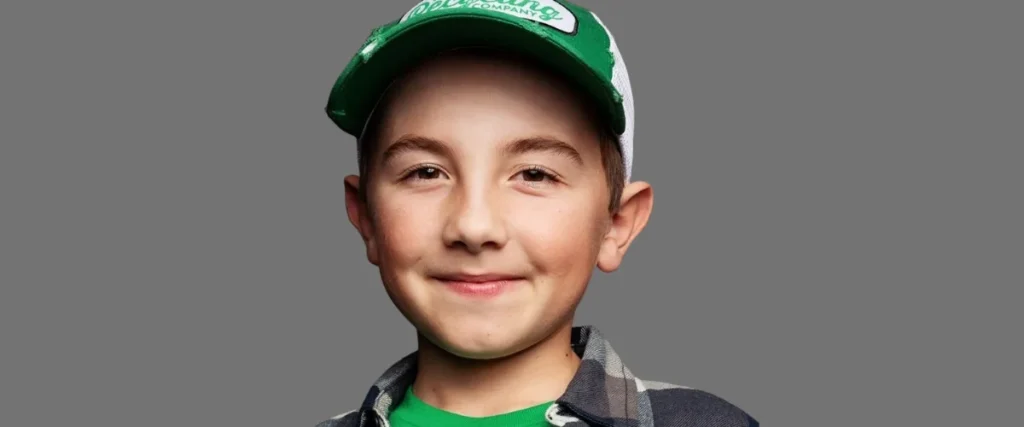
Local newspaper The Capistrano Dispatch and the Orange County Register published profiles on the seven-year-old CEO who had already recycled nearly 200,000 cans and bottles. The story struck an immediate chord online. Within days, national and international outlets—including CNN, NBC, Good Morning America, The Huffington Post, and Time for Kids—picked up the story. Videos of the articulate, energetic seven-year-old explaining why plastic hurts sea lions garnered tens of millions of views across social media platforms.
As Damion Hickman recalled, the family’s inbox was suddenly flooded with hundreds of emails a day from schoolchildren, teachers, mayors, and fans from as far away as Dubai, Australia, and Europe.
The Appearance on The Ellen DeGeneres Show
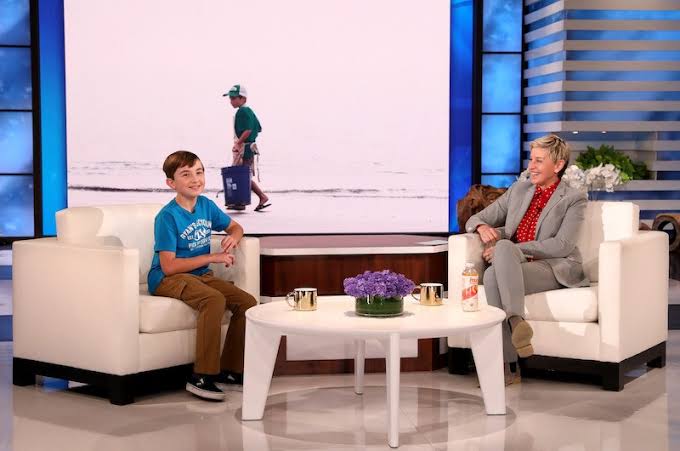
The pinnacle of this media whirlwind arrived in January 2017, when Ryan was invited as a featured guest on The Ellen DeGeneres Show.
Sitting across from Ellen DeGeneres in his signature green Ryan’s Recycling T-shirt, seven-year-old Ryan charmed the studio audience and millions of viewers at home with his effortless candor and humor. During the interview:
- Ryan explained how he started his business at age three and a half after earning five dollars at the recycling center.
- He revealed his “executive team,” naming his mom, dad, and grandma as his current business partners, and his best friend Wyatt as a “future partner”.
- Drawing big laughs from the audience, Ryan noted that he recycled aluminum cans, plastic bottles, and glass, adding matter-of-factly that his mom drank a lot of wine, which helped keep his glass recycling numbers strong.
- Never one to miss a business opportunity, Ryan politely asked Ellen if the show’s crew could save all the empty water bottles from the green room for him to take home and recycle.
At the conclusion of the segment, Ellen surprised Ryan with two gifts: a brand-new, motorized kid-sized John Deere utility vehicle (decorated with a custom Ryan’s Recycling decal) to help him haul bags around his neighborhood, and a giant novelty check for $10,000 from Shutterfly to support his business and college fund. For years afterward, that giant $10,000 check hung proudly on Ryan’s bedroom wall right above his bed.
Expanding the Mission: Project3R and Recycle From Home
As Ryan grew from a viral child prodigy into a pre-teen and teenager, his vision matured alongside him. He realized that while he could personally sort hundreds of thousands of containers, one person—even one working every weekend—could only make a localized dent in a global waste crisis. To create systemic change, he needed to make recycling easier for everyday households and educate the next generation.
This realization led to two major ventures that expanded his footprint far beyond his personal pickup routes.
1. Project3R (Founded 2020)
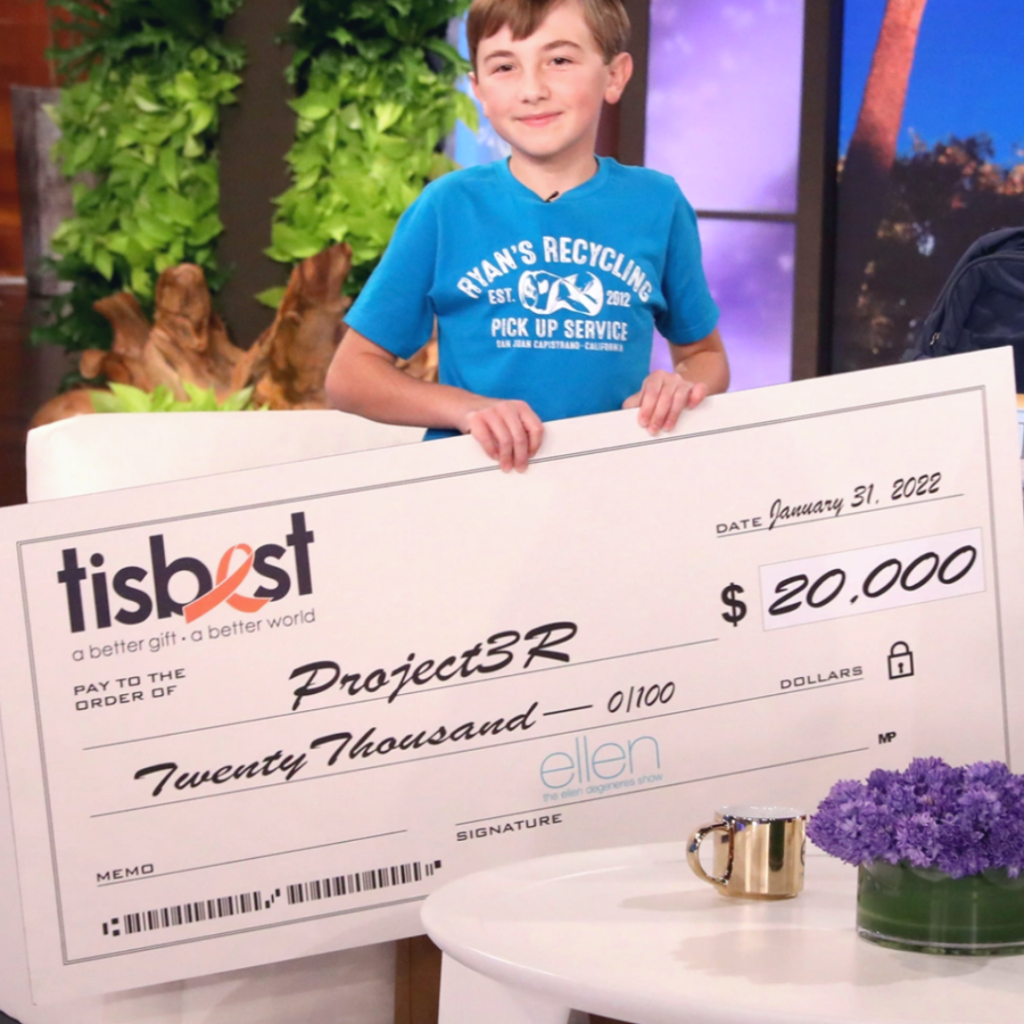
In 2020, at age 11, Ryan founded Project3R, a registered 501(c)(3) nonprofit organization dedicated to global recycling education, environmental awareness, and community action. Named after the three pillars of waste management—Reduce, Reuse, Recycle—Project3R gave Ryan a formal platform to scale his advocacy. Through Project3R, Ryan and his team of volunteers have:
- Organized Massive Beach Cleanups: Ryan regularly leads coastal cleanup drives across Southern California and internationally, including his annual “5-in-5 Beach Clean Up Tour” spanning beaches in California and Mexico, as well as high-profile community cleanups partnered with professional sports teams like the NHL’s Anaheim Ducks.
- Launched School Recycling Programs: Project3R helps schools across the United States and abroad establish campus-wide bottle and can collection systems, teaching students how to divert waste while raising funds for their schools.
- Delivered Global Keynotes: Ryan has spoken to tens of thousands of students, educators, and corporate leaders at schools, universities, and sustainability conferences around the world.
2. Recycle From Home
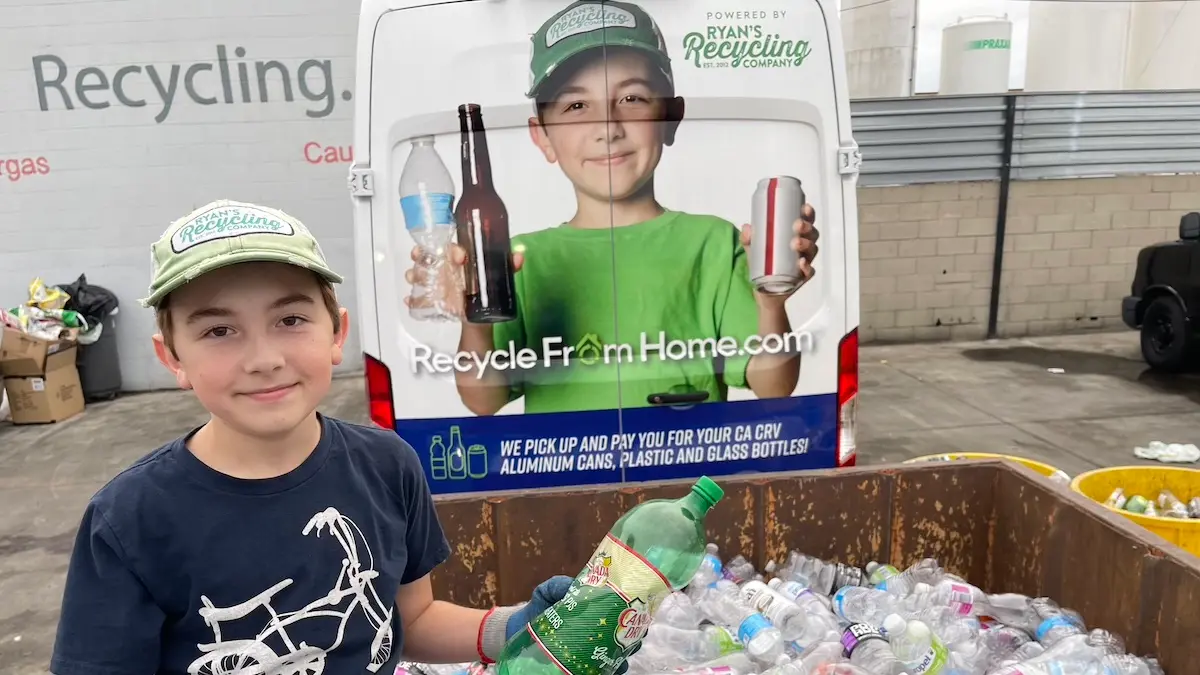
Recognizing that the biggest barrier to recycling in California was inconvenience—requiring residents to store sticky bags of cans and drive them to redemption centers—Ryan became a co-founder and partner in Recycle From Home.
Operating in partnership with CalRecycle (California’s Department of Resources Recycling and Recovery), Recycle From Home modernized the traditional redemption model into an on-demand residential service:
Customers sign up online and receive specialized barcoded bags.
- When their bags are full, they schedule a pickup right from their doorstep.
- Service vans collect the bags, count the containers at a processing facility, and electronically deposit the California Redemption Value refund directly into the customer’s bank account or Venmo.
By 2026, Recycle From Home had grown to serve more than 15,000 residential customers, turning Ryan’s childhood doorstep-pickup concept into a scalable, tech-enabled municipal solution. Even as a teenager busy with high school and larger corporate partnerships, Ryan remained actively involved in day-to-day operations—doing ride-alongs on service vans, greeting customers, and continuing to collect from his original Ryan’s Recycling clients on weekends.
Milestones, Impact, and Numbers
Over more than a decade of continuous work, Ryan Hickman’s personal and organizational metrics have reached extraordinary heights:
| Milestone Category | Impact & Figures (Through Late 2026) |
| Personal Containers Recycled | Nearly 2.5 million cans and bottles personally collected, sorted, and recycled. |
| Landfill Waste Diverted | Over 100+ tons of aluminum, plastic, and glass kept out of landfills and waterways. |
| Residential Reach | 15,000+ households served through Recycle From Home. |
| Charitable Fundraising | Tens of thousands of dollars raised and donated directly to the Pacific Marine Mammal Center. |
| Global Outreach | Spoken to 50,000+ students and community members worldwide. |
Awards and National Recognition
Ryan’s sustained commitment—proving he was far more than a one-week viral sensation—has earned him some of the highest honors bestowed upon youth leaders and environmentalists in the United States:
- CNN Young Wonder (2017): Honored during the annual CNN Heroes: An All-Star Tribute broadcast for his extraordinary community service at age eight.
- San Juan Capistrano Citizen of the Year (2017): Recognized by his hometown mayor and city council for bringing positive global attention and civic pride to the city.
- Gloria Barron Prize for Young Heroes & ECO-HERO Award (2018): Celebrated among North America’s most inspiring young environmental stewards.
- Aquarium of the Pacific Young Hero Award (2019): Honored in Long Beach for his direct contributions to marine conservation.
- TIME Kid of the Year Finalist (2020): Selected from more than 5,000 nominees nationwide as one of the top young changemakers in America by TIME magazine and Nickelodeon.
- California Nonprofit of the Year (2022): Project3R was named the 36th Senate District Nonprofit of the Year by California State Senator Patricia Bates.
- Orange County Register 125 Most Influential People (2024): Named alongside prominent business executives, philanthropists, and civic leaders shaping Southern California.
- Youth Ambassador for the Pacific Marine Mammal Center: A long-standing official role recognizing his years of fundraising and public education on behalf of ocean wildlife.
Ryan Hickman Today: A Teenage Environmental Leader
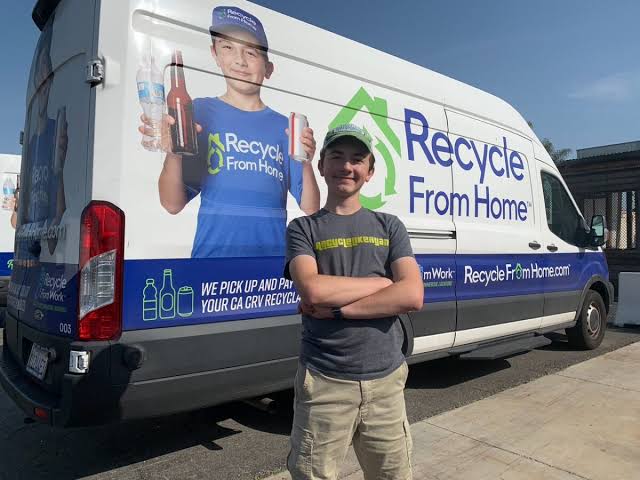
In 2026, at age 16, Ryan Hickman represents a rare bridge between childhood idealism and seasoned executive execution. While balancing the normal life of an American high school student—attending classes, spending time with friends, and enjoying outdoor activities—he continues to push the boundaries of modern recycling.
His focus has increasingly expanded beyond beverage containers to address emerging environmental challenges, including electronic waste (e-waste). In late 2026, Ryan partnered with ERI, the largest recycler of electronics in the United States, touring their state-of-the-art Fresno facility to educate his massive online following on how old smartphones, laptops, and batteries can be safely dismantled and recovered rather than dumped in landfills.
Despite the global accolades, television appearances, and millions of recycled containers, Ryan’s core philosophy remains remarkably unchanged from the three-year-old boy who handed out plastic bags on his cul-de-sac. When asked in interviews what advice he gives to people who feel overwhelmed by the scale of global pollution, his answer is always grounded in immediate, practical action:
“You don’t have to recycle a million bottles tomorrow. Just start with one bottle, one can, or one piece of trash on the ground. If everybody does a little bit, it adds up to a huge difference for the planet.”
Through sheer consistency, infectious optimism, and a willingness to get his hands dirty every single weekend, Ryan Hickman has proved that age is never a barrier to leadership—and that even the smallest actions, repeated faithfully over time, can change the world.