


Baek Kang-hyun is a South Korean child prodigy born in 2012 whose extraordinary cognitive abilities, accelerated academic milestones, and resilience in the face of intense public scrutiny have made him one of the most closely followed young minds of his generation. Widely recognized for recording a Mensa-scale IQ of 204—a score placing him in the top 0.0001% of the global population—Baek has spent nearly his entire life navigating the complex intersection of exceptional intellect, media fame, and traditional educational structures.
From solving complex algebraic equations on national television at just three years old to entering South Korea’s most prestigious science high school at age ten, and later pivoting from an ambitious University of Oxford application to launching his own commercially available video game, Baek Kang-hyun’s story is far more than a catalog of test scores. It is a nuanced portrait of what it means to grow up profoundly gifted in the modern digital age.
Early Life, Family Background, and Childhood Environment
Baek Kang-hyun was born on November 20, 2012, in Sanggye-dong, Nowon-gu, a residential district in northeastern Seoul, South Korea. He was raised in a close-knit family alongside his father, Baek Dong-gi, his mother, Lee Hye-jin, and his maternal grandparents. From the very beginning, his parents observed behavioral and cognitive patterns that set him apart from typical infants and toddlers.
Unlike the stereotypical image of South Korean “hagwon” (cram school) culture—where young children are placed into rigorous, structured tutoring schedules—Baek’s early development was largely driven by organic curiosity and an unstructured, exploratory home environment. His parents have repeatedly emphasized in interviews that they did not force early academic drilling upon him. Instead, they acted as facilitators, providing books, puzzles, musical instruments, and open-ended answers whenever he asked questions about how the world worked.
By the time he was two and three years old, Baek’s interests had already expanded far beyond typical early childhood play:
- Linguistic Acceleration: He demonstrated early mastery of reading and comprehension, absorbing encyclopedias and advanced texts on science, history, and mathematics long before entering kindergarten.
- Mathematical Intuition: Rather than merely memorizing numbers, Baek intuitively grasped abstract mathematical relationships. By age three, he was independently solving linear and quadratic algebraic equations involving unknown variables—concepts typically introduced in middle school.
- Musical Aptitude: Alongside numbers, Baek exhibited a deep sensitivity to sound and rhythm. He began playing musical instruments by ear and composing his own short melodies at an age when most children are still learning basic nursery rhymes.
This combination of logical-mathematical brilliance and creative-musical expression became a defining feature of his early identity, signaling that his intellect was not narrowly confined to rote calculation.
Television Debut and Intelligence Milestones
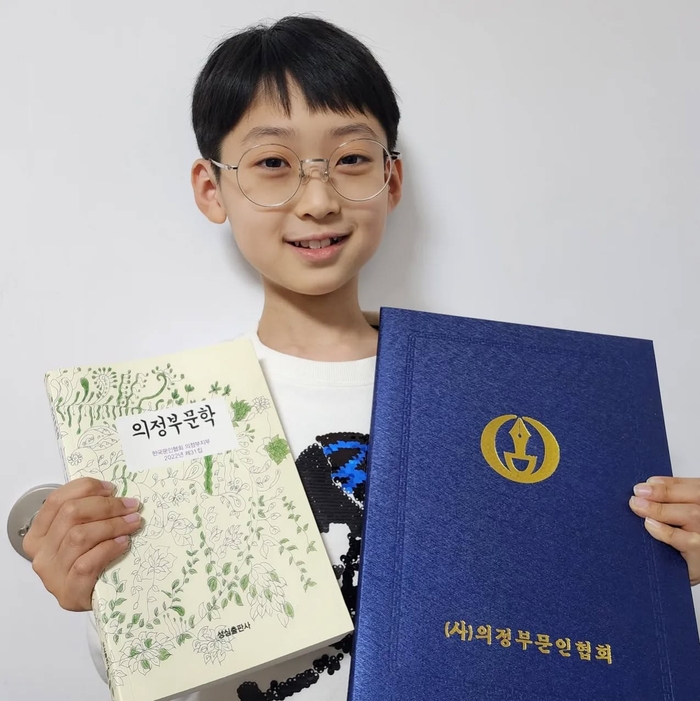
Baek Kang-hyun’s transition from a remarkably bright toddler to a national household name happened rapidly between 2015 and 2016. He first appeared on television in 2015 on SBS’s long-running variety show Star King, where his youthful charm and precocious talents immediately caught the attention of producers and viewers.
However, it was his appearance in 2016—at just 41 months old—on SBS’s Genius Discovery Unit (also known internationally as Finding Genius) that cemented his status as a national sensation. On the program, cameras followed Baek in his daily life and documented standardized cognitive evaluations. Viewers watched in astonishment as the toddler casually solved complex math problems, analyzed musical structures, and engaged in articulate conversations with adults.
To understand the scale of his abilities, psychologists administered formal intelligence assessments over several years, yielding historic results:
| Assessment / Recognition | Year / Age | Recorded Score / Milestone | Significance |
| Korean Wechsler Preschool and Primary Scale (K-WPPSI) | 2016 (Age 3) | IQ 164 | Placed him far above the standard gifted threshold of 130. |
| Korean Wechsler Intelligence Scale for Children (K-WISC) | January 2019 (Age 6) | IQ 163 (Theoretical Ceiling) | Achieved a perfect score in the Working Memory Index, reaching the maximum measurable limit of the test. |
| Mensa Korea Scale | 2019 (Age 6) | IQ 204 | Equivalent to the top 0.0001% of the population (Standard Deviation 24). |
| World Genius Directory / High-IQ Societies | 2021 (Age 8) | Youngest Recognized Member | Gained international recognition within global high-IQ communities alongside adult prodigies. |
Psychologists evaluating Baek noted not only his raw processing speed and encyclopedic memory, but also his metacognitive awareness—his ability to reflect on how he solved problems and explain his reasoning clearly. Yet, even during these triumphant early broadcasts, child development experts warned that standard school environments often struggle to accommodate children whose intellectual age outpaces their chronological age by a decade or more.
Accelerated Education and the Seoul Science High School Controversy
As Baek reached formal school age, navigating South Korea’s rigid, age-segregated education system proved to be one of his family’s greatest challenges. Standard grade-by-grade progression offered little intellectual stimulation for a child who had already mastered secondary-level mathematics and science.
Rapid Grade Acceleration
- Elementary School (2019–2020): Baek enrolled in Hoecheon Elementary School in 2019. Recognizing his advanced academic standing, school authorities approved early grade advancement, allowing him to skip grades and graduate as a fifth grader in early 2020 at just seven years old.
- Middle School (2020–2023): He transitioned directly to Saengyeon Middle School, completing the three-year curriculum ahead of schedule while continuing independent studies in advanced mathematics, physics, and computer science.
- High School Admission (March 2023): In late 2022, Baek passed the fiercely competitive entrance examinations for Seoul Science High School, widely regarded as South Korea’s premier public magnet school for gifted STEM students. When he officially matriculated in March 2023 at age 10, the story dominated national headlines, celebrating him as a historic young entrant among peers aged 15 and 16.
The August 2023 Withdrawal and Public Fallout
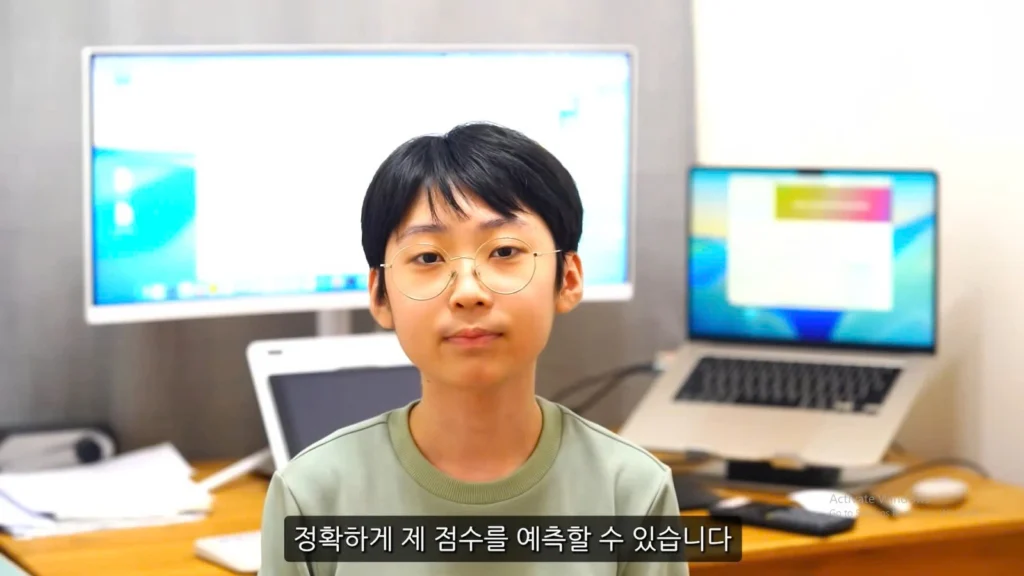
Less than six months later, in August 2023, Baek shocked the nation by announcing on his personal YouTube channel that he had withdrawn from Seoul Science High School after completing just one semester.
In his initial video statement, the 10-year-old spoke calmly and articulately, explaining that he did not want to become a “problem-solving machine” locked in an endless cycle of exam preparation. He expressed a desire to step away from the pressure-cooker environment to compose music, build creative projects, and explore his own intellectual curiosities.
However, the narrative quickly took a darker, more contentious turn. Shortly after Baek’s video was uploaded, his father, Baek Dong-gi, posted a series of public statements alleging that the true reason behind his son’s departure was severe emotional bullying, deliberate ostracization during group assignments, and hostile behavior from older classmates. Even more disturbingly, Baek’s father revealed that he had received threatening emails from the parent of a fellow student, warning him not to speak publicly about the school and mocking his son’s admission.
The incident triggered an intense nationwide debate in South Korea over several sensitive issues:
- Integration of Profoundly Gifted Minors: Whether placing a 10-year-old child into an intensely competitive high school environment with teenagers six years his senior sets up unavoidable social and developmental friction.
- Institutional Accountability: The Seoul Metropolitan Office of Education launched an official inquiry into the allegations. While the office eventually announced that its investigation found no formal evidence of actionable “school violence” under legal definitions, critics argued that subtle social exclusion and psychological isolation among teenagers rarely leave the kind of physical or documentary trail required by administrative investigations.
- Public Scrutiny of Prodigies: Online forums divided sharply, with some netizens questioning whether Baek had struggled academically with the school’s grueling specialized exams, while thousands of others rallied in defense of a young boy who had endured immense pressure under the public microscope.
Ultimately, the withdrawal marked a major turning point. Baek and his family decided to step away from South Korea’s domestic high school track altogether, choosing an independent path focused on international qualifications and self-directed learning.
International Ambitions: The University of Oxford Application
Freed from the rigid daily schedule of a domestic high school, Baek channeled his energy into preparing for higher education abroad. Over the next two years, he pursued the International A-Level curriculum through independent study, focusing heavily on Mathematics, Further Mathematics, Physics, and Computer Science—subjects aligned with his growing ambition to become an artificial intelligence researcher and software engineer.
In September 2025, at just 12 years old, Baek shared a major update with his YouTube subscribers: he had officially submitted an undergraduate application to study Computer Science at the University of Oxford in the United Kingdom.
Applying to Oxford’s Computer Science program is an arduous undertaking even for top-performing 18-year-old applicants globally, and Baek navigated every stage of the rigorous admissions pipeline:
- Mathematics Admissions Test (MAT): In October 2025, Baek sat for the notoriously difficult MAT, an exam designed to test deep mathematical reasoning and problem-solving creativity rather than memorized formulas.
- Interview Shortlist: Based on his academic profile and MAT performance, Oxford shortlisted Baek for the formal admissions interviews in December 2025—a significant milestone indicating that his raw academic capability met the university’s threshold for serious consideration.
- Final Outcome (January 2026): In January 2026, Baek transparently announced on his channel that he had not received an offer of admission.
While Oxford does not publicly disclose individual admissions decisions, education analysts and international observers pointed out that Baek faced formidable structural and legal hurdles beyond academic competition. Specifically, under UK immigration rules, standard Student Visas are generally restricted to applicants aged 16 and older (with younger students falling under the Child Student Visa category, which applies to independent schools rather than universities). For a 13-year-old international applicant, visa eligibility, safeguarding regulations, housing restrictions, and the practical realities of living independently abroad posed massive administrative barriers.
Rather than expressing bitterness or defeat, Baek handled the rejection with remarkable maturity, thanking his supporters and immediately pivoting toward building tangible real-world technology.
Career Pivot: Game Development, AI Aspirations, and Return to TV
Determined to prove his capabilities through real-world creation rather than academic credentials alone, Baek immersed himself in software architecture, game engines, and coding. Working independently under the solo developer banner TeamOmega, he spent months conceptualizing, designing, programming, and testing his first commercial video game.
On April 7, 2026, Baek officially released Blind Tank on the Google Play Store. Designed as a turn-based strategy puzzle RPG, the game reflects Baek’s own analytical mind—requiring players to rely on spatial memory, logical deduction, and psychological prediction to outmaneuver opponents without full visual information. By handling everything from game mechanics and UI design to programming and debugging himself, Baek demonstrated that he could translate abstract mathematical intelligence into a polished, functional consumer product.
Around the same time in spring 2026, Baek returned to national television on SBS’s special broadcast Finding Genius: Infinity, marking a decade since his viral childhood debut. Now an articulate teenager, he reflected candidly on his journey—acknowledging the emotional scars of his high school withdrawal, discussing his lessons from the Oxford application process, and sharing his long-term vision of contributing to artificial intelligence and software innovation.
Public Image, YouTube Presence, and Legacy
Throughout his adolescence, Baek Kang-hyun’s personal YouTube channel has served as his primary window to the world. Managed with the help of his family, the channel evolved from cute childhood clips of him solving math problems and playing piano into a platform where he shares academic milestones, discusses his creative philosophy, and communicates directly with the public without media filtering.
Today, Baek occupies a unique cultural space in South Korea and beyond. His life serves as a compelling case study for educators, parents, and psychologists studying asynchronous development—the phenomenon where a child’s intellectual capacity races years ahead of their emotional and social environment. By stepping off the traditional elite academic conveyor belt and embracing independent software development, Baek Kang-hyun is actively writing a new chapter—one defined not by standardized test ceilings, but by what he chooses to build next.
Frequently Asked Questions (FAQ)
1. When was Baek Kang-hyun born, and where is he from?
Baek Kang-hyun was born on November 20, 2012, in Sanggye-dong, Nowon-gu, Seoul, South Korea.
2. What is Baek Kang-hyun’s exact IQ score?
He has been evaluated on two major scales: he recorded an IQ of 164 (and 163 on a later children’s assessment, hitting the test’s theoretical ceiling) on the Korean Wechsler Intelligence Scale, which corresponds to an IQ of 204 on the Mensa Korea scale (standard deviation 24), placing him in the top 0.0001% of the population.
3. Who are Baek Kang-hyun’s parents, and how did they raise him?
His father is Baek Dong-gi and his mother is Lee Hye-jin. Rather than relying on aggressive cram schools during his toddler years, his parents fostered an open, self-directed learning environment at home, encouraging his natural curiosity in math, reading, and music.
- Why did Baek Kang-hyun leave Seoul Science High School in 2023?
Baek enrolled at age 10 in March 2023 and withdrew after one semester in August 2023. Baek stated he wanted to pursue creative work rather than becoming a “problem-solving machine,” while his father alleged that emotional bullying, isolation from older peers, and threatening emails from another parent forced him out. The Seoul Metropolitan Office of Education investigated and stated it found no formal legal evidence of school violence, though the incident sparked widespread debate on supporting young gifted students.
- Did Baek Kang-hyun get accepted into the University of Oxford?
No. At age 12 in late 2025, he applied to study Computer Science at Oxford, took the Mathematics Admissions Test (MAT), and reached the interview shortlist stage. However, in January 2026, he announced he was not offered admission. Beyond intense competition, practical barriers such as UK student visa age requirements (which generally require students to be at least 16) were widely noted as major hurdles.
- What is the name of the video game Baek Kang-hyun created?
He solo-developed and released Blind Tank on Google Play on April 7, 2026, under the developer name TeamOmega. It is a turn-based strategy puzzle RPG focused on memory, logic, and deduction.
- What are Baek Kang-hyun’s future goals?
Baek has expressed a strong aspiration to become an artificial intelligence (AI) expert and software innovator, continuing to build independent applications and study advanced computer science.