



Ahaduzzaman Tonmoy
Once, countless Maya cities flourished across vast regions of Central America. These cities were home to magnificent palaces, towering temples, bustling marketplaces, centers of learning, and sacred religious structures. The Maya people looked to the skies to measure time, carved the histories of their rulers into stone, and used advanced mathematics to calculate days, months, and years.
Over time, however, the course of history changed. Political power weakened, great cities were abandoned, and dense forests gradually reclaimed the stone monuments. Under Spanish colonial rule, numerous manuscripts were destroyed, and much of the region’s cultural heritage suffered irreparable loss.
Yet the story of the Maya civilization did not come to an end.
Even today, the majestic pyramids of Tikal rise above the jungles of Guatemala. Sunlight continues to play across the steps of the Pyramid of Kukulkan at Chichén Itzá. The stone carvings of Palenque still preserve the histories of kings who ruled centuries ago. Most importantly, the descendants of the Maya continue to speak their ancestral languages, uphold their traditions, and adapt to the challenges of the modern world.
Perhaps the greatest mystery of the Maya civilization is not the disappearance of its ancient cities. Rather, it is the remarkable endurance of a people who have managed to preserve their culture, language, and identity across the centuries. The Maya did not vanish. What disappeared were many of their cities, kingdoms, and priceless manuscripts. The legacy of their civilization, however, lives on in stone monuments, beneath the forest canopy, among the stars they once studied, and in the lives of their descendants.
Today, the Maya civilization remains one of history’s most enduring and inspiring testaments to human achievement, resilience, and cultural continuity.
The history of the Maya civilization remains vividly alive in the lands of modern-day Mexico. Through virtual conversations with several Mexican residents, valuable insights emerged about the enduring traces of this ancient civilization. According to them, countless archaeological remains of the Maya civilization are still scattered across various regions of Mexico. Ancient pyramids, temples, stone structures, and inscribed monuments continue to bear witness to a history that spans thousands of years.
They explained that the ancient pyramids standing throughout Mexico are not merely architectural marvels; they also serve as important testimonies to the Maya people’s knowledge, religious beliefs, astronomical understanding, and social organization. The hieroglyphic inscriptions carved into their walls and stone monuments provide historians with valuable information about Maya governance, royal dynasties, religious ceremonies, and everyday life.
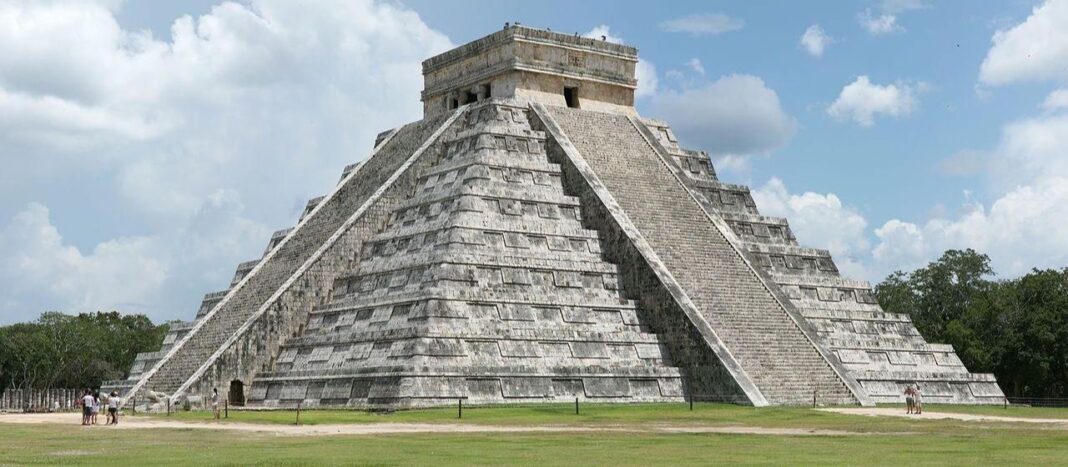
Among the most significant archaeological sites of the Maya civilization in Mexico are Chichén Itzá, Uxmal, and Palenque, all located on or near the Yucatán Peninsula. Some of these structures functioned as places of worship, while others served as centers for administration and ceremonial activities. The Pyramid of Kukulkan at Chichén Itzá, in particular, is widely regarded as an extraordinary example of the Maya’s achievements in architecture and astronomy. According to local residents, these historical landmarks are not only monuments of the past but also integral elements of Mexico’s cultural identity and heritage. Every year, visitors, researchers, and history enthusiasts from around the world travel to these archaeological sites, fascinated by the Maya people’s construction techniques, calendar system, mathematics, astronomy, and enigmatic writing system.
However, the Maya civilization is far more than its stone pyramids and ancient ruins. The descendants of the Maya people still live throughout Mexico and across parts of Central America. Their languages, cultural traditions, cuisine, folklore, and daily customs continue to preserve many elements of their ancestral heritage. As a result, the Maya civilization is not merely a forgotten chapter of history, but an unbroken link between the achievements of the past and the realities of the present.
Even after thousands of years, the surviving remnants of the Maya civilization across Mexico serve as powerful reminders that while a civilization may decline politically or undergo profound transformation, its knowledge, culture, and creative legacy do not easily disappear.
The Maya are not a lost people, nor are they simply the subject of ancient history books. Carrying with them a rich heritage of knowledge, science, culture, and identity accumulated over millennia, Maya communities continue to thrive and adapt to the modern world. Their language, way of life, beliefs, and cultural practices remain infused with the legacy of their ancestors. Much has changed with the passage of time, yet the roots and traditions of the Maya have endured. Rather than fading away, they continue to honor their past while writing new chapters in their remarkable and ongoing history.
A civilization that understood and used the concept of zero more than a thousand years ago, developed sophisticated mathematical systems and calendars, meticulously observed the movements of celestial bodies, and constructed towering pyramids that seemed to touch the sky. Yet, at one point in history, many of its great cities were abandoned. Countless urban centers, temples, and palaces disappeared into the depths of dense tropical forests.
This was the Maya civilization, one of the most remarkable societies in human history. Stretching across the lush rainforests, limestone highlands, rivers, and peninsulas of Central America, the Maya world stands as one of humanity’s most extraordinary achievements.
What makes the Maya civilization truly remarkable is that its accomplishments extended far beyond monumental architecture. The Maya excelled in mathematics, astronomy, architecture, agriculture, medicine, literature, art, and timekeeping. Many aspects of their knowledge and culture continue to astonish researchers and historians to this day.
But how did this civilization come into existence? Who were the Maya people? How did they acquire such advanced knowledge and skills? Why were their great cities eventually abandoned? And did the Maya really predict the end of the world, as many popular myths suggest?
To answer these questions, we must journey back thousands of years to the heart of ancient Central America, where one of history’s most fascinating civilizations first emerged and flourished.
The Origins of the Maya Civilization: Where and When Did It Begin?
The Maya civilization emerged in the region known as Mesoamerica, which encompasses parts of present-day southern Mexico, Guatemala, Belize, Honduras, and El Salvador. Their settlements developed across a diverse landscape of dense tropical forests, limestone plains, wetlands, rivers, and mountainous regions.
Unlike many ancient civilizations, the Maya civilization was not founded by a single ruler or established through a sudden political revolution. Instead, it evolved gradually over thousands of years as agricultural communities developed more sophisticated technologies, religious beliefs, social structures, and systems of governance.
According to historians, the earliest agricultural settlements in the Maya region began to appear around 1800 BCE. Over time, these small communities grew into larger villages and eventually developed into urban centers featuring temples, religious complexes, marketplaces, and administrative institutions.
Historians generally divide Maya history into three major periods:
Preclassic Period (c. 2000 BCE-250 CE)
During this era, agriculture, permanent settlements, social hierarchies, and the foundations of urban life began to take shape. Large ceremonial structures and the first pyramids gradually emerged, reflecting the increasing complexity of Maya society.
Classic Period (250-900 CE)
This was the Golden Age of the Maya civilization. During this period, city-states flourished, royal dynasties rose to prominence, and remarkable advancements were made in architecture, mathematics, astronomy, writing, and art. Cities such as Tikal, Palenque, Copán, and Calakmul became powerful political and cultural centers.
Postclassic Period (900-1521 CE)
Although many of the great southern cities experienced political decline, important urban centers continued to thrive in the northern Yucatán Peninsula. Cities such as Chichén Itzá and Mayapán emerged as influential centers of political, economic, and religious life. Maya culture and political traditions continued to survive and evolve across different regions.
This historical timeline makes one fact clear: the Maya civilization did not appear suddenly, nor did it disappear overnight. It was the product of a long process of cultural, social, and political evolution spanning several millennia.
Not an Empire, but a Network of City-States
A common misconception about the Maya civilization is that it formed a single vast empire. In reality, the Maya political system consisted of numerous independent city-states, each governed by its own ruler and administrative structure.
Every major city had its own king, government, military forces, religious institutions, and sphere of influence over surrounding territories. Maya rulers were known as Ajaw (or Ahau), meaning “lord” or “king.”
These kings were not merely political leaders. They also held significant religious authority and were often regarded as intermediaries between the gods and the people.
Relations among Maya city-states varied over time. Some formed alliances through trade, diplomacy, and marriage, while others engaged in warfare over political dominance, territorial expansion, or control of important trade routes. Certain city-states became so powerful that they exerted influence over neighboring kingdoms and smaller settlements.
Tikal
Located in present-day Guatemala’s Petén region, Tikal was one of the most powerful city-states of the Maya world. It was renowned for its monumental pyramids, royal palaces, temples, and vast ceremonial plazas.
Palenque
Situated in the modern Mexican state of Chiapas, Palenque is famous for its remarkable architecture, intricate sculptures, and royal tombs. The tomb of the celebrated ruler King Pakal the Great was discovered there, providing invaluable insights into Maya history.
Copán
Located in present-day Honduras, Copán was an important center of Maya art, scholarship, and writing. Its carved stone monuments and hieroglyphic inscriptions remain among the most valuable historical records of the Maya civilization.
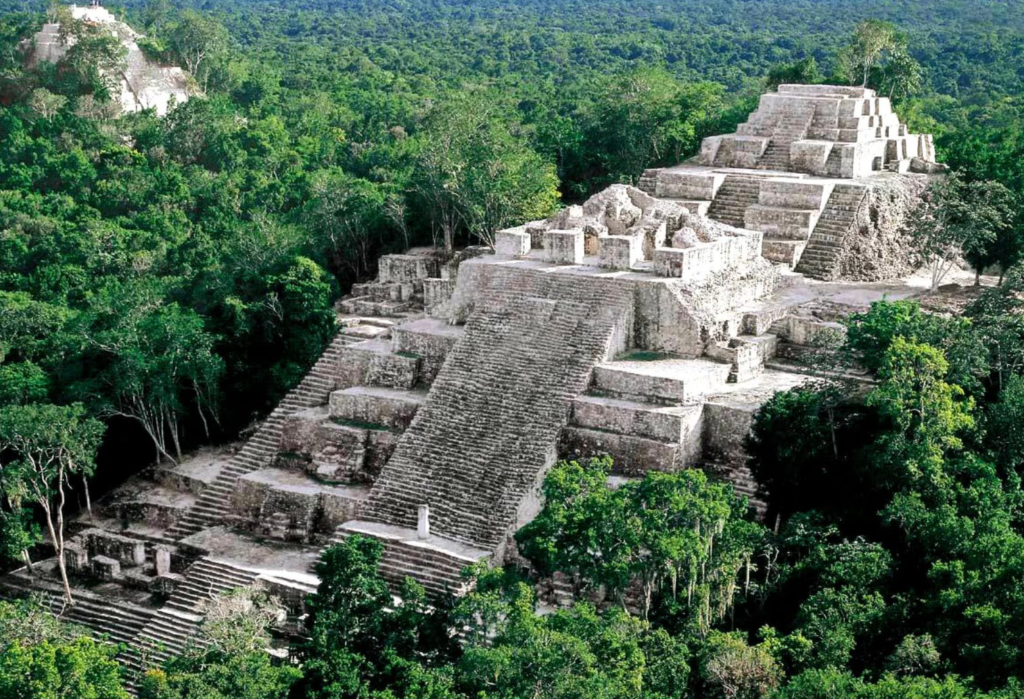
Calakmul
Located in the Mexican state of Campeche, Calakmul was one of Tikal’s greatest rivals. The political competition between these powerful city-states helped shape the complex and dramatic history of the Maya world.
Kings, Politics, and the Struggle for Power
Monarchy was a central institution in Maya society. The king was the highest authority within the state and stood at the apex of the political system. Beneath him were the nobility, military commanders, priests, scribes, and administrative officials who helped govern the kingdom.
Succession was typically hereditary, with rulers often chosen from within the royal family. However, disputes over succession, struggles for power, and military conflicts were not uncommon.
To reinforce their authority and commemorate important events, Maya rulers commissioned inscriptions on stone monuments recording their victories, royal lineage, political achievements, and religious ceremonies. These monuments, known as stelae, are among the most important sources of information available to modern archaeologists and historians.
A king’s power depended on more than military strength alone. Religious legitimacy, successful agricultural production, economic prosperity through trade, and the support of the noble class all played crucial roles in maintaining political authority.
The political history of the Maya civilization was shaped by a dynamic interplay of diplomacy, warfare, religion, and royal ambition, making it one of the most fascinating and complex civilizations of the ancient world.
Everyday Life in Maya Society
The history of the Maya civilization is not merely the story of kings, pyramids, and wars. The true foundation of this civilization was its ordinary people, including farmers, artisans, builders, merchants, and laborers. Social status largely determined an individual’s responsibilities, privileges, and opportunities within Maya society.
At the top of the social hierarchy were the royal family and the nobility. Beneath them were priests, military officials, scribes, and skilled craftsmen. Farmers and laborers constituted the largest segment of the population and formed the backbone of the Maya economy.
Farmers were responsible for producing food crops, while artisans crafted pottery, jewelry, clothing, and various tools for everyday use. Builders and laborers constructed temples, palaces, roads, and other public structures that came to define Maya cities.
Maya women also played a vital role in both economic and social life. In addition to managing household responsibilities, they participated in farming, food preparation, textile production, and various commercial activities. Historical and archaeological evidence suggests that women of the royal family occasionally held significant political and religious influence as well.
Maize, or corn, was the staple food of the Maya diet. They also cultivated and consumed beans, squash, chili peppers, fruits, fish, and other food sources. Maize was far more than a dietary staple; it occupied a central place in Maya religious beliefs and cultural identity.
One of the most important texts of Maya mythology, the Popol Vuh, contains a creation story in which humans are formed from maize. This belief highlights the profound spiritual and cultural significance of maize in Maya civilization.
Mathematics and the Remarkable Use of Zero
One of the most extraordinary achievements of the Maya civilization was its sophisticated understanding of mathematics. In the modern world, mathematics is unimaginable without the concept of zero. However, in the ancient world, the development of zero represented a remarkable intellectual breakthrough. The Maya independently conceived the idea of zero and used a distinct symbol to represent it in their numerical system.
Their numbering system was primarily vigesimal, or base-20, meaning that 20, rather than 10, served as the fundamental unit of calculation.
The Maya used three basic symbols to represent numbers. A dot represented one, a bar represented five, and a shell-shaped symbol represented zero. By combining dots and bars in different arrangements, they were able to express large and complex numbers with remarkable efficiency.
This mathematical system was not limited to everyday calculations. It played a crucial role in astronomy, calendar-making, timekeeping, and the recording of historical events. The Maya used mathematical calculations to track celestial movements and maintain highly accurate calendars.
Their mathematical knowledge was so advanced that they developed complex astronomical tables capable of predicting solar and lunar eclipses. The sophistication of their calculations continues to impress modern scholars and stands as a testament to the scientific achievements of one of the world’s most remarkable ancient civilizations.
Astronomy: The Sky Was Their Laboratory
Without the aid of modern telescopes, spacecraft, or computers, the Maya acquired an extraordinary understanding of the heavens through careful observation of the sky. They regularly monitored the movements and positions of the Sun, the Moon, Venus, and other celestial bodies. Venus, in particular, held special significance in Maya astronomy. They meticulously recorded its appearances, disappearances, and changing positions in the sky over long periods of time.
For the Maya, astronomy was more than a matter of religious belief. Their observations had practical applications in agriculture, seasonal forecasting, and timekeeping. The structure known as El Caracol at Chichén Itzá is often regarded as an astronomical observatory. Scholars have long studied its circular design and the orientation of its windows, which may have been aligned with important celestial events. Through their observations, the Maya developed sophisticated calculations related to the cycles of the Sun and Moon, eclipses, and seasonal changes.
The Maya Calendar: A Different Way of Measuring Time
One of the most fascinating achievements of the Maya civilization was its calendar system. The Maya viewed time not only as a linear progression but also as a series of repeating cycles. Their method of timekeeping consisted of several interconnected calendar systems.
Three calendars were particularly important:
1. Tzolk’in
The Tzolk’in was a 260-day sacred calendar. It was created through the combination of 13 numbers and 20 day names. This calendar was used for religious ceremonies, naming rituals, and determining auspicious dates for important events.
2. Haab’
The Haab’ was a 365-day solar calendar. It consisted of 18 months of 20 days each, totaling 360 days, followed by an additional five-day period known as Wayeb’.
3. Long Count
The Long Count calendar was designed to measure extended periods of time. It enabled the Maya to record historical and mythological events within a precise chronological framework.
The combination of the Tzolk’in and Haab’ calendars formed what is known as the Calendar Round, a cycle that repeated approximately every 52 years. The Long Count, meanwhile, tracked much longer spans of time. One major Long Count cycle, consisting of 13 baktuns, lasted about 5,125 years.
On December 21, 2012, a particular Long Count cycle came to an end. This date sparked widespread speculation and apocalyptic predictions about the end of the world. However, according to Maya calendrical traditions, it marked the conclusion of one cycle and the beginning of another, not the destruction of the Earth. There is no credible evidence that the Maya predicted the end of the world in 2012.
Maya Writing: Thousands of Years of History Carved in Stone
Another remarkable achievement of the Maya civilization was the development of their own writing system. They created a complex script that combined pictures, symbols, and phonetic signs to represent words and sentences. This system is known as Maya hieroglyphic writing.
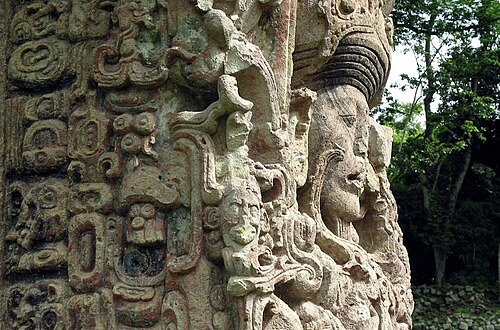
The Maya recorded the names of kings, accounts of wars, dates of births and deaths, religious ceremonies, royal genealogies, and major political events in their inscriptions. They wrote on stone monuments, temple walls, ceramic vessels, and paper made from tree bark.
For much of the nineteenth and twentieth centuries, Maya inscriptions remained largely undeciphered. Many scholars once believed that the symbols represented only religious or astronomical concepts. Over time, however, the combined efforts of linguists, archaeologists, and historians led to major breakthroughs in deciphering the script.
Particularly during the second half of the twentieth century, significant progress was made in understanding Maya writing. These discoveries opened the door to previously unknown chapters of Maya history and revealed details about rulers, dynasties, wars, and political alliances.
Unfortunately, many Maya manuscripts were destroyed during the Spanish colonial period. Today, only a handful of ancient Maya codices have survived. Among the most important are the Dresden Codex, Madrid Codex, and Paris Codex.
Architecture: Wonders Built in Stone
The architecture of the Maya civilization continues to captivate tourists, historians, and researchers from around the world. Their pyramids, temples, palaces, observatories, and ball courts demonstrate an exceptional mastery of engineering and construction.
The Maya primarily used limestone to build their monumental structures. By cutting, shaping, and carefully fitting stone blocks together, they created massive buildings that have endured for centuries. One of the most distinctive features of Maya architecture was the corbel arch, a technique in which successive layers of stone projected inward to form a roof or vaulted passage.
Their architectural achievements were not only functional but also artistic, reflecting the sophistication of Maya culture and technology. The great cities of Tikal, Chichén Itzá, Palenque, Uxmal, and Copán remain enduring monuments to the ingenuity and creativity of the Maya people.
Even after more than a thousand years, these stone masterpieces stand as powerful reminders of one of the most advanced and influential civilizations of the ancient world.
The Pyramid of Kukulkan: A Marvel of Light and Shadow
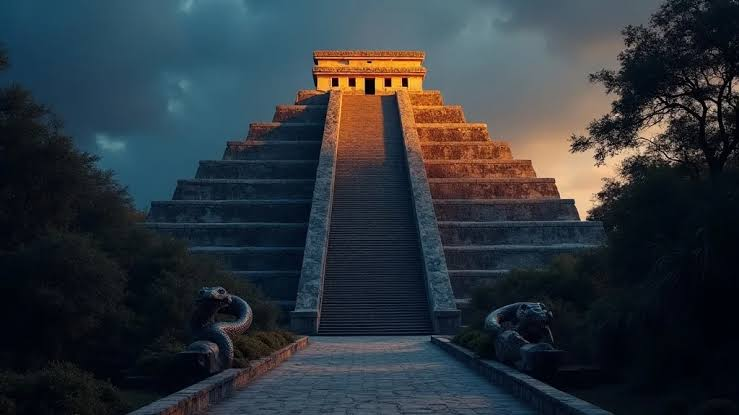
The Pyramid of Kukulkan, located at Chichén Itzá on Mexico’s Yucatán Peninsula, is one of the most famous examples of Maya architecture. This stepped pyramid features staircases on all four sides and is closely associated with Kukulkan, the Feathered Serpent deity of Maya mythology.
During the spring and autumn equinoxes, a remarkable interplay of sunlight and architectural design creates the illusion of a serpent-shaped shadow descending along one side of the pyramid’s staircase. This extraordinary phenomenon has contributed to the structure’s enduring mystery and fascination, making it one of the most celebrated architectural achievements of the ancient world.
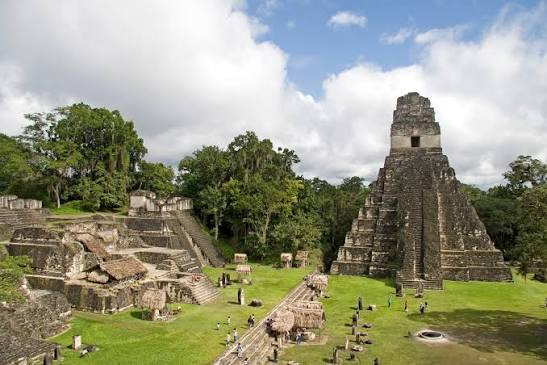
The Temples of Tikal
The towering temples of Tikal, located in present-day Guatemala, rise majestically above the dense tropical rainforest. These impressive structures served not only as places of religious worship but also as powerful symbols of royal authority, political influence, and urban prosperity.
Their commanding presence reflected the importance of Tikal as one of the most influential city-states of the Maya world.
The Palace of Palenque
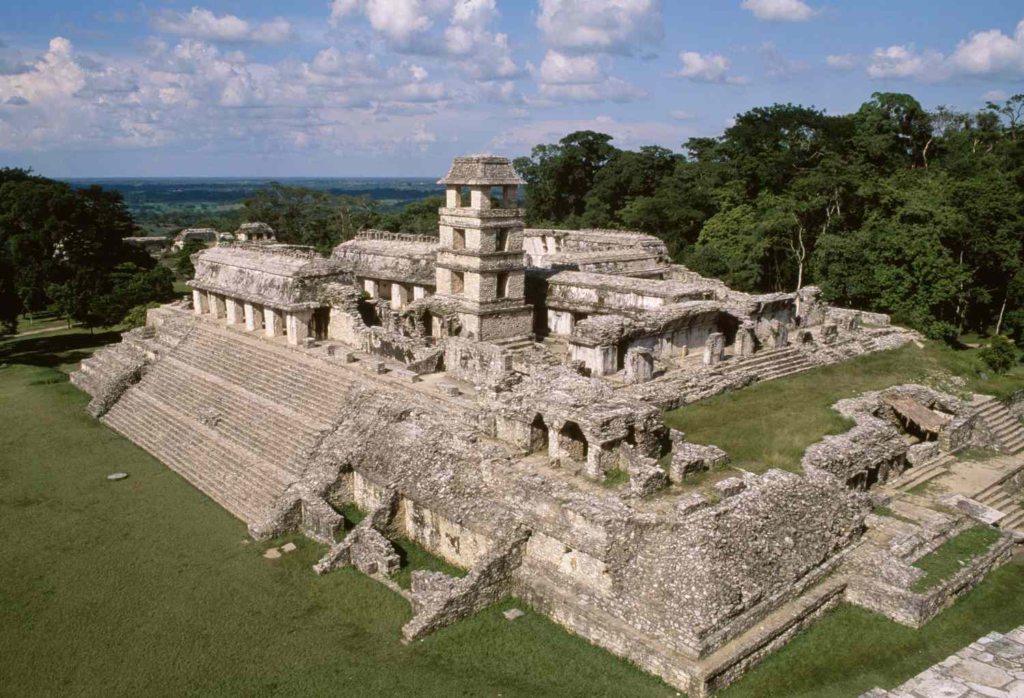
The Palace of Palenque is a remarkable architectural complex consisting of multiple buildings, courtyards, and a distinctive observation tower. The sculptures and inscriptions carved into its walls provide valuable insights into the history of the Maya royal family and the city’s political life.
One of the defining characteristics of Maya architecture was its close relationship with nature and cosmology. Many structures were carefully designed and oriented according to the movements of the Sun, seasonal cycles, and religious beliefs, reflecting the Maya understanding of the connection between the earthly and celestial worlds.
Religion and Deities: A Spiritual Connection with Nature
Religion played a central role in Maya society. The Maya believed that nature, the heavens, the Earth, rain, the Sun, the Moon, death, and rebirth were all interconnected elements of a sacred universe. Their religious system was polytheistic, and they worshipped numerous gods and goddesses.
Although the names and forms of worship varied across different regions, several deities held particular importance throughout Maya culture.
1. Itzamna
Itzamna was one of the most important Maya deities, associated with creation, wisdom, knowledge, and the heavens.
2. Kukulkan
Kukulkan, the Feathered Serpent God, occupied a prominent place in Maya mythology and religious architecture. He was closely associated with power, renewal, and divine authority.
3. Chaac
Chaac was the god of rain, storms, and thunder. In a civilization heavily dependent on agriculture, he was one of the most widely revered deities.
4. Kinich Ahau
Kinich Ahau was worshipped as the Sun God and was closely linked to light, energy, and royal power.
5. Ix Chel
Ix Chel was the goddess of the Moon, fertility, childbirth, medicine, and healing. She was particularly important to women and families throughout the Maya world.
The Maya envisioned the universe as a multi-layered realm consisting of the heavens, the earthly world, and the underworld. They believed these realms were spiritually interconnected and influenced human existence.
Priests played a vital role in conducting religious ceremonies and interpreting sacred knowledge. Religious rituals accompanied important events such as agricultural cycles, royal coronations, warfare, and other significant social occasions.
In some Maya kingdoms, practices such as bloodletting rituals and, in certain cases, human sacrifice were performed as offerings to the gods. However, these practices did not occur uniformly across all periods, regions, or Maya communities.
The Ballgame: A Blend of Religion, Politics, and Entertainment
One of the most fascinating cultural traditions of the Maya civilization was the Mesoamerican Ballgame, a sport played by various societies throughout Mesoamerica.
Specially designed elongated courts were constructed for the game, often featuring high walls on both sides. Some courts also included large stone rings mounted on the walls. The ball used in the game was made from natural rubber, and players controlled it using different parts of their bodies, depending on the rules being followed.
The Great Ball Court at Chichén Itzá is among the most famous surviving examples of this sporting tradition and remains one of the most significant archaeological attractions in the Maya world.
The ballgame served purposes far beyond recreation. It was deeply connected to religious beliefs, social status, and political ceremonies. In some instances, it functioned as a formal competition between rival groups or communities.
Maya mythology also associated the game with profound themes such as the gods, creation, death, rebirth, and the cosmic struggle between opposing forces. As a result, the ballgame occupied a unique position at the intersection of sport, religion, politics, and culture, making it one of the most distinctive traditions of Maya civilization.
Trade and Economy: Connections Beyond the Jungle
Agriculture formed the foundation of the Maya civilization’s economic strength. However, the Maya economy was not dependent on farming alone. An extensive trade network was another key factor behind their prosperity. The Maya engaged in the exchange of goods both within their own territories and with distant peoples across Mesoamerica.
Among their most important trade commodities were cacao (cocoa beans), jade, obsidian, marine shells and ornaments, salt, cotton and textiles, pottery, and feather-crafted luxury items.
Jade, in particular, was highly prized among the Maya elite. It was used to create royal jewelry, ceremonial objects, and religious artifacts. Cacao was also regarded as an item of great value. In some cases, cacao beans even served as a medium of exchange and functioned as an early form of currency.
Maya trade routes extended across both land and water. They maintained commercial connections with regions along the Caribbean coast, the Gulf of Mexico, and various parts of Central America. These networks facilitated the movement of goods over considerable distances and helped strengthen economic ties between different communities.
Trade was not limited to the exchange of material products alone. It also served as a channel for the spread of technology, religious beliefs, artistic traditions, and cultural influences. Through these interactions, ideas and innovations traveled alongside merchants, contributing to the cultural richness and development of the Maya world.
The extensive trade system played a crucial role in the growth and prosperity of Maya city-states, linking distant regions and helping to create one of the most dynamic and interconnected civilizations of the ancient Americas.
Agriculture: Mastering a Challenging Environment
Agriculture was the single most important factor behind the rise and success of the Maya civilization. Their staple crop was maize (corn), which formed the foundation of their diet and economy. In addition to maize, the Maya cultivated beans, squash, chili peppers, and a variety of fruits.
One of the most remarkable aspects of Maya agriculture was its adaptability to different geographical environments. Across the Maya world, landscapes varied from dense tropical forests and limestone plains to wetlands and mountainous regions. To make the most of these diverse conditions, the Maya developed a range of innovative farming techniques.
They cleared sections of forest for cultivation and, in some mountainous areas, constructed terraces along hillsides to create fertile farmland. In wetlands and low-lying regions, they developed specialized agricultural systems to maximize food production. One of the best-known Maya farming methods was the milpa system, in which maize, beans, and squash were grown together. These three crops complemented one another, creating a sustainable and productive agricultural environment. Beans enriched the soil with nutrients, squash helped retain moisture and suppress weeds, and maize provided structural support for the climbing bean plants.
Another significant achievement of the Maya was their sophisticated system of water management. In regions where natural water sources were scarce, they built reservoirs, storage facilities, and water distribution systems to ensure a reliable supply of water. Archaeological evidence of such infrastructure has been discovered at Tikal and several other Maya cities.
These achievements demonstrate that the Maya excelled not only in urban planning and monumental architecture but also in developing practical solutions to support large populations. Their ability to manage food production and water resources played a crucial role in sustaining one of the most advanced civilizations of the ancient Americas.
The Decline of the Maya Civilization: Why Were the Great Cities Abandoned?
One of the most fascinating and enduring mysteries of Maya history is the decline of the Classic Period city-states.
For centuries, Maya cities flourished as thriving centers of politics, religion, commerce, and culture. Thousands of people lived within these urban centers, surrounded by royal palaces, temples, marketplaces, and administrative buildings. Yet many of these once-prosperous cities gradually became depopulated and were eventually reclaimed by the surrounding forests.
Between the late eighth and ninth centuries CE, many city-states in the southern Maya lowlands experienced severe political and social turmoil. By around 900 CE, construction of major monuments had largely ceased, and royal institutions in many important cities had collapsed.
The question remains: Why did this happen?
Most researchers agree that no single factor can fully explain the decline of the Maya city-states. Instead, the collapse appears to have resulted from a combination of interconnected crises.
A. Prolonged Drought and Climate Change
One of the most widely accepted explanations for the decline is a series of prolonged droughts.
Maya agriculture depended heavily on seasonal rainfall. Extended periods of reduced precipitation would have severely affected the cultivation of maize and other essential crops, leading to food shortages and economic stress.
Studies of ancient climate patterns have revealed evidence of significant drought episodes across the Maya region during the period associated with the political decline of many city-states. These climatic disruptions likely placed enormous pressure on agricultural production and food security, undermining the foundations of Maya society.
B. Population Growth and Food Shortages
During the Classic Period, population levels in many Maya cities increased dramatically. As urban populations expanded, demand for food rose accordingly.
To meet this growing demand, more land was cleared for agriculture, increasing pressure on the environment. In some areas, the intensive use of natural resources may have contributed to ecological degradation. When declining agricultural productivity coincided with reduced rainfall, the resulting food shortages could have become increasingly difficult to manage.
C. Warfare Between City-States
Relations among Maya city-states were not always peaceful. Conflicts frequently arose over political dominance, territorial expansion, and control of important trade routes.
Warfare could disrupt agriculture, trade networks, and urban life. As conflicts intensified, public confidence in rulers may have weakened, creating additional instability. Archaeological evidence, including inscriptions and monuments, indicates that warfare, the capture of prisoners, and political rivalries played a significant role in Maya history.
D. Weakening of Political Institutions
The authority of Maya kings was closely tied to religious legitimacy and public confidence. Rulers were expected to maintain order, ensure prosperity, and preserve their connection with the divine.
When prolonged droughts, food shortages, warfare, and other crises affected society, rulers may have struggled to meet these expectations. As a result, both their political authority and religious prestige could have declined. This weakening of leadership may have contributed to the collapse of governmental structures in many city-states.
E. Environmental Stress
The growth of large cities required enormous amounts of resources. Expanding agricultural fields, constructing monumental buildings, and supporting large populations increased pressure on forests and natural ecosystems.
Many scholars believe that long-term environmental strain, combined with climatic challenges, reduced the sustainability of urban life in several regions. Over time, these pressures may have made it increasingly difficult for some Maya cities to survive.
Did the Maya Civilization Completely Disappear?
The answer is no, and this is perhaps the most important point to understand.
Although many Classic Period city-states in the southern lowlands declined or were abandoned, Maya civilization itself did not vanish. In the northern Yucatán Peninsula, important centers such as Chichén Itzá and Mayapán continued to flourish long after the decline of the southern cities.
Therefore, the so-called “collapse” of the Maya civilization should not be understood as the extinction of an entire people or culture. Rather, it refers to the breakdown of a particular urban and political system during a specific historical period. Maya communities, traditions, languages, and cultural practices endured, evolving over time and surviving well beyond the fall of the great Classic Period cities.
The Arrival of the Spanish: The Beginning of Another Catastrophe
Several centuries after the decline of the great city-states of the Classic Maya period, Europeans arrived in the Maya region. During the sixteenth century, Spanish explorers began reaching Central America, bringing with them new political powers, religious influences, and colonial rule.
In 1517, a Spanish expedition reached the Yucatán Peninsula. In the years that followed, conflicts erupted between the Spanish and the Maya peoples. Spanish military campaigns, local political divisions, devastating epidemics, and colonial exploitation profoundly affected Maya society. Many Maya communities resisted Spanish domination, and their resistance continued for generations.
Although the Spanish established control over much of the Yucatán during the 1540s, Maya resistance did not completely disappear. The Itza Maya maintained an independent political center at Tayasal, which remained unconquered for many years. It was not until 1697 that the Spanish finally captured Tayasal, bringing one of the last independent Maya kingdoms under colonial rule.
The colonial period inflicted extensive damage on Maya religious traditions, manuscripts, and cultural heritage. Ancient temples and sacred objects were destroyed, indigenous religious practices were suppressed, and countless historical records were lost. One of the most significant and controversial episodes occurred in 1562, when Bishop Diego de Landa oversaw the destruction of Maya religious artifacts and manuscripts in Yucatán.
As a result, a vast amount of Maya knowledge, literature, historical records, and cultural memory was lost forever. The destruction of these priceless documents deprived future generations of invaluable insights into one of the world’s most remarkable civilizations. Although a small number of Maya codices survived, much of their written history disappeared during the colonial era.
Yet despite conquest, disease, and centuries of colonial rule, the Maya people endured. Their languages, traditions, beliefs, and cultural identity survived and continue to thrive across Mexico and Central America today. The resilience of the Maya stands as a powerful testament to a civilization that, despite immense challenges, preserved its heritage and carried it forward into the modern world.
Lost Manuscripts of the Maya Civilization
One of the greatest challenges in understanding Maya history is the destruction of their written records. The Maya produced a special type of paper made from tree bark, which they folded into book-like manuscripts known as codices. These manuscripts contained valuable information on astronomy, calendars, religious ceremonies, deities, and systems of timekeeping.
However, during the Spanish colonial era, many of these manuscripts were destroyed because they were considered incompatible with Christian religious beliefs. As a result, only a handful of important pre-Columbian Maya codices have survived to the present day.
Among the most significant surviving codices are:
1. The Dresden Codex
The Dresden Codex is particularly important for its detailed astronomical observations, calendar calculations, and eclipse tables. It is considered one of the most valuable sources of information about Maya scientific knowledge.
2. The Madrid Codex
The Madrid Codex contains information related to religious rituals, everyday activities, agricultural practices, and various numerical calculations.
3. The Paris Codex
The Paris Codex preserves religious and historical symbolism, as well as important calendrical and ceremonial information.
These surviving manuscripts provide scholars with invaluable windows into the lost world of the Maya, offering rare insights into their knowledge, beliefs, and intellectual achievements.
The Popol Vuh: The Remarkable Book of Maya Mythology
One of the most important works of Maya literature and mythology is the Popol Vuh. This sacred text of the K’iche’ Maya contains accounts of creation, gods and goddesses, heroic legends, and the history of ancestral lineages.
The Popol Vuh presents the Maya understanding of the creation of the world and humanity. Among its most famous narratives is the story of the Hero Twins, Hunahpu and Xbalanque, who confront the powers of the underworld and undergo a series of trials that demonstrate their intelligence, courage, and ingenuity.
Another significant section of the text describes the creation of humankind. According to the narrative, several unsuccessful attempts were made to create human beings from different materials before humanity was ultimately fashioned from maize. This story reflects the profound importance of maize within Maya culture and belief.
The Popol Vuh remains an essential source for understanding Maya religious thought, their relationship with nature, and their views on human origins and the cosmos.
How Modern Archaeology Rediscovered the Lost Maya Cities
For centuries, countless Maya structures lay hidden beneath dense Central American forests, buried under thick vegetation and layers of earth. During the nineteenth century, European and American explorers began systematically investigating the ruins of ancient Maya cities. Over time, the combined efforts of archaeologists, historians, linguists, and researchers revealed a wealth of previously unknown information about Maya civilization.
In recent decades, modern technology has dramatically advanced this research.
One of the most transformative innovations has been LiDAR (Light Detection and Ranging) technology. Using laser-based remote sensing, LiDAR can map the ground surface beneath dense forest canopies, allowing researchers to detect hidden roads, settlements, monuments, defensive structures, and agricultural systems that are invisible from the ground.
LiDAR surveys conducted in Guatemala’s Petén region have revealed numerous previously unknown archaeological sites and ancient settlements. These discoveries suggest that Maya urban life and transportation networks were far more extensive and sophisticated than scholars once believed.
The findings indicate that the story of the Maya civilization is still far from complete. Vast areas of Central America’s tropical forests remain unexplored, and many historians believe that countless archaeological treasures and historical discoveries are still waiting to be uncovered.
In this sense, the Maya civilization is not merely a subject of the past. It remains an ongoing field of discovery, where each new archaeological breakthrough continues to reshape our understanding of one of humanity’s most remarkable civilizations.
Has the Maya Civilization Truly Disappeared?
One of the most common misconceptions about the Maya civilization is that the Maya people vanished completely. The reality is quite different. Today, millions of Maya people continue to live across Mexico, Guatemala, Belize, Honduras, and other parts of Central America. Maya communities can also be found in the United States and elsewhere around the world.
According to the Smithsonian National Museum of the American Indian, more than seven million Maya people currently live in their traditional homelands and in various countries around the world. Their languages, clothing, festivals, religious traditions, agricultural practices, and cultural heritage remain vibrant and alive.
More than thirty languages belonging to the Maya language family are still spoken today. These include K’iche’, Yucatec Maya, Kaqchikel, Tzotzil, and many others. Many Maya families continue to maintain traditional maize-based agricultural practices, while their folk traditions, weaving techniques, religious ceremonies, and ancestral beliefs remain woven into contemporary life.
In other words, although the great ancient city-states declined, the Maya people themselves did not disappear. They are not a lost civilization confined to the pages of history. Rather, they are a living people who continue to preserve and carry forward the legacy of their ancestors while actively participating in the modern world.
Lessons from the Maya Civilization for the Modern World
The story of the Maya civilization is not merely a tale of ancient pyramids, mathematics, or astronomy. It also offers valuable lessons for contemporary society.
First, human creativity and innovation are not limited by time or technology. Without modern scientific instruments or advanced technology, the Maya achieved remarkable breakthroughs in mathematics, astronomy, engineering, and architecture.
Second, the relationship between humans and the environment is of vital importance. When the balance between agriculture, water resources, and natural ecosystems is disrupted, even the most powerful societies can face serious challenges.
Third, political fragmentation, prolonged conflict, and social inequality can weaken the long-term stability of a civilization. The experiences of the Maya demonstrate how internal divisions and environmental pressures can combine to create periods of significant upheaval.
Fourth, the history of a people cannot be understood solely through their rulers, palaces, or political institutions. The language, culture, traditions, daily lives, and collective memories of ordinary people are equally important parts of the historical record.
The history of the Maya reminds us that the true strength of a civilization lies not only in its monumental structures, but also in its knowledge, cultural heritage, relationship with nature, and the collective efforts of its people.
Even today, the legacy of the Maya endures. It survives not only in the magnificent ruins scattered across Central America, but also in the living communities that continue to speak Maya languages, practice ancient traditions, and preserve a cultural heritage that has withstood the passage of centuries. Through their resilience and enduring identity, the Maya offer one of history’s most powerful examples of cultural continuity and human perseverance.