


The paper-based IELTS test is no longer available in Bangladesh. According to the official website of IDP, one of the co-owners of the IELTS test, the paper test format has been discontinued from 31 January this year. From now on, anyone wishing to take the exam must sit for the computer-based IELTS.
Computer-delivered IELTS had already been introduced in Bangladesh several years ago alongside the paper-based version. While many candidates find the computer format convenient, others may feel somewhat uncertain about it. However, there is no reason to worry. By keeping a few important points in mind, you can perform at your best in the computer-based test as well.
If you’re planning to apply for higher studies abroad but your IELTS score or required documents are not ready yet, don’t panic. Here’s what you can do:
1️⃣ If IELTS Is Not Yet Taken
- Check university requirements carefully. Some universities allow you to apply first and submit the IELTS score later.
- Look for application deadlines—you may still have time to take the test.
- Some universities offer conditional admission, meaning you can submit IELTS later.
- If you studied in English-medium institutions, some universities may waive IELTS (depending on country and policy).
2️⃣ If Academic Documents (Transcripts/Certificates) Are Not Ready
- Request a provisional certificate or official transcript from your university.
- Many universities accept scanned copies during application and require originals only after admission.
- If your final results are pending, you can often apply with latest available transcripts and submit final documents later.
3️⃣ Write to the Admissions Office
If you are close to the deadline, email the admissions office:
- Explain your situation briefly.
- Ask whether you may submit IELTS/documents after the deadline.
- Request clarification about conditional submission.
4️⃣ Plan Smartly
- Book the earliest available IELTS date.
- Prepare documents (passport, CV, SOP, recommendation letters) in parallel.
- Keep soft copies ready in PDF format.
Important
Application systems are usually flexible—but you must communicate early and follow instructions carefully.
Where Is the Difference?
IELTS trainer Md. Ashikuzzaman explained the differences between the computer-based and paper-based tests. He said, “In the computer-based test, you do not need to fill in circles with a pencil or write answers by hand. In the Listening, Reading, and Writing sections, you type your answers on the computer. However, the Speaking section remains the same in both formats. You must attend an interview with an examiner. The examiner may be physically present or may conduct the interview online.”
Md. Ashikuzzaman also highlighted several advantages of the computer-delivered test. “Previously, securing a test date could sometimes be difficult. With the computer-based format, test dates are available almost every day of the week. Candidates can choose their preferred time slot—morning, দুপুর (midday), or afternoon. While paper-based test results take 13 days to be published, computer-based test results are typically available within just two to five days.”
When taking the computer-based IELTS, it is important to keep certain strategic advantages and challenges in mind. One clear benefit is that you no longer need to worry about how neat your handwriting is. Instead, you can focus more on spelling accuracy and sentence structure. However, you must develop good typing speed. If you cannot type quickly, it may be difficult to complete the test within the allotted time.
You should also be comfortable reading long passages on a computer screen for extended periods. In the Reading section, the screen is divided into two parts—questions on one side and the passage on the other—making it easier to locate relevant information. During the Listening test, each candidate is provided with noise-canceling headphones.
Ellora Sharme, Head of IELTS Exam at IDP Bangladesh, says, “Computer-delivered IELTS is a modern version of the test. It offers several conveniences for candidates. Test-takers can book their preferred time slot almost every day. At IDP, results are available within 24 to 48 hours. In the Writing module, word count is displayed automatically. Features such as copy, highlight, drag, and drop help save time. The computer-based format has been introduced to make IELTS more candidate-friendly.”
How to Prepare
To perform well in the computer-based IELTS, you may need to adjust your preparation strategy. Young professional Bidhan Saha scored a 7 in the computer-based IELTS at the end of last year. He advises, “It is no longer enough to rely only on hardcopy books from Nilkhet. Regularly practice using the free materials available on the official British Council or IDP websites. Try to practice typing on a computer for at least 30 minutes daily. Pay special attention to correct punctuation and capitalization. Develop the habit of reading English news or blogs online. This will improve your eye movement and your ability to quickly locate information on a screen.”
The Importance of Mock Tests
One of the biggest advantages of the computer-based test is that you can become familiar with the user interface in advance. The format you see in mock tests is the same as in the actual exam. Repeated practice builds confidence and efficiency.
Rubina Haque, a researcher at North South University, took the computer-based IELTS on the 6th of this month. She says, “A major part of preparation should involve mock tests. The British Council website offers a free computer-delivered IELTS familiarization test, which is a demo software similar to the real exam. By taking it, you can learn how to submit answers, highlight text, and manage your time using the on-screen clock. Sitting for the actual exam without taking at least three to five full-length mock tests is not advisable.”
She also shares some useful tips:
- In the Writing section, you do not need to count words manually—the word count is displayed automatically at the bottom of the screen, saving time.
- You can highlight important parts of the passage using the mouse.
- You can take virtual notes.
- In the Writing task, if you feel a sentence is incorrect or want to add a new idea, you can easily cut and paste—something that was not possible in the handwritten format.
For those planning to take the exam soon, first watch the computer-based test videos on the British Council website to become familiar with the interface. Before enrolling in any coaching center, try a free mock test to assess your current level. Maintain a regular study routine. Allocate at least one hour daily each for Listening and Reading practice. Use headphones while practicing Listening.
It is not enough to understand the exam format—you must also strengthen your vocabulary and grammar, the foundation of the English language. One important point to note is that during the Speaking test, the examiner may be physically present or may join online from the test center. Practice speaking comfortably in both situations.
Faatiha Aayat: The 13-Year-Old Prodigy Rewriting IELTS Standards
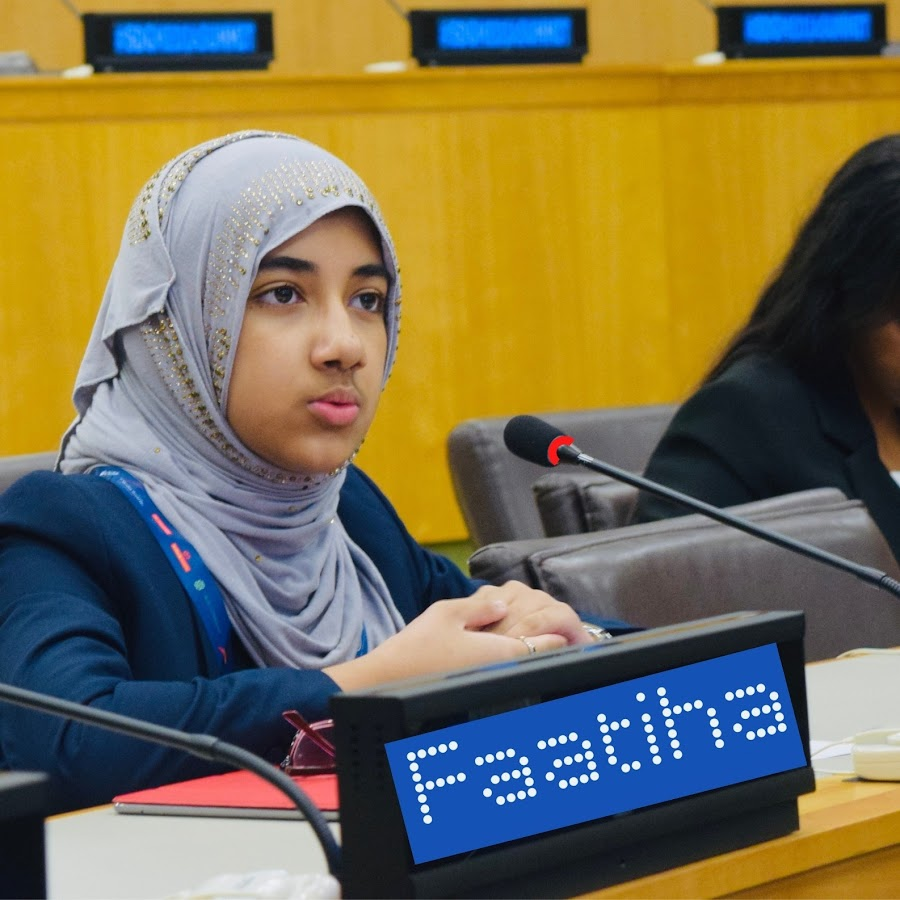
In a feat that has inspired thousands of aspiring students, child rights activist and climate campaigner Faatiha Aayat achieved a staggering 8.5 overall band score in the IELTS academic exam at just 13 years old. This rare achievement places her in the top tier of English speakers globally, a level usually reserved for seasoned academics and native-level professionals.
The Breakdown of a Masterclass
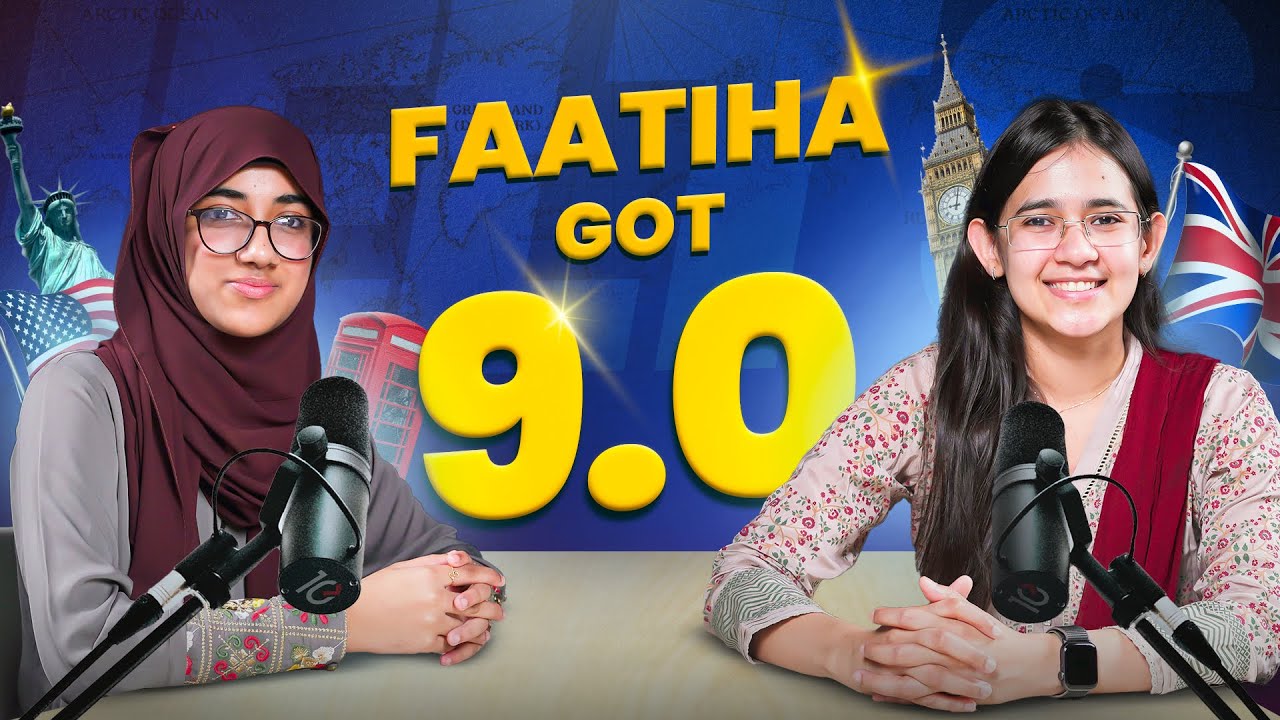
While a score of 8.5 is impressive for any adult, Faatiha’s performance was particularly noted for her Speaking skills. In real-time mock sessions, she demonstrated a level of fluency and vocabulary that earned her a perfect 9.0 in practice segments. Her ability to articulate complex global issues—a skill honed through her speeches at the United Nations and TEDx—translated seamlessly into the rigorous requirements of the IELTS.
Turning Achievement into Opportunity: “IELTS with Faatiha”
Faatiha didn’t stop at her personal success. Recognizing the hurdles many students face, she launched an educational initiative called “IELTS with Faatiha”. Through this platform, she mentors learners using her signature “Hit the Ground Running” strategy.
Her program offers specialized tracks such as:
- ExamMatters: Focused on foundational techniques.
- ExamWise: Strategic deep dives into test modules.
- ExamNext: Real-time feedback and advanced mock tests.
More Than Just a Score
Faatiha’s IELTS success is another feather in the cap of a girl who is already a published author and a recipient of the U.S. President’s Education Award. Currently studying at The Aga Khan Academy, she continues to balance her roles as a global youth advocate and a mentor, proving that age is merely a number when it comes to mastery and impact.