
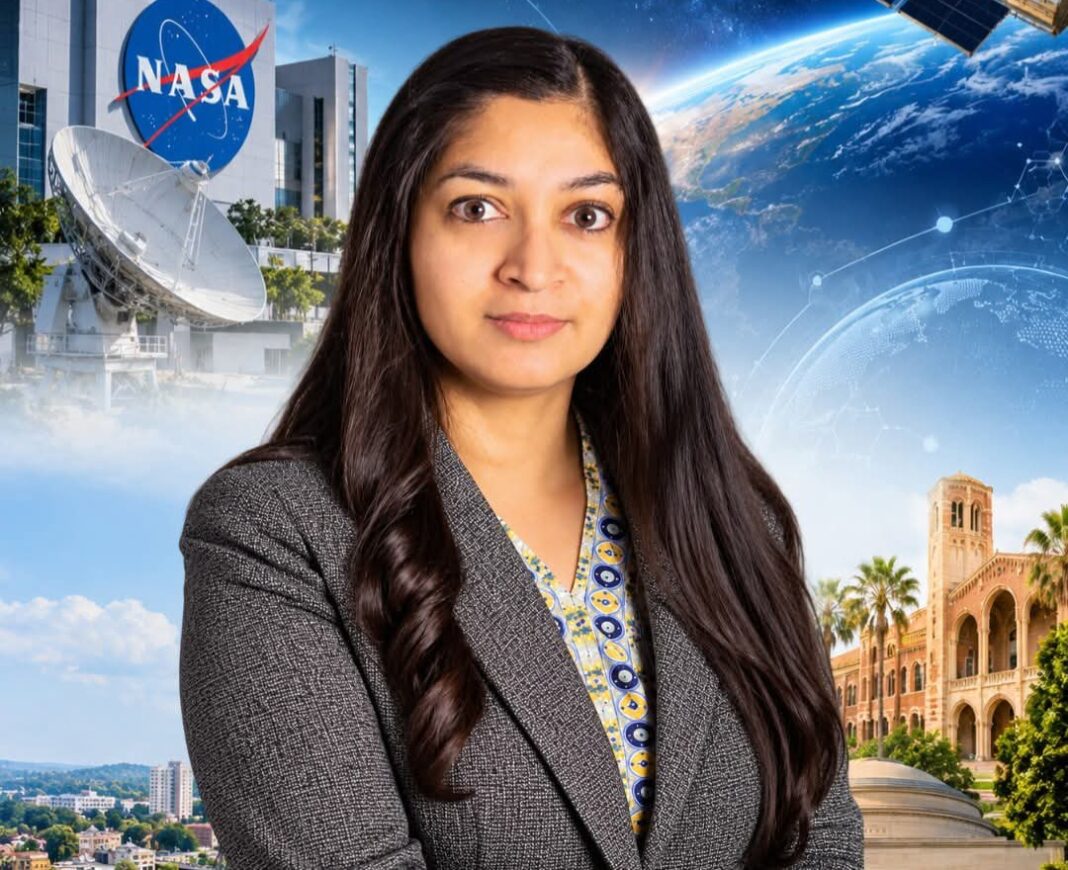

From the peaceful riverbanks of Ishwardi, Bangladesh, to the cutting-edge cleanrooms of the National Aeronautics and Space Administration (NASA), the journey of Dr. Mahmooda Sultana reads like a stellar constellation—bright, precise, and infinitely inspiring. Today, as the Associate Branch Head of the Instrument Systems Engineering Branch at NASA’s Goddard Space Flight Center, this Bangladeshi-born scientist is not just participating in space exploration; she is building the very tools that will define its future.
The Spark of Ambition: A Childhood Shaped by Engineering
Mahmooda’s cosmic journey began in Ishwardi, a town in the Rajshahi division of Bangladesh. Her fascination with how things work started at a very young age, deeply influenced by her father, who was a supervisory civil engineer for the government. She often accompanied him to construction sites, watching dams and barrages take shape. This early exposure planted the seeds of engineering in her mind, even though she grew up believing it wasn’t a conventional career path for women at the time.
The turning point came when she heard stories about outer space from a relative who worked as a physicist at NASA’s Ames Research Center. Those stories shifted her gaze from earthly structures to the mysteries of the stars, defining her lifelong goal: to work for NASA.
At the age of 14, Mahmooda moved to Southern California with her family. Transitioning to a new country as a teenager brought immediate cultural and academic challenges. However, her profound curiosity and love for solving complex math puzzles transcended all language barriers.
Rising Through the Ranks of Ivy Leagues
She took her first major academic stride at the University of Southern California (USC), where she pursued a Bachelor of Science in Chemical Engineering with a minor in Mathematics. Graduating with summa cum laude—the highest academic distinction—her brilliance caught the attention of elite global academic circles.
This paved her way into the prestigious Massachusetts Institute of Technology (MIT), where she earned her Ph.D. in Chemical Engineering with a minor in Quantum Mechanics in 2010. Even before stepping into NASA, her immense research potential was recognized through highly competitive awards, including the Bell Laboratories Graduate Research Fellowship, the National Science Foundation (NSF) Graduate Research Fellowship, and MIT’s own WmC and Margaret H. Rousseau Fellowship.
Redefining Space Tech: Shrinking Instruments to the Size of a Cell Phone
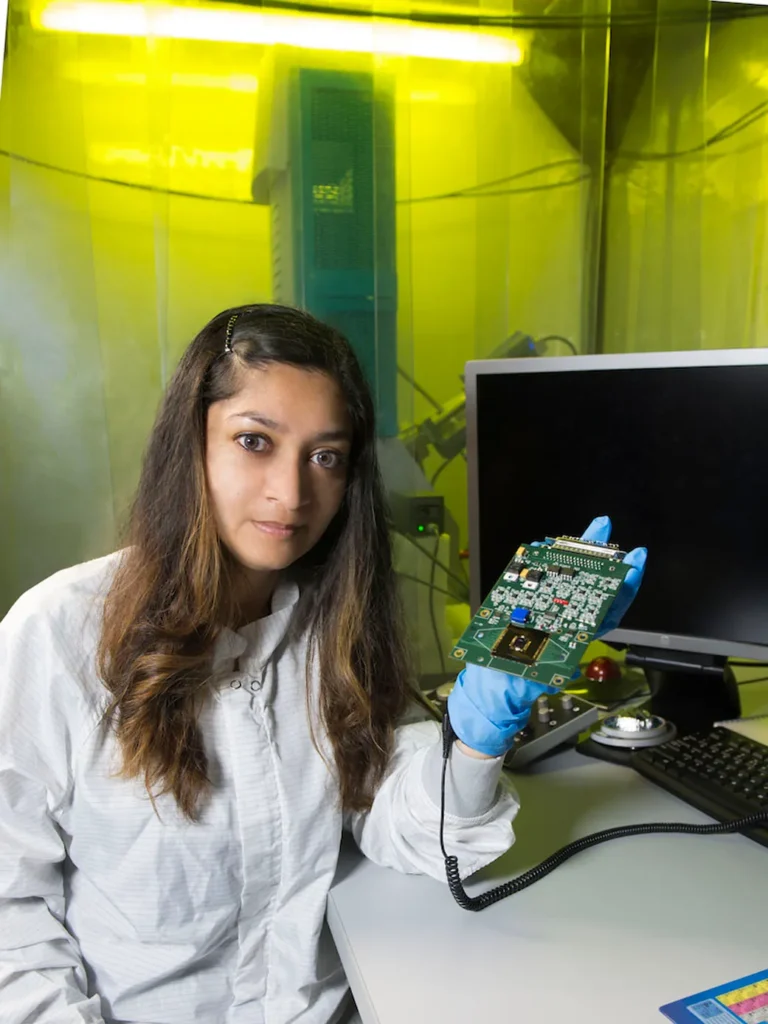
Immediately after earning her doctorate, Dr. Sultana was recruited as a research engineer at NASA’s Goddard Space Flight Center in Greenbelt, Maryland. Her research focused on the atomic scale—specifically nanotechnology and advanced materials like graphene.
Traditional space instruments are heavy, bulky, and consume massive amounts of power. Launching these massive instruments into space requires enormous rockets and millions of dollars. Dr. Sultana’s pioneering work directly addresses this challenge.
“Traditional spectrometers are large, which results in massive instruments that we can’t really use in small satellites,” Dr. Sultana explained in a NASA interview. “The innovative aspect of our work is that we can bring down the size to about the size of a cell phone. These are so low-resource we can fly them on small satellites and get really good science out of it.”
Her revolutionary approach involves using Micro-Electro-Mechanical Systems (MEMS), 3D printing, and quantum dots. In 2019, a team led by her secured a massive $2 million technology development award from NASA to advance a nanomaterial-based detector platform. By printing multi-functional sensors directly onto aerospace parts, her team enables future rovers and satellites to “smell” and analyze alien atmospheres with unprecedented sensitivity, using only a fraction of the weight. These miniature “instruments-on-a-chip” are designed to look for life-sustaining gases on icy moons, asteroids, and comets across our solar system.
A Decorated Trailblazer
Dr. Sultana’s relentless drive has earned her the highest praise from NASA leadership. In 2017, she was awarded the “IRAD Innovator of the Year” by NASA Goddard’s Office of the Chief Technologist. Peter Hughes, the Chief Technologist at Goddard, praised her by saying,
“Mahmooda has distinguished herself as a tenacious, creative thinker, impressing virtually everyone with her technical acumen and drive.”
Her growing list of accolades also includes the Space Technology Mission Directorate (STMD) Innovation Award, the Craig Tooley Award, the Robert H. Goddard Award for Technical Excellence, the NASA Early Career Achievement Medal, and the IRAD New Achiever Medal. Furthermore, her critical work on the development of the microshutter array for the James Webb Space Telescope (JWST)—the most powerful telescope ever built—earned her a prestigious NASA Group Achievement Award.
An Inspiration for the Next Generation
Today, Dr. Sultana wears multiple hats. Alongside leading breakthrough technology concepts—such as SCOPE, a futuristic project that distributes quantum-dot sensors across solar sails to create giant, lightweight space cameras—she also oversees supervisory engineering tasks for active flight missions.
Beyond the laboratory, she actively participates in school outreach programs, breaking stereotypes and encouraging young girls to pursue careers in STEM (Science, Technology, Engineering, and Mathematics).
Dr. Mahmooda Sultana represents a monumental shift in representation. She is living proof that neither geographical origins nor gender can limit one’s reach when fueled by passion and resilience. As NASA plans to return humans to the Moon with the Artemis missions and prepares for the journey to Mars, the nanotechnology designed by a girl from Ishwardi will likely be the one sending the deepest secrets of the universe back home to Earth.
Expanding Horizons: Leadership in Planetary Exploration and Core Projects
Dr. Sultana’s current role spans pivotal responsibilities within NASA GSFC’s Planetary Environments Lab (Org Code 699), where her technical expertise is driving next-generation planetary science. Far from resting on her initial breakthroughs, she serves as the Principal Investigator (PI) for several high-stakes instrument development programs.
Her current portfolio of core projects includes:
- Multifunctional Nanosensor Platform: A cutting-edge project advancing the miniature chemical sensors that will heavily decrease the resource footprint of future spacecraft.
- Quantum Dot Spectrometer: An ongoing effort to pioneer next-gen spectrometers utilizing quantum physics for profound chemical mapping.
- SCOPE (Neptune-Triton Mission Concept): Leading the vision for a conceptual mission targeting the outer solar system’s mysterious ice giant, Neptune, and its ocean moon, Triton.
Before spearheading these planetary endeavors, Dr. Sultana put her knowledge of quantum mechanics into practice by designing crucial semiconductor microelectronic hardware. Her foundational work includes developing X-ray detectors and the incredibly sophisticated Microshutter Array—a key technology that enables the James Webb Space Telescope to capture light from thousands of distant galaxies simultaneously.
Her sustained technical excellence has continued to accumulate prestigious agency honors long after her early career. Notable recent additions to her long list of accolades include the Space Technology Mission Directorate (STMD) Innovation Award (2021), the Craig Tooley Award (2021), and the Robert H. Goddard Team Award.