
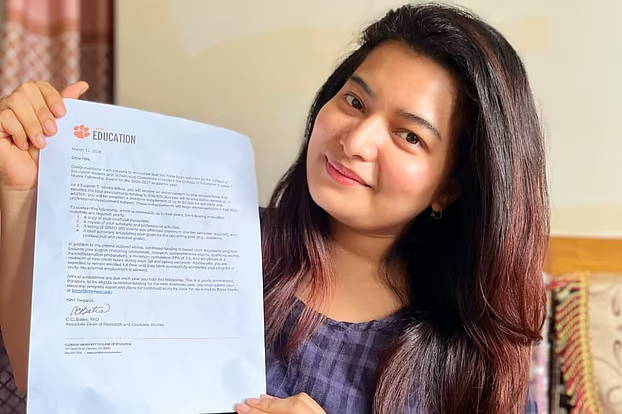

Discover the inspiring journey of Bangladeshi scholar Neela Wan Rakhine, who worked at a clinic to finance her education before earning fully funded PhD offers from three U.S. universities. Learn how she achieved her dream and get a step-by-step guide to applying for PhD scholarships abroad.
From a Small Clinic in Cox’s Bazar to an American University
Success stories often begin in places that seem ordinary.Some begin in large cities with prestigious schools and abundant resources.Others begin in small villages, modest homes, or workplaces where dreams quietly grow despite financial hardship.The story of Neela Wan Rakhine belongs to the second category.Years before receiving admission offers from prestigious universities in the United States, Neela spent her days working at a pathology clinic in Cox’s Bazar.She earned around 4,000 Bangladeshi Taka per month.Part of that income helped support her family.The rest she carefully saved so she could afford university admission tests.
She had no expensive coaching classes.No privileged academic environment.No shortcuts.Only determination.Today, that same young woman has earned fully funded PhD opportunities from three American universities, choosing Clemson University for her doctoral studies in Teaching and Learning.Her journey proves that determination, consistency, and purpose can often overcome limited resources.This is not simply the story of one student’s success.It is a roadmap for thousands of young people who dream of studying abroad.
Who Is Neela Wan Rakhine?
Neela Wan Rakhine is a Bangladeshi educator and researcher from Cox’s Bazar, belonging to the indigenous Rakhine community.She completed her undergraduate studies in Pali at the University of Chittagong before earning a master’s degree in Education from the Asian University for Women.Her academic interests gradually shifted toward educational research, teacher training, curriculum development, and improving learning opportunities for disadvantaged communities.Instead of viewing education merely as a pathway to personal success, Neela came to see it as a tool for transforming society.That vision eventually led her to pursue doctoral research in the United States.
Growing Up in Cox’s Bazar
Neela’s childhood was shaped by financial hardship.Her father, Mongfruthen Rakhine, worked as a tailor and was the sole breadwinner of a family of four.Like many lower-middle-income families, every educational expense required careful planning.Private coaching classes were simply beyond the family’s means.But financial hardship never reduced Neela’s curiosity.
She studied diligently, completing:
- SSC from Cox’s Bazar Government Girls’ High School
- HSC from Cox’s Bazar Government Women’s College
She understood from an early age that education represented the most powerful opportunity to change her future.Unfortunately, not everyone shared that belief.Some relatives questioned why a girl needed so much education.They suggested she would eventually become a housewife anyway.Rather than discouraging her, those comments strengthened her determination.Instead of arguing, she decided to answer through achievement.
Working at a Clinic While Preparing for University
For many students, preparing for university entrance exams is already stressful.Now imagine doing it while working a job to support your family.That was Neela’s reality.Without the financial ability to attend admission coaching, she accepted a job at a local pathology clinic during her university admission period.The salary was modest—about BDT 4,000 per month.Yet every taka mattered.Part of her earnings went toward helping her family meet daily expenses.The remaining money was carefully saved to pay for university application fees, travel expenses, and admission tests.
While many of her peers spent their entire days studying, Neela divided her time between work and books.Her schedule demanded discipline.She worked during the day, studied whenever she could, and continued preparing for one of the most important examinations of her life.Looking back, those months became one of the strongest foundations of her character.Financial hardship did not delay her dream—it strengthened her determination.
Choosing the University of Chittagong
When the university admission results were published, Neela achieved something she had worked tirelessly for.She earned admission to the Department of Pali at the University of Chittagong.For many people unfamiliar with the subject, choosing Pali may seem unusual.However, the decision reflected Neela’s long-standing interest in Buddhist philosophy, language, and history.Growing up in the Rakhine community, she had developed an appreciation for Buddhist teachings from an early age.Studying Pali allowed her to explore that intellectual and cultural heritage in greater depth.University life also exposed her to a wider world.She met students from different regions, cultures, and backgrounds.These experiences broadened her perspective and encouraged her to think beyond academic success alone.
Learning Beyond the Classroom
University education was never limited to textbooks for Neela.She believed learning also happened through experience.During her undergraduate years, she became actively involved in several student organizations, including:Bangladesh Rakhine Students’ Association
- Angan
- Rendezvous Cultural Group
Through these organizations, she developed valuable leadership skills.She learned how to organize events, communicate with diverse groups of people, manage projects, and work effectively in teams.These experiences later became surprisingly important during scholarship applications.International universities often look beyond grades.They seek students who demonstrate leadership, community engagement, and the ability to contribute beyond the classroom.Without realizing it at the time, Neela was already building a profile that would one day strengthen her PhD applications.
Academic Performance
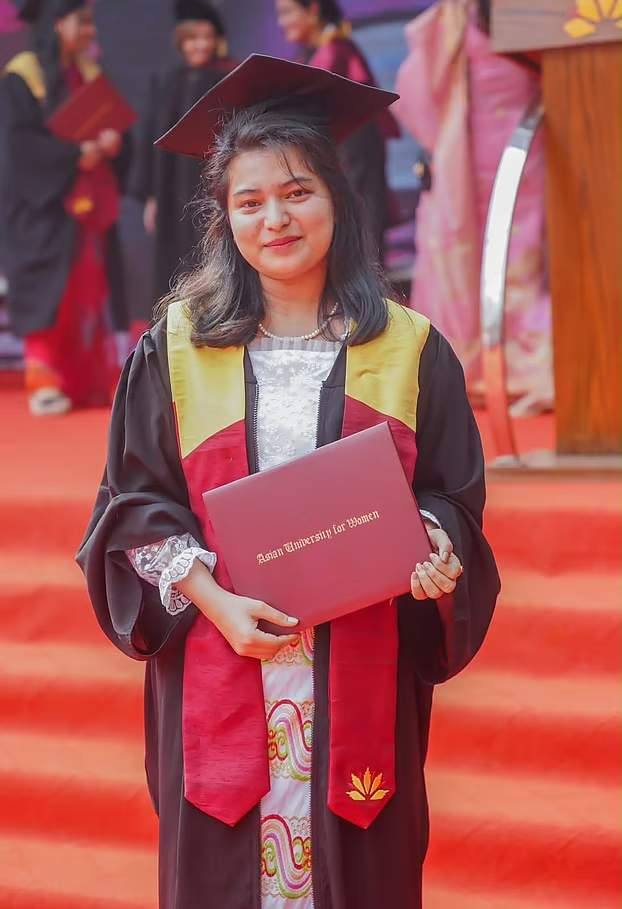
Neela completed her bachelor’s degree with a CGPA of 3.45.While this was a strong academic result, what made her profile stand out was that her achievements extended far beyond examination scores.She had practical work experience.She had leadership experience.She had volunteer experience.She had teaching experience.This balanced profile would later become one of her greatest strengths.It is an important reminder for students that prestigious universities rarely evaluate applicants based solely on grades.Instead, they often look for evidence of curiosity, perseverance, leadership, and real-world impact.
Discovering a Passion for Education
After completing her undergraduate studies, Neela realized that her greatest passion was no longer confined to language or religious studies.She had discovered something even more meaningful.She wanted to become an educator.This realization inspired her to pursue a Master’s degree in Education at the Asian University for Women (AUW) in Chattogram.At AUW, she studied modern educational theories, curriculum development, teaching methods, classroom assessment, and educational leadership.She graduated with a CGPA of 3.52, further strengthening her academic foundation.More importantly, she found the research field that would shape her future career.
She became deeply interested in questions such as:
- Why do some students learn faster than others?
- How can teachers improve classroom learning?
- What makes an education system effective?
- How can indigenous children receive quality education without losing their language and identity?
These questions eventually became the driving force behind her decision to pursue a PhD.
Teaching Became More Than a Profession
Even while studying, Neela was already teaching.She worked as a private tutor.She volunteered to teach children.She created educational videos.She even provided online lessons for students from Myanmar.Every classroom experience strengthened her conviction that education changes lives.Rather than simply delivering lessons, she enjoyed helping students discover confidence in themselves.Those experiences convinced her that improving education requires more than good teachers—it also requires strong research, effective policies, and innovative teaching methods.That realization would soon guide her toward doctoral research in the United States.
Marriage, Family Support, and the Strength to Dream Bigger
For many women in South Asia, marriage is often seen as the end of their academic ambitions.
Neela Wan Rakhine wanted to prove that it did not have to be.
While pursuing her master’s degree, she got married to Ni Ja Rakhine. Like many newly married women, she suddenly found herself balancing multiple responsibilities—family, household duties, academic commitments, and career aspirations.
Managing all these responsibilities was not always easy.
There were assignments to complete, classes to attend, research to conduct, and family obligations that required equal attention.
Yet instead of asking her to abandon her dreams, her husband became one of her strongest supporters.
Neela has repeatedly acknowledged that every successful journey needs people who believe in you even during moments of uncertainty.
She often credits both her father and her husband for encouraging her to continue her education when giving up would have been much easier.
Their support did not remove the challenges.
It gave her the confidence to overcome them.
Her story also sends an important message to families: when parents and spouses invest in a woman’s education, they invest in the future of an entire community.
Becoming an Educator Beyond the Classroom
Neela never viewed teaching as simply standing in front of a classroom and delivering lectures.She believed that education should empower learners, improve communities, and create opportunities for those who have historically been left behind.This philosophy guided every step of her professional journey.While completing her master’s degree, she began working as a Teacher Trainer on a UNICEF-supported education project.
Rather than teaching children directly, she trained teachers—helping them develop better classroom practices, interactive teaching methods, and learner-centered approaches.The experience gave her a broader understanding of how educational systems function.She realized that improving one teacher could positively influence hundreds or even thousands of students over time.That realization strengthened her interest in educational research.
Working with the Asian University for Women
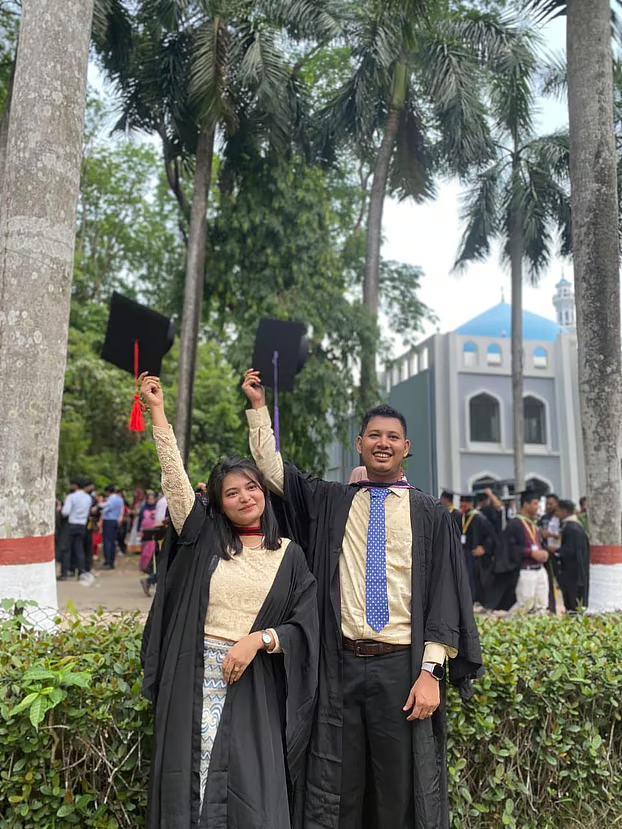
Following her work with UNICEF, Neela also contributed to educational initiatives at the Asian University for Women (AUW).These programs allowed her to collaborate with educators from different countries and cultures.Working in such an international academic environment expanded her understanding of global education challenges.She learned that while education systems differ across countries, many challenges remain surprisingly similar.Teachers everywhere strive to engage students more effectively.Schools everywhere seek better learning outcomes.Communities everywhere hope education will create better futures for the next generation.These experiences gradually shaped the research questions she hoped to explore during her PhD.
Joining 10 Minute School
Neela’s passion for education eventually led her to one of Bangladesh’s best-known online learning platforms—10 Minute School.There she worked as an English Trainer and Content Creator.The role introduced her to digital education on a much larger scale.Instead of teaching only a small classroom, her educational content had the potential to reach learners across the country.
She gained valuable experience in:
- Designing online learning materials
- Creating engaging educational content
- Communicating complex ideas clearly
- Teaching through digital platforms
- Understanding modern educational technology
These skills became increasingly important because the future of education is no longer limited to traditional classrooms.Online learning, blended education, and digital teaching tools are now transforming how students learn around the world.
Founding Chalung Academy
Among all of Neela’s achievements, one initiative perhaps reflects her heart more than any degree or scholarship.She founded Chalung Academy.The academy was created to support children from her own indigenous Rakhine community through mother tongue-based education.For many indigenous children, education presents a unique challenge.They often begin school in a language different from the one spoken at home.
This language barrier can affect confidence, learning outcomes, and long-term academic success.Neela wanted to help change that.Through Chalung Academy, she worked to ensure that children could begin learning in an environment that respected both their language and their cultural identity.The project reflected her belief that education should never require children to abandon who they are.Instead, quality education should celebrate diversity while creating equal opportunities.
Leadership That Extended Beyond Academics
When American universities evaluate PhD applicants, they rarely focus only on grades.
They also ask an important question:
“Will this applicant make a meaningful contribution to society?”
By the time Neela applied for doctoral programs, her answer was already visible through her work.
She had:
- Taught students.
- Trained teachers.
- Created educational content.
- Worked with international organizations.
- Led community initiatives.
- Founded an educational institution.
- Supported indigenous learners.
- Continued learning despite financial hardship.
These experiences demonstrated leadership, initiative, and long-term commitment to educational development.For admissions committees, these qualities often distinguish an excellent applicant from a truly exceptional one.
Preparing for the Biggest Academic Challenge
Although Neela had built an impressive academic and professional profile, earning admission to a fully funded PhD program in the United States would require another level of preparation.She carefully researched universities whose faculty members specialized in education, curriculum development, teacher training, and learning sciences.
She refined her academic résumé.She prepared research interests.She strengthened her statement of purpose.She communicated with universities.Most importantly, she developed a clear vision.She wasn’t applying simply because she wanted to study abroad.She knew exactly why she wanted a PhD and how she hoped to use that knowledge after graduation.Admissions committees appreciate applicants with purpose.Neela had one.
A Dream Begins to Take Shape
Years earlier, while working in a small pathology clinic to save money for university admission, studying in America had seemed almost unimaginable.Now, after years of education, teaching, leadership, and perseverance, that dream was beginning to feel within reach.Soon, emails from American universities would begin arriving.And each one would bring life-changing news.
Winning Three Fully Funded PhD Offers in the United States
For many students, receiving admission from one international university is a dream come true.
Receiving offers from two is exceptional.
Receiving three PhD offers from universities in the United States is an achievement that reflects years of careful preparation, academic dedication, and professional growth.
That is exactly what Neela Wan Rakhine accomplished.
After years of studying, teaching, conducting educational projects, volunteering, and building a strong academic profile, she submitted applications to several American universities.
Soon, the results began arriving.
One after another, universities recognized her potential.
By the end of the admission cycle, Neela had earned opportunities to pursue doctoral studies at three respected American universities.
Each offer represented years of perseverance finally being rewarded.
Three Universities, Three Opportunities
Neela received admission offers from:
- Clemson University – PhD in Teaching and Learning (Fully Funded)
- Indiana University – PhD in Curriculum and Instruction (Fully Funded)
- Kent State University – PhD in Curriculum and Instruction (Admission offered, with additional funding arrangements under discussion)
For any student, choosing between multiple universities can be difficult.
Each institution had respected faculty members, strong research opportunities, and excellent academic reputations.
Instead of selecting the most famous name, Neela focused on something more important.
She asked herself a simple question:
“Which university is the best place for the research I want to conduct?”
That question guided her final decision.
Why Clemson University?
After carefully comparing the programs, Neela accepted the offer from Clemson University.
Several factors influenced her decision.
First, the university offered full financial support for five years, allowing her to concentrate on research without worrying about tuition fees or living expenses.
Second, Clemson’s doctoral program closely matched her research interests.
She plans to specialize in Teaching and Learning, an area that examines how students learn most effectively, how teachers can improve classroom instruction, and how educational systems can create better learning environments.
For someone who has already worked as a teacher, trainer, educational content creator, and community educator, the program was an ideal match.
It represented not only an academic opportunity but also the next logical step in a career devoted to improving education.
What Does a Fully Funded PhD Mean?
Many students hear the phrase “fully funded PhD” but are unsure what it actually includes.
In most American universities, a fully funded doctoral program generally provides:
- Full tuition waiver
- A monthly or annual living stipend
- Health insurance (at many universities)
- Research or teaching assistantship opportunities
- Access to university research facilities
- Library resources
- Academic conference support (in many cases)
This means that instead of paying for their education, doctoral students are financially supported while conducting research, teaching undergraduate courses, or assisting professors.
However, funding packages differ from one university to another, so applicants should always review the official offer carefully before making a decision.
Why American Universities Selected Neela
Many students assume that international universities admit only applicants with perfect grades.
Grades are important.
But they are only one part of a much larger picture.
Neela’s application stood out because it demonstrated consistency across several areas.
Strong Academic Foundation
She completed both her bachelor’s and master’s degrees with solid academic performance while steadily improving her knowledge and research skills.
Professional Experience
Unlike many applicants whose experience is limited to classrooms, Neela had already worked in education through:
- UNICEF projects
- Teacher training programs
- Asian University for Women initiatives
- 10 Minute School
- Community education
These experiences showed that she could connect academic theory with real educational practice.
Leadership
Admissions committees also value applicants who create positive change.
Neela demonstrated leadership by founding Chalung Academy, an initiative dedicated to improving educational opportunities for indigenous children through mother tongue-based learning.
That achievement reflected initiative, vision, and social commitment.
Clear Research Goals
Perhaps the strongest part of her application was clarity.
She knew exactly what she wanted to research.
She was not applying simply because she wanted a foreign degree.
She wanted to investigate better teaching methods, improve educational quality, and eventually contribute to Bangladesh’s education system.
Universities appreciate applicants whose research goals align with their long-term career ambitions.
Neela’s application communicated that vision clearly.
Leaving Bangladesh with the Intention of Returning
For many students, studying abroad becomes the beginning of a permanent life overseas.
Neela’s dream is different.
She has repeatedly expressed her desire to return to Bangladesh after completing her PhD.
Her ambition is not merely to earn another academic qualification.
She wants to apply what she learns to improve education in her own country.
In particular, she hopes to contribute to:
- Teacher development
- Educational research
- Curriculum improvement
- Indigenous education
- Girls’ education
- Equal access to quality learning
Having grown up as a member of the indigenous Rakhine community, she understands the educational barriers that many minority students face.
She believes that research should ultimately improve people’s lives—not remain confined to academic journals.
A Journey That Inspires Thousands
Neela’s story carries an important message.
She did not begin her journey with wealth, privilege, or extraordinary advantages.
She began with determination.
She worked while preparing for university.
She continued studying despite financial challenges.
She volunteered.
She taught.
She created educational content.
She built leadership experience.
She supported her community.
Step by step, those experiences came together to form an application that impressed some of the world’s leading universities.
Her success reminds young people that remarkable opportunities are rarely created overnight.
They are built through years of consistent effort.
How to Get a Fully Funded PhD Abroad: A Complete Guide for Bangladeshi Students
Neela Wan Rakhine’s story is inspiring.
But inspiration alone is not enough.
Many students read success stories and wonder:
“Could I do the same?”
The answer is yes—provided you prepare strategically and remain consistent over several years.
A fully funded PhD is not awarded because someone is lucky.
It is awarded because an applicant has demonstrated academic ability, research potential, leadership, and a clear purpose.
Here is a practical roadmap for students who dream of studying abroad.
Step 1: Build a Strong Academic Foundation
Everything begins with your undergraduate degree.
Although there is no universal CGPA requirement, most competitive PhD applicants have consistently good academic records.
However, grades alone will not guarantee admission.
Admissions committees also want evidence that you enjoy learning beyond examinations.
Read books.
Take online courses.
Attend workshops.
Participate in seminars whenever possible.
The habit of learning continuously is one of the strongest qualities a future researcher can develop.
Step 2: Gain Research Experience
Research experience is often more valuable than many students realize.
If your university has opportunities to assist faculty members with research projects, volunteer.
Write research papers.
Present papers at conferences.
Publish articles if possible.
Learn academic writing.
Become familiar with research methods.
Even small research experiences can significantly strengthen your application.
Step 3: Develop Leadership and Community Impact
American universities want students who will contribute to society.
Leadership does not necessarily mean becoming president of a student club.
It means solving problems.
Volunteer.
Teach underprivileged children.
Organize educational events.
Create learning resources.
Launch a community project.
Work with NGOs.
Support environmental initiatives.
Every meaningful activity demonstrates initiative and responsibility.
Step 4: Improve Your English
Since most international PhD programs are taught in English, applicants usually need to demonstrate language proficiency.
Common English proficiency tests include:
- IELTS
- TOEFL
- Duolingo English Test (accepted by many universities)
Always check the university’s official admission requirements because they vary.
Some universities waive English test requirements under specific circumstances.
Step 5: Identify Your Research Interest
One of the biggest mistakes applicants make is saying:
“I want to study in America.”
That is not a research goal.
Instead, ask yourself:
- What problem do I want to solve?
- Which subject excites me?
- What questions do I want to investigate for the next five years?
Your research interest becomes the foundation of your application.
Step 6: Search for Universities
Do not apply blindly.
Instead, search for universities whose faculty members conduct research related to your interests.
Useful sources include:
- University websites
- Google Scholar
- Academic conference websites
- ResearchGate
- Academic departments’ faculty pages
Read professors’ recent publications.
Study their research areas.
Identify whose work aligns with your interests.
Step 7: Contact Professors Professionally
Many PhD applicants contact professors before submitting formal applications.
A good email should be:
- Short
- Respectful
- Personalized
- Professional
Introduce yourself briefly.
Explain your research interests.
Mention why their research interests you.
Attach your CV if appropriate.
Avoid sending the same generic email to dozens of professors.
Professors recognize copy-and-paste messages immediately.
Step 8: Write an Outstanding Statement of Purpose (SOP)
The SOP is one of the most important documents in your application.
A strong SOP should answer:
- Who are you?
- What inspired your research interests?
- What academic experiences prepared you?
- Why this university?
- Why this professor?
- What are your future goals?
- How will this PhD help your country or field?
An SOP should tell a coherent story rather than simply listing achievements.
Step 9: Build a Professional CV
A competitive academic CV usually includes:
- Education
- Research experience
- Publications
- Conferences
- Teaching experience
- Scholarships
- Leadership
- Volunteer activities
- Professional skills
- Awards
- Languages
Remember:
A CV should demonstrate growth—not merely collect information.
Step 10: Prepare Strong Recommendation Letters
Recommendation letters matter.
Choose professors or supervisors who know your work well.
A detailed letter from someone familiar with your abilities is usually far more valuable than a generic letter from a famous person.
Build genuine academic relationships long before application season begins.
Common Mistakes Students Make
Many excellent students are rejected because they make avoidable mistakes.
Some of the most common include:
- Applying without clear research interests.
- Sending identical SOPs to every university.
- Writing poorly structured CVs.
- Contacting professors with unprofessional emails.
- Applying only to famous universities.
- Ignoring application deadlines.
- Giving up after the first rejection.
Remember:
Rejection is part of almost every successful academic journey.
Persistence matters.
Useful Websites for Finding PhD Opportunities
Students should regularly explore:
- Official university websites
- FindAPhD
- PhD Portal
- DAAD (Germany)
- Fulbright Program
- Erasmus+
- Commonwealth Scholarships
- Chevening (for master’s)
- EducationUSA
- Professors’ personal webpages
- Google Scholar
The best opportunities are often found through careful research rather than social media posts.
What Makes an Applicant Stand Out?
Looking at Neela Wan Rakhine’s journey, several qualities clearly distinguished her application.
She combined:
- Strong academics.
- Teaching experience.
- Leadership.
- Community service.
- International perspective.
- Clear research goals.
- Professional experience.
- Long-term commitment to education.
No single achievement secured her admission.
Together, they created a compelling academic profile.
Career Timeline
Early Years
Born and raised in Cox’s Bazar in a Rakhine family.
School Education
Completed SSC from Cox’s Bazar Government Girls’ High School.
College Education
Completed HSC from Cox’s Bazar Government Women’s College.
University Admission
Worked at a pathology clinic while preparing for university entrance examinations.
University of Chittagong
Completed a Bachelor’s degree in Pali (CGPA 3.45).
Asian University for Women
Completed a Master’s degree in Education (CGPA 3.52).
Professional Career
- Teacher Trainer (UNICEF projects)
- Teacher Trainer (Asian University for Women)
- English Trainer and Content Creator (10 Minute School)
Community Leadership
Founded Chalung Academy to support indigenous children’s education.
2026
Received PhD offers from:
- Clemson University
- Indiana University
- Kent State University
Accepted Clemson University’s fully funded PhD offer in Teaching and Learning.
Frequently Asked Questions
Who is Neela Wan Rakhine?
Neela Wan Rakhine is a Bangladeshi educator and researcher from Cox’s Bazar who received PhD offers from three universities in the United States and accepted a fully funded position at Clemson University.
Which university did Neela Wan Rakhine choose?
She chose Clemson University to pursue a fully funded PhD in Teaching and Learning.
What did Neela Wan Rakhine study in Bangladesh?
She earned a Bachelor’s degree in Pali from the University of Chittagong and a Master’s degree in Education from the Asian University for Women.
Why is Neela Wan Rakhine’s story inspiring?
Because she worked at a pathology clinic to finance her education, overcame financial hardship, became an educator and community leader, and eventually earned multiple fully funded PhD opportunities in the United States.
What is a fully funded PhD?
A fully funded PhD generally includes tuition coverage, a living stipend, health insurance (where applicable), and opportunities to work as a teaching or research assistant.
Can Bangladeshi students get fully funded PhD scholarships?
Yes. Every year, many Bangladeshi students receive fully funded PhD opportunities in countries such as the United States, Canada, the United Kingdom, Australia, Germany, Japan, South Korea, and several European nations.
Is research experience important for PhD admission?
Yes. Research experience significantly strengthens an application because it demonstrates academic curiosity and the ability to conduct independent scholarly work.
What should students do during university if they want to study abroad?
Maintain good grades, participate in research, improve English proficiency, develop leadership skills, volunteer in meaningful activities, and build strong relationships with faculty members.
Final Thoughts
Neela Wan Rakhine’s journey reminds us that extraordinary success rarely happens overnight.
It is built through thousands of ordinary days—days spent studying after work, saving money when resources are scarce, volunteering without expecting recognition, and believing in a dream long before others can see it.
From a modest pathology clinic in Cox’s Bazar to a fully funded doctoral program at Clemson University, her story is not merely about academic achievement. It is about resilience, purpose, and the transformative power of education.
Perhaps the most inspiring part of her journey is not that she is leaving Bangladesh to study abroad.
It is that she hopes to return.
She dreams of improving education, empowering indigenous communities, supporting girls’ education, and helping future generations access opportunities that once seemed beyond reach.
For every young reader wondering whether financial hardship, limited resources, or discouraging words can define their future, Neela’s life offers a powerful answer.
Dream boldly. Prepare patiently. Work consistently. And let your achievements speak louder than your circumstances.
Editor’s Note (Recommended for Teenagers)
At Teenagers – Inspiring Young Minds Worldwide, we believe stories like Neela Wan Rakhine‘s deserve to be preserved because they do more than celebrate individual success. They become practical roadmaps for the next generation. If even one student begins preparing today for a scholarship abroad after reading this story, then Neela’s journey will have inspired yet another life—continuing the ripple effect of education across borders.