


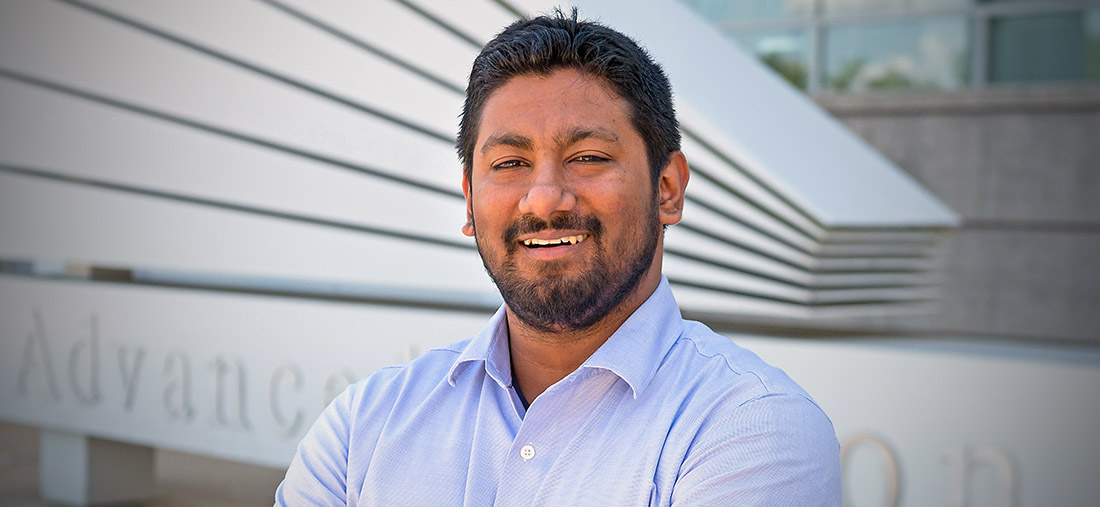
In an era when artificial intelligence is reshaping almost every field of science and technology, one Bangladeshi researcher is working at a particularly consequential intersection: artificial intelligence and nuclear engineering.
Dr. Syed Bahauddin Alam, who grew up in Chandgaon, Chattogram, is now an Assistant Professor in the Department of Nuclear, Plasma, and Radiological Engineering at the University of Illinois Urbana-Champaign (UIUC) in the United States. He also has an affiliation with the university’s National Center for Supercomputing Applications.
His work focuses on an emerging question with enormous implications for the future of nuclear energy: Can artificial intelligence make complex nuclear systems safer, smarter, more efficient, and easier to monitor in real time?
The answer Dr. Alam and his research team are exploring is increasingly promising.
From developing AI-powered digital twins for nuclear systems to working on virtual sensing, explainable machine learning, advanced monitoring, and intelligent technologies for nuclear reactors, Alam has established himself as an emerging international researcher in one of the world’s most technically demanding fields.
His achievements have also moved beyond academic research. In 2025, he was named to the American Nuclear Society’s Nuclear News 40 Under 40, while he was also appointed to an 11-member committee of the National Academies of Sciences, Engineering, and Medicine (NASEM) examining foundation models for scientific discovery and innovation. In 2026, his list of distinctions grew further with a U.S. Department of Energy Distinguished Early Career Award, an NSF CAREER Award, an American Nuclear Society early-career award, and selection for the National Academy of Engineering’s Frontiers of Engineering program.
His journey is therefore not simply the story of a Bangladeshi engineer who became a university professor abroad. It is the story of how a student who began with electrical and electronic engineering eventually entered the frontier of nuclear science—and then helped connect that field with artificial intelligence.
A Beginning in Chattogram
The American Nuclear Society’s 2025 Nuclear News 40 Under 40 profile identifies Alam’s hometown as Chandgaon, Chattogram, Bangladesh.
The same profile offers a glimpse into the personal influences behind his journey. He credits his mother, Reena Jahan, and his father, Syed Moinuddin Alam, as his greatest influences. He says his mother taught him to work hard, remain humble, and stay grounded, while his father taught him resilience.
His professional journey also began in Bangladesh. Before entering the world of advanced nuclear research, Alam worked at Nokia Siemens Networks in Bangladesh. In the ANS profile, he recalls that his first job taught him that sometimes a person has to sacrifice something valuable in order to reach a larger goal.
That willingness to move beyond familiar territory would become an important feature of his academic career.
From Electrical Engineering to Nuclear Engineering
Alam’s academic background is particularly interesting because nuclear engineering was not his original field.
According to the University of Illinois, he earned his B.Sc. in Electrical and Electronics Engineering from Bangladesh University of Engineering and Technology (BUET) in 2011. He subsequently moved to the University of Cambridge, where he completed an M.Phil. in Nuclear Energy in 2013 and a Ph.D. in Nuclear Engineering in 2018.
His transition from electrical engineering to nuclear engineering was not straightforward.
In a 2025 Cambridge alumni feature, Alam described arriving at Cambridge with a background in electrical engineering and computer-related studies but with, in his words, essentially “zero” understanding of nuclear engineering. He credited his Cambridge supervisor, Professor Geoff Parks, and his research group with helping him gain the confidence to tackle an entirely new field.
His doctoral research focused on the design of reactor cores for civil nuclear marine propulsion. Earlier, during his M.Phil., he worked on the modeling of a reduced-moderation water reactor fuel assembly.
The trajectory is revealing. Rather than remaining confined to his original discipline, Alam moved across engineering boundaries—eventually combining nuclear engineering with computation, artificial intelligence, data science, and advanced modeling.
Building an International Research Career
After Cambridge, Alam accumulated research experience across several major scientific institutions.
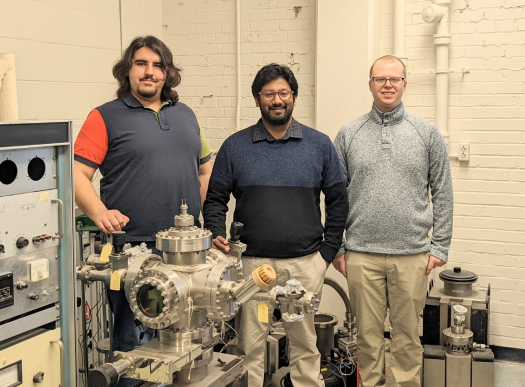
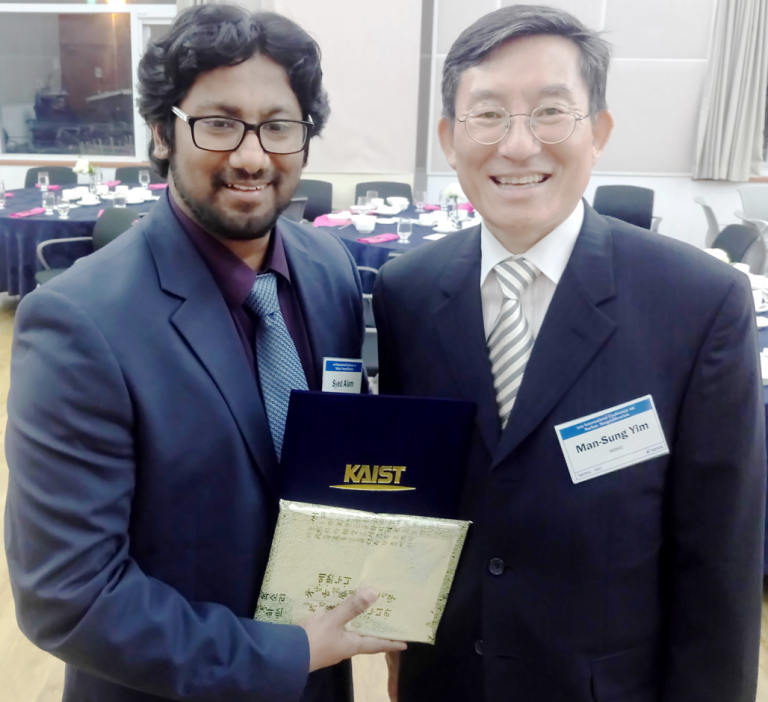
His professional record includes work at the French Atomic Energy Commission, where he was a postdoctoral researcher, and at Argonne National Laboratory in the United States, where he was a Modeling, Experimentation and Validation (MEV) Fellow. He also served as a Nonproliferation Fellow at the Korea Advanced Institute of Science and Technology (KAIST).
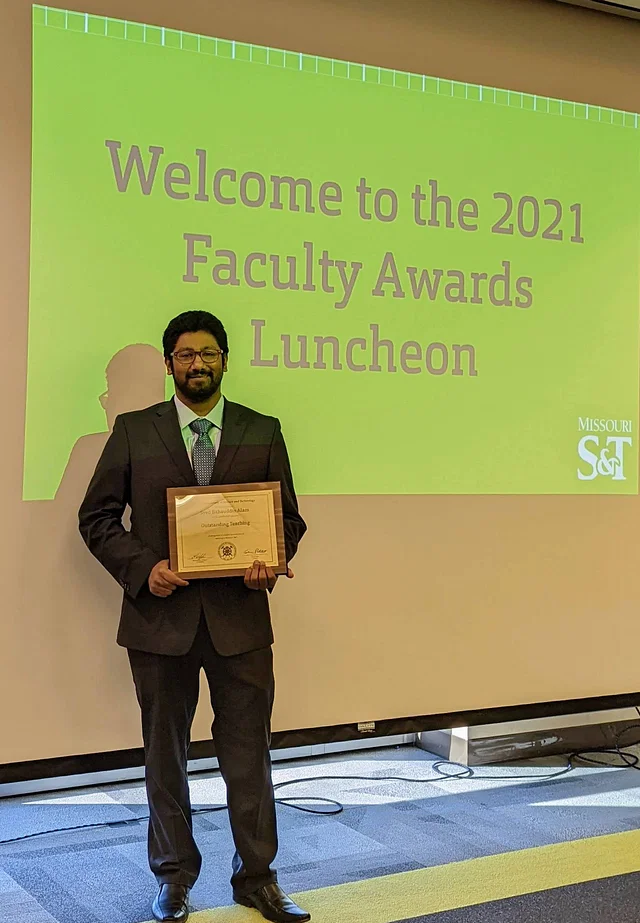
Before joining UIUC, he was an Assistant Professor at Missouri University of Science and Technology from 2020 to 2023. In 2023, he joined the University of Illinois Urbana-Champaign as an Assistant Professor in Nuclear, Plasma, and Radiological Engineering.
Today, his work sits at the intersection of nuclear engineering, machine learning, data science, mechanics and materials, and uncertainty quantification.
The MARTIANS Lab
At the heart of Alam’s research program is the MARTIANS Laboratory, whose name stands for Machine Learning and ARTificial Intelligence for Advancing Nuclear Systems.
The laboratory brings together artificial intelligence, machine learning, nuclear engineering, advanced sensing, digital twins, uncertainty quantification, and other computational technologies.
The goal is not simply to put AI into nuclear engineering as an add-on. Rather, Alam’s research seeks to integrate physics-based understanding with data-driven machine learning so that AI systems can provide useful predictions while remaining interpretable and trustworthy.
Researchers in his group are working on areas including trustworthy digital twins, real-time monitoring, virtual sensing, microreactor monitoring, explainable AI, structural degradation monitoring, and uncertainty analysis.
This interdisciplinary approach is becoming increasingly important as nuclear systems become more complex and as researchers look for new ways to monitor advanced reactors.
What Is a Nuclear Digital Twin?
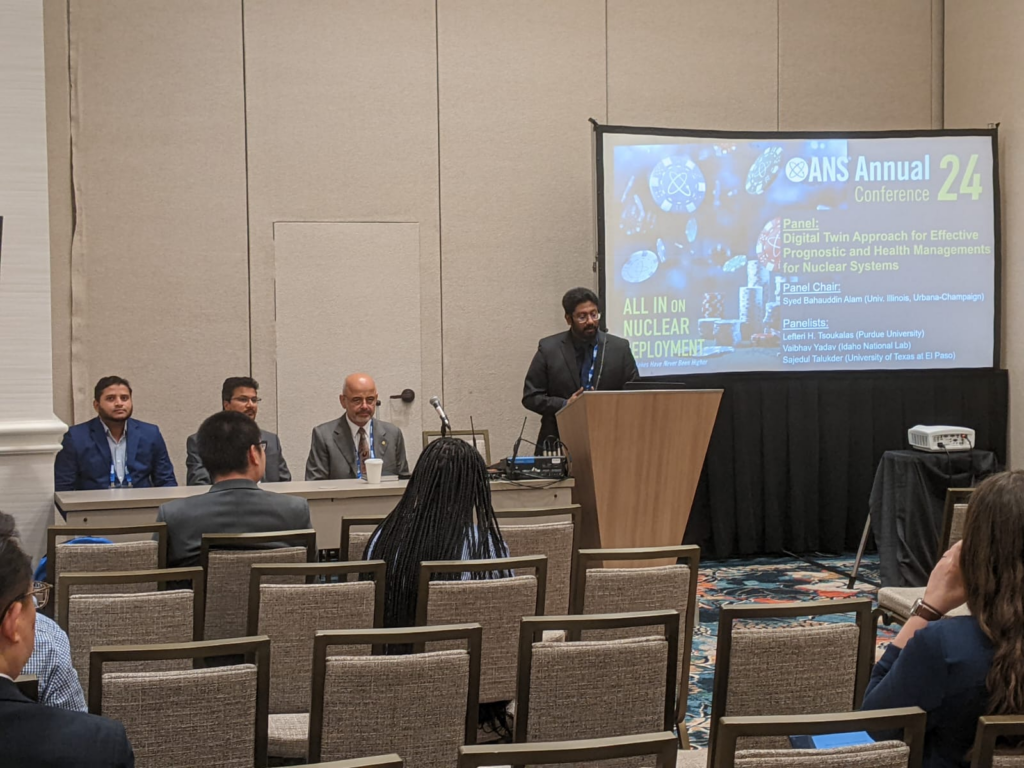
One of Alam’s most prominent research areas is the development of AI-enabled digital twins for nuclear energy systems.
A digital twin is essentially a sophisticated virtual representation of a physical system. Instead of relying only on the physical system and its sensors, researchers can build a computational model that continuously uses available information to estimate what is happening inside the real system.
For nuclear engineering, this can be especially valuable because some locations inside a reactor or its components can be difficult to access directly.
Alam and his collaborators have explored the use of machine-learning models known as neural operators to accelerate the computational processes needed for digital twins.
In a 2024 paper published in Scientific Reports, Alam and Kazuma Kobayashi investigated the use of DeepONet, a deep neural operator, as a surrogate modeling method for digital-twin applications in nuclear energy systems. Their research showed that the approach could provide accurate and computationally efficient predictions and could be useful for real-time inference.
The significance is straightforward: if a complex nuclear process can be modeled quickly enough, operators and engineers could potentially receive useful information about system conditions much faster than would be possible with computationally intensive traditional simulations alone.
That does not mean AI replaces engineers or conventional safety systems. Instead, the research is aimed at developing additional tools that can support monitoring, prediction, diagnosis, and decision-making.
Seeing the Invisible Through Virtual Sensing
Another important component of Alam’s work is virtual sensing.
Traditional sensors measure conditions at specific physical locations. But in complicated engineering systems, it may not always be practical—or technically possible—to install sensors everywhere that information would be useful.
AI-based virtual sensing attempts to infer information about unmeasured locations from available measurements, physical models, and learned relationships.
In 2025, a research team including Alam published work in npj Materials Degradation on a virtual sensing-enabled digital twin framework for real-time monitoring of nuclear systems. The study emphasized real-time monitoring as a foundation of nuclear digital-twin technology, particularly for detecting material degradation and maintaining system integrity.
This line of research could eventually help engineers monitor parts of complex nuclear systems that are difficult to observe directly.
Connecting Physics With Artificial Intelligence
One of the defining features of Alam’s research is the effort to combine physics-based models with machine learning.
Purely data-driven AI can be powerful, but nuclear engineering presents unusually demanding requirements. Nuclear systems are safety-critical, and predictions must be reliable even when operating conditions change.
That is why Alam’s research emphasizes explainable AI, uncertainty quantification, surrogate modeling, and hybrid data-plus-physics approaches.
His research group describes its broader theme as combining hybrid data- and physics-driven machine learning with multiscale modeling, uncertainty quantification, robust optimization, and multi-criteria decision-making for nuclear engineering problems.
The objective is to create AI systems that are not merely accurate under laboratory conditions, but are also better understood and more trustworthy when applied to complex physical systems.
Research With the U.S. Nuclear Sector
Alam’s work has increasingly intersected with U.S. government agencies and national laboratories.
In 2024, he was involved in a project led by Idaho National Laboratory and sponsored by the U.S. Nuclear Regulatory Commission to develop digital twins for online monitoring of nuclear power plants. The project aimed to address technical and regulatory issues associated with using digital twins for monitoring nuclear structures, systems, and components.
His expertise in trustworthy and explainable AI and uncertainty quantification is particularly relevant to such work because nuclear technologies must satisfy demanding standards of reliability and safety.
In 2023, Alam was also part of a UIUC research team involved in a roughly $2 million U.S. Department of Energy project focused on consent-based approaches to spent nuclear fuel storage. The project incorporated machine learning and explainable AI alongside education, engagement, and data-driven approaches. Importantly, this was a collaborative project involving multiple institutions, rather than a $2 million grant awarded solely to Alam’s laboratory.
That distinction is important when describing his funding record accurately.
A Voice in America’s AI Policy Conversation
One of the more notable developments in Alam’s career came in 2025.
He was appointed as one of 11 members of a National Academies of Sciences, Engineering, and Medicine committee examining foundation models for scientific discovery and innovation, particularly their opportunities and implications for the U.S. Department of Energy and the broader scientific enterprise.
He was also named a National AI leader and expert in the University of Illinois Urbana-Champaign’s official institutional response to the White House Request for Information on the U.S. National Artificial Intelligence (AI) Action Plan.
This is an important distinction from saying that he was directly “selected by the White House to formulate the national AI policy.” The publicly documented fact is that UIUC identified him as a national AI leader and expert in its institutional response to the White House’s request for information.
His expertise therefore reached beyond nuclear engineering and into the broader U.S. conversation about AI and scientific research.
Recognition From the American Nuclear Society
In 2025, Alam was named to the American Nuclear Society’s Nuclear News 40 Under 40 list.
The annual list recognizes young professionals who are making significant contributions to the nuclear field. The 2025 list identifies Alam as an Assistant Professor at the University of Illinois Urbana-Champaign and records his hometown as Chandgaon, Chattogram. At age 38, he was recognized for his work involving digital twins, cybersecurity, foundation models, and real-time virtual sensing.
Cambridge also highlighted the recognition as part of its alumni news, noting his M.Phil. and Ph.D. work at the university.
For a Bangladeshi researcher working in a highly specialized field, the recognition represented an important international milestone.
An Extraordinary Run of Recognition in 2025–2026
The 40 Under 40 recognition was only one part of a much broader period of professional recognition.
In 2025, Alam received the Dean’s Award for Excellence in Research at the assistant-professor level from the Grainger College of Engineering at UIUC. He was also a finalist for the 2024 Illinois Innovation Award for his research on AI and digital twins.
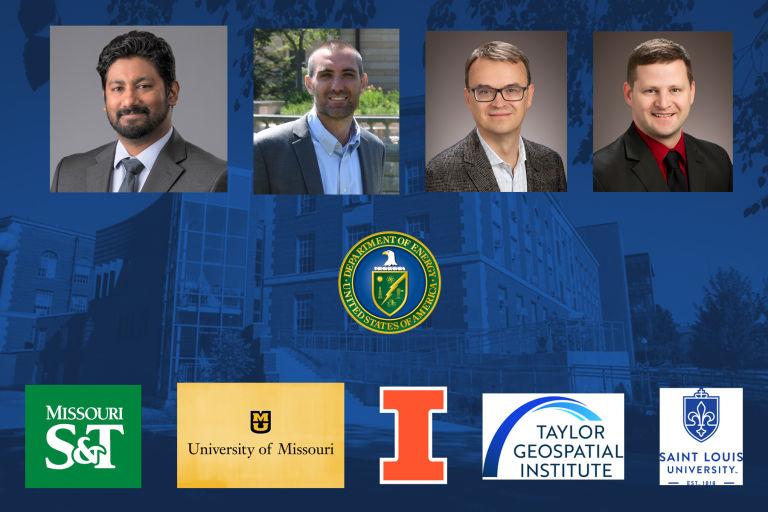
He subsequently received the U.S. Department of Energy Distinguished Early Career Award in 2025. The award recognizes promising early-career faculty conducting nuclear energy research.
In 2025, he also received the HPCwire Editors’ Choice Award in Energy, a recognition connected to high-performance computing and scientific innovation.
Then came further recognition in 2026.
The American Nuclear Society named him the 2026 recipient of the Ted Quinn Early Career Award, recognizing outstanding early-career contributions to nuclear instrumentation and control or human-machine interface technologies. UIUC specifically highlighted his work in AI-enabled virtual sensing, real-time digital twins, and intelligent monitoring.
He was also selected for the National Academy of Engineering’s 2026 Frontiers of Engineering program, which brings together highly accomplished early-career engineers from across disciplines. UIUC reported that Alam was among 74 engineers selected nationwide for the 2026 cohort.
The University of Illinois also lists an NSF CAREER Award in 2026 among his honors.
Taken together, these recognitions indicate that his influence is expanding beyond the traditional boundaries of nuclear engineering.
Why His Research Matters for the Future
Nuclear energy is entering a period of renewed global attention. At the same time, AI is rapidly increasing demand for electricity, computing infrastructure, and advanced energy systems.
That creates an unusual convergence.
The future of nuclear power may depend not only on designing better reactors but also on developing better ways to understand, monitor, operate, and maintain them.
This is where research such as Alam’s becomes particularly relevant.
A trustworthy digital twin could potentially provide a continuously updated computational representation of a complex system. Virtual sensing could help estimate conditions where direct measurement is difficult. Machine learning could accelerate simulations and predictions. Explainable AI could help engineers understand why a model is producing a particular result. Uncertainty quantification could help researchers determine how confident they should be in those predictions.
The technology is still under development, and significant scientific, engineering, cybersecurity, regulatory, and validation challenges remain. But the direction is clear: AI is becoming an increasingly important research tool for next-generation nuclear systems.
A Connection With Bangladesh
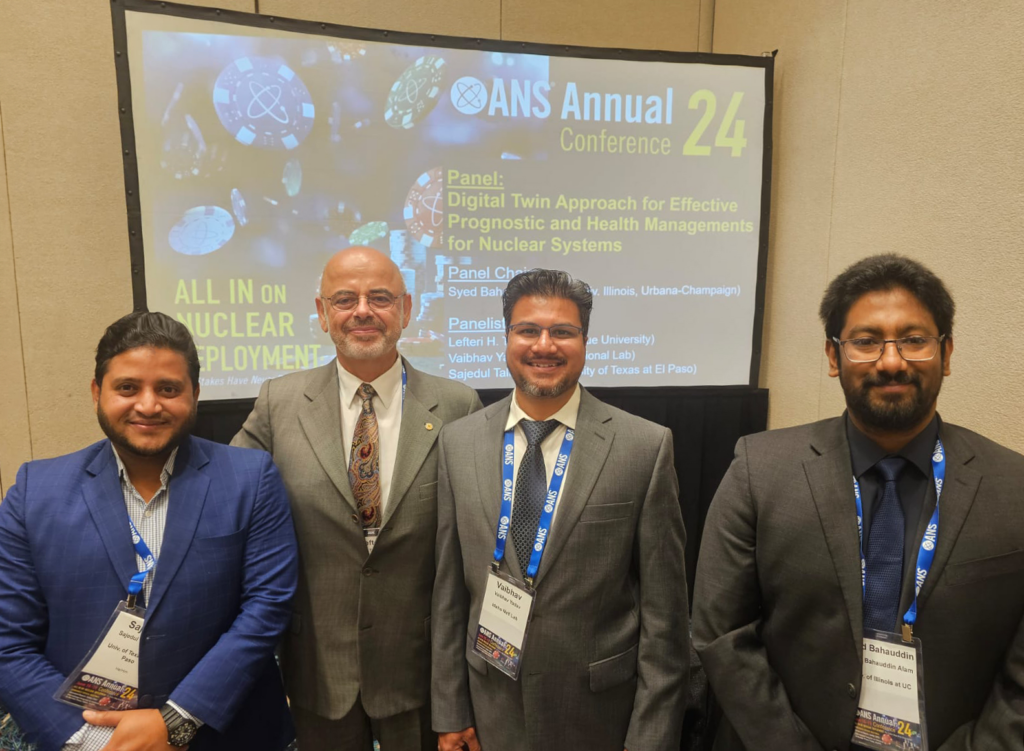
Despite building his career internationally, Alam’s story remains closely connected to Bangladesh through his educational roots and identity.
He began his academic journey at BUET, one of Bangladesh’s leading engineering universities, before moving into the global nuclear research community.
His story is particularly meaningful for Bangladeshi students because his original academic background was not nuclear engineering. He entered the field after studying electrical and electronic engineering and then developed expertise in a highly specialized discipline at Cambridge.
His journey demonstrates that an undergraduate degree does not necessarily have to define the limits of a person’s future research career.
The path from electrical engineering in Bangladesh to nuclear engineering at Cambridge, followed by research at institutions such as Argonne National Laboratory and the French Atomic Energy Commission and ultimately a faculty position at UIUC, illustrates the possibilities created by interdisciplinary education and persistent research.
More Than a Personal Success Story
Dr. Syed Bahauddin Alam’s career is ultimately about more than a list of degrees, awards, grants, or prestigious affiliations.
His work represents a larger transformation taking place in science.
The boundaries between engineering disciplines are becoming increasingly fluid. Nuclear engineers need computational science. AI researchers need knowledge of physical systems. Energy researchers need data science. And safety-critical technologies require all of these disciplines to work together.
Alam’s career has developed precisely at this intersection.
From Chandgaon in Chattogram to Cambridge, from international laboratories to the University of Illinois, and from reactor physics to artificial intelligence and digital twins, his journey reflects the power of crossing disciplinary boundaries.
His achievements also offer a compelling message to young people in Bangladesh: where you begin does not necessarily determine how far your intellectual journey can take you.
The most important part of Alam’s story may therefore not be that a Bangladeshi researcher reached a leading American university. It may be that he entered a completely new field, learned from the ground up, built expertise at the intersection of multiple disciplines, and is now contributing to research questions that could influence the future of nuclear energy and artificial intelligence.
For Bangladesh, that is a source of pride.
For young researchers, it is a lesson in persistence.
And for the global scientific community, the work of Dr. Syed Bahauddin Alam is another indication that the future of nuclear engineering may increasingly be shaped not only by reactors and materials, but also by algorithms, data, intelligent sensors, and artificial intelligence.
Other Information about Dr Syed Bahauddin Alam
Dr. Syed Bahauddin Alam (Not “Syed Alam”) is an Assistant Professor of the Nuclear, Plasma & Radiological Engineering department at the University of Illinois Urbana-Champaign (UIUC).
- He has been appointed as one of 11 National Committee Members on Foundation Models for Scientific Discovery and Innovation: Opportunities Across the Department of Energy at the National Academies of Sciences, Engineering, and Medicine (NASEM).
- He was named a National AI leader and expert in UIUC’s official institutional response to the White House Request for Information on the U.S. National Artificial Intelligence (AI) Action Plan (2025).
- He has been named to the American Nuclear Society’s Nuclear News “40 Under 40” List (2025) that “shines a spotlight on the exceptional young professionals driving the nuclear sector forward as the nuclear community faces a dramatic generational shift.”
- He received the 2025 HPCwire Editors’ Choice Award in Energy(for the first time for Grainger UIUC), which recognizes the most significant breakthroughs and the best and brightest minds in supercomputing/HPC.
- He has also been selected/invited as one of ~100 Selected Leadersbythe Simons Foundation (Flatiron Institute) to bring leaders and enablers of Foundation Models (FM) for Science together from across the globe.
Source: Official website of Dr. Syed Bahauddin Alam