


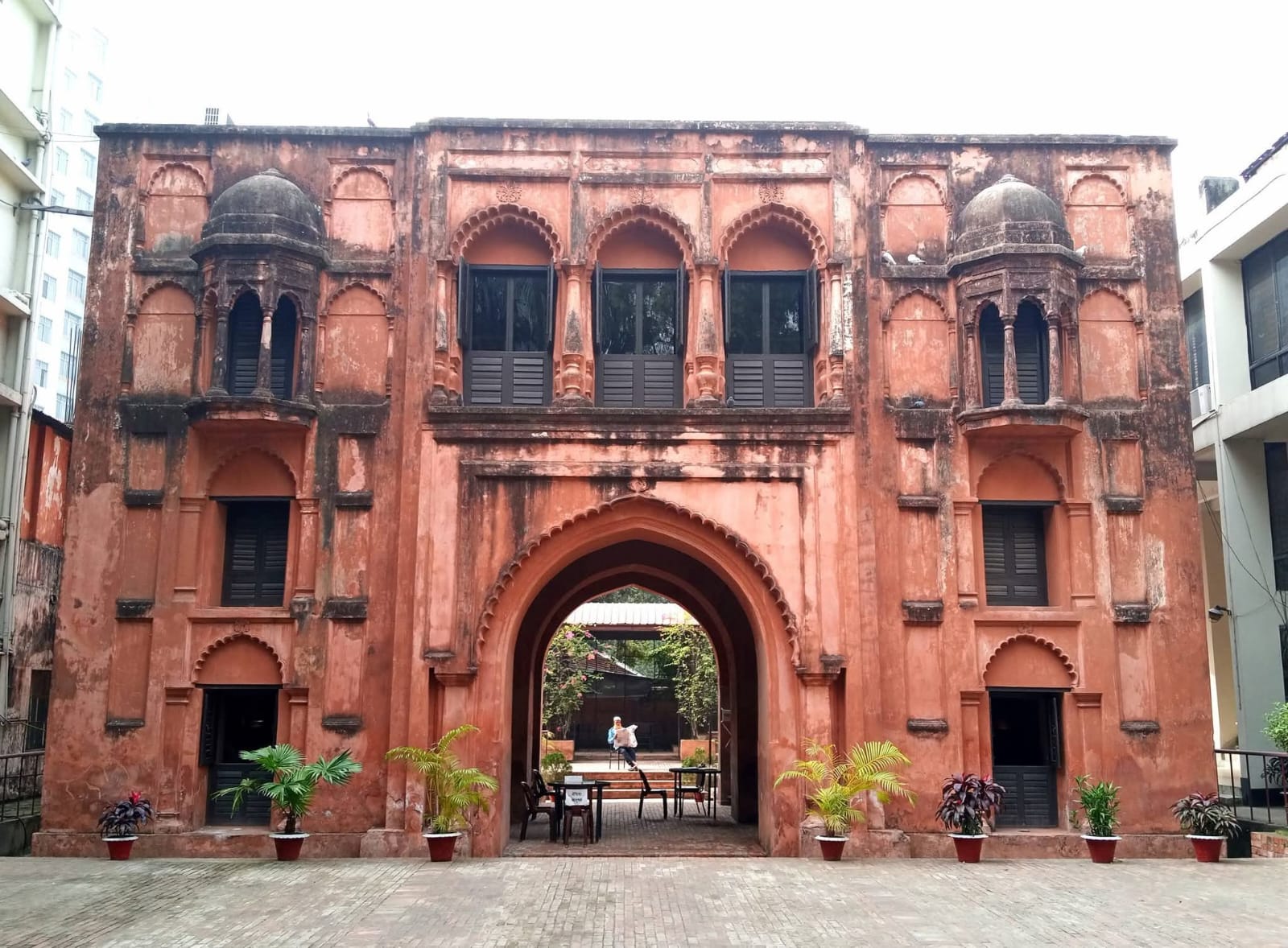
Nimtali Deuri, tucked away in the historic heart of Old Dhaka, is one of the city’s lesser-known architectural treasures. Standing quietly amid the dense urban landscape, this historic gateway is a reminder of a time when Dhaka was a city of nawabs, palaces, gardens, grand processions, and elaborate courtly traditions.
Unlike many celebrated monuments of Bangladesh, Nimtali Deuri does not dominate the skyline or attract large crowds. Yet its weathered walls and distinctive architecture tell an important story about Dhaka’s aristocratic past and the transformation of the city over centuries.
Today, Nimtali Deuri survives as a rare architectural fragment of the Nimtali Palace complex. For anyone interested in the history, architecture, and cultural heritage of Old Dhaka, it offers a fascinating glimpse into a forgotten chapter of the city.
A Glimpse into Dhaka’s Regal Past
Dhaka has experienced several important historical periods. The city developed significantly during the Mughal era and later became an important centre of administration and commerce under the British.
Nimtali Deuri belongs to this historical landscape.
The gateway was associated with the Nimtali Palace, which became an important residence of the Naib-Nazim of Dhaka during the eighteenth century. The Naib-Nazim was a high-ranking official who represented the Nawabs and played an important role in the administration of the region.
The palace complex once occupied a considerably larger area than what remains today. Over time, however, urban expansion, changing land use, and the disappearance of historic structures caused much of the original complex to vanish.
Nimtali Deuri survived.
That survival makes the structure particularly significant.
What Does “Deuri” Mean?
The word “Deuri” traditionally refers to a gateway or entrance structure, particularly one associated with a palace, mansion, or important compound.In the architectural traditions of South Asia, gateways were more than simple entrances. They could communicate status, authority, and grandeur.
A palace gateway marked the transition between the ordinary world outside and the controlled space within. Visitors passing through such an entrance were entering an environment associated with power, administration, and aristocratic life.Nimtali Deuri appears to have served precisely such a function. Its architectural presence provides an indication of the scale and importance of the palace complex that once stood behind it.
The Nimtali Palace Connection
The history of Nimtali Deuri cannot be separated from the history of Nimtali Palace.During the eighteenth century, Dhaka was an important administrative centre of Bengal. The city’s political landscape included powerful officials, aristocratic families, merchants, and members of the ruling establishment.
The Nimtali Palace was built as an official residence associated with the Naib-Nazim of Dhaka.
The palace complex reportedly included residential quarters, courtyards, gardens, and spaces connected with administration and ceremonial activities. Like many historic residences of the period, it reflected both political authority and the sophisticated lifestyle of the city’s elite.
Nimtali Deuri formed an important part of that environment.
Today, the surviving gateway gives visitors an opportunity to imagine the much larger architectural complex that once surrounded it.
Architecture of Nimtali Deuri
One of the most fascinating aspects of Nimtali Deuri is its architectural character.
The structure reflects the architectural traditions that developed in Bengal during the Mughal and post-Mughal periods. Its design combines functional requirements with decorative elements, creating a gateway that was both practical and visually impressive.
The use of brick is particularly significant because brick has historically been one of the defining materials of Bengal’s architecture. The region’s abundance of clay and relative scarcity of building stone encouraged the development of a rich brick-building tradition.
The gateway’s proportions, arches, decorative details, and surviving masonry provide clues about the architectural vocabulary of eighteenth-century Dhaka.
Although the structure has endured considerable change, it still conveys something of the elegance associated with aristocratic architecture of its period.
A Fragment of a Lost Palace
Perhaps the most poignant feature of Nimtali Deuri is that it represents something much larger that no longer exists.
Imagine approaching the gateway several centuries ago.
Beyond it would have been a much different Dhaka—one of gardens, courtyards, palatial residences, narrow roads, river traffic, markets, mosques, and aristocratic compounds.
The gateway would have formed part of a living architectural environment.
Today, much of that world has disappeared.
Modern Dhaka has grown around the surviving structure, transforming its surroundings almost beyond recognition. Tall buildings, busy streets, shops, traffic, and dense settlements have replaced much of the historic landscape.
Nimtali Deuri therefore functions almost like an architectural time capsule.
It does not simply tell us about a building. It tells us about an entire urban environment that has largely disappeared.
Nimtali Deuri and the History of Old Dhaka
Old Dhaka is often described as one of the most historically important parts of Bangladesh’s capital.
Its streets contain remnants of different periods of the city’s development—from Mughal architecture to colonial-era buildings and later residences.
Nimtali Deuri belongs to this remarkable historical mosaic.
Its importance becomes even clearer when viewed alongside other historic structures in Old Dhaka. Together, these surviving buildings demonstrate how Dhaka evolved from a provincial Mughal city into a major colonial and commercial centre.
However, heritage structures in densely populated areas face enormous challenges.
Buildings that once stood within gardens and spacious compounds are now surrounded by modern construction. Historic streetscapes have been altered, and many buildings have disappeared altogether.
The survival of Nimtali Deuri is therefore particularly valuable.
The Memory of Aristocratic Dhaka
Historic architecture can reveal much more than political history.
A structure such as Nimtali Deuri can help us understand how powerful people lived, how official residences were organized, and how social hierarchy was expressed through architecture.
Palaces and gateways were designed to create a sense of distinction.
Their scale and ornamentation reflected the authority of their occupants. Ceremonial entrances, courtyards, gardens, and residential spaces were carefully arranged to accommodate both everyday life and formal occasions.
Nimtali Deuri was part of that world.
Although the original palace has largely disappeared, the gateway preserves a physical connection to Dhaka’s aristocratic culture.
Why Is Nimtali Deuri Important Today?
The importance of Nimtali Deuri goes beyond its age.
1. It preserves historical memory
The gateway connects modern Dhaka with an important period in the city’s history.
2. It represents historic architecture
Its surviving features offer insight into the architectural traditions of eighteenth-century Bengal.
3. It is part of Old Dhaka’s heritage
The monument contributes to the broader historical identity of one of the country’s oldest urban areas.
4. It reminds us of what has been lost
Perhaps most importantly, Nimtali Deuri reminds us that heritage is fragile. Once historic buildings disappear, reconstructing their authentic surroundings becomes extremely difficult.
A Heritage Site Hidden in Plain Sight
One of the remarkable things about Nimtali Deuri is how easily it can be overlooked.
In a city as busy as Dhaka, historic structures often become part of the everyday background. People pass them on their way to work, school, markets, or other destinations without realizing the stories hidden behind their walls.
But monuments do not need to be enormous to be important.
Sometimes a single surviving gateway can preserve more historical memory than an entire modern neighbourhood.
Nimtali Deuri is one such example.
Its quiet presence encourages us to look more carefully at Old Dhaka and recognize that history is not confined to museums or textbooks. It exists in streets, buildings, gateways, courtyards, and fragments of architecture scattered throughout the city.
Challenges of Preserving Nimtali Deuri
Like many historic structures in Old Dhaka, Nimtali Deuri exists within a rapidly changing urban environment.
Heritage conservation in a densely populated city is complicated. Historic buildings can face pressure from surrounding development, environmental deterioration, neglect, inappropriate modifications, and a lack of public awareness.
Preserving a monument does not necessarily mean freezing its surroundings in time. Instead, successful conservation requires finding a balance between modern urban needs and historical preservation.
For Nimtali Deuri, maintaining the surviving structure while ensuring that its historical context is properly documented and interpreted is essential.
Educational initiatives can also play an important role.
The more people understand why a monument matters, the stronger the public support for its preservation can become.
Why Young People Should Care About Nimtali Deuri
For younger generations, historical monuments can sometimes seem disconnected from modern life.
But places like Nimtali Deuri offer a different perspective.
History is not simply a collection of dates and names. It is the story of people, cities, cultures, ambitions, and everyday life.
A teenager walking through Old Dhaka can encounter a building that was already standing more than two centuries ago. That simple fact can make history feel real.
Nimtali Deuri can inspire young people to ask questions:
Who passed through this gateway?
What did Dhaka look like when it was built?
What happened to the palace?
Why did most of the complex disappear?
And what can we do to protect the historic buildings that remain?
These questions are important because heritage survives not only through government protection but also through public interest and collective memory.
Nimtali Deuri: A Symbol of a Changing Dhaka
Dhaka has always been a city of transformation. Its rulers changed. Its economy changed. Its population expanded. Its architecture evolved. Streets that once carried horses and palanquins now carry buses, cars, rickshaws, and pedestrians. Yet some fragments of the past remain. Nimtali Deuri is one of those fragments.
It stands as a quiet witness to the rise and transformation of Dhaka, connecting today’s enormous metropolis with the smaller but politically significant city of centuries ago.Its greatest value may therefore lie not only in what it tells us about the past, but also in what it asks us to consider about the future.If a centuries-old gateway can survive while an entire palace disappears, what will remain of today’s Dhaka two hundred years from now?That is the question heritage places silently ask us.
Final Thoughts
Nimtali Deuri may not be the most famous monument in Bangladesh, but its historical significance makes it a remarkable part of Dhaka’s architectural heritage.As the surviving gateway of the historic Nimtali Palace complex, it offers a rare glimpse into the city’s aristocratic and administrative past. Its architecture, history, and survival tell a story of grandeur, transformation, and loss.Standing quietly amid modern Dhaka, Nimtali Deuri is more than an old gateway.It is a silent witness to Dhaka’s regal past—a reminder that beneath the noise and movement of today’s capital lies a much older city, waiting to be remembered.
Frequently Asked Questions
Where is Nimtali Deuri located?
Nimtali Deuri is located in the historic Old Dhaka area of Bangladesh’s capital.
What is Nimtali Deuri?
Nimtali Deuri is a historic gateway associated with the Nimtali Palace complex, which was connected with the Naib-Nazim of Dhaka during the eighteenth century.
Why is Nimtali Deuri historically important?
It is an important surviving architectural remnant of the Nimtali Palace and provides insight into the political and aristocratic history of eighteenth-century Dhaka.
What does “Deuri” mean?
“Deuri” generally refers to a gateway or entrance, especially one associated with a palace, mansion, or important compound.
Does the Nimtali Palace still exist?
Most of the historic Nimtali Palace complex has disappeared over time. The surviving Nimtali Deuri preserves an important physical connection to the former palace.
Why should Nimtali Deuri be preserved?
Preserving Nimtali Deuri helps protect Dhaka’s architectural heritage and keeps alive the memory of the city’s historic political and aristocratic past.
How the Nimtali Deuri of Old Dhaka was restored
Architect Dr Abu Sayeed Mostaque describes how he took on the challenging task of restoring the hundreds-of-years-old Nimtali Deuri
While walking past the Amar Ekushey Hall, the Anwar Pasha building and the Asiatic Society at the Dhaka University area, it took me quite some time to realise that this is where the famous Nimtali palace used to stand.
I was trying to reimagine the paintings of Charles D’Oyly and Frederick William de Fabeck from the 18th century. In one of the paintings, one Eid procession was standing in front of this palace and in another sketch, one of the deuri or gates of the palace stands with boundary walls.
But standing amidst the 21st-century reality, or as we say the ‘urban jungle’, it was almost uncanny of me to revive something that’s almost 300 years old.
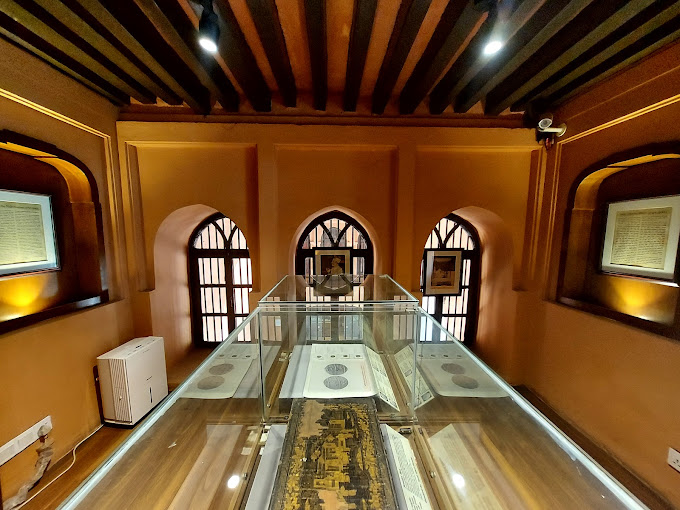
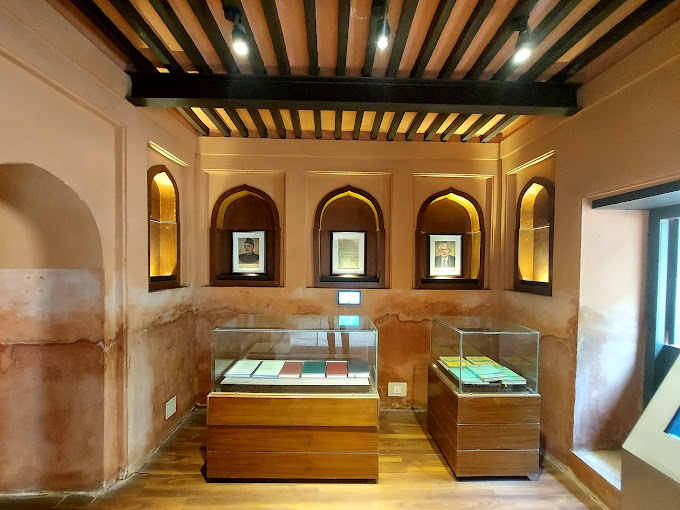
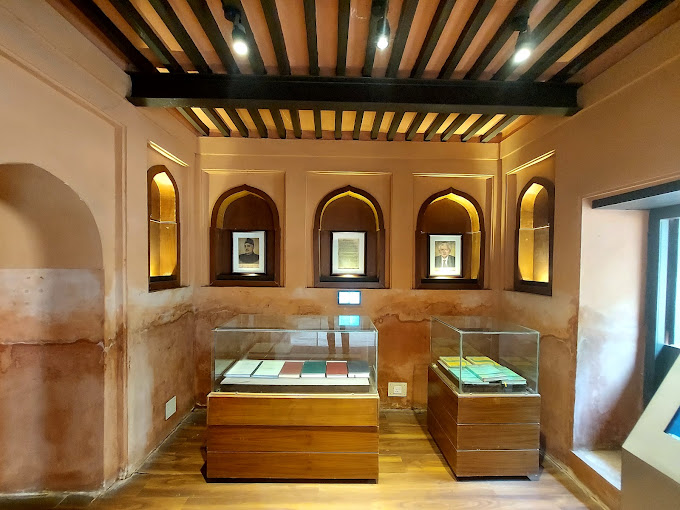
Or maybe not. Because in that concrete clan, I came across something – a gothic arched gateway, tangerine-coloured, with immaculate design on it. It was the west gate of Nimtali Kuthi – an 18th century palace – recently restored and now being used as the Asiatic Society Heritage Museum.
Dr Abu Sayeed Mostaque Ahmed was the main architect of this restoration project and it was his first restoration project in Bangladesh.
History of Nimtali Deuri
The word ‘deuri’ means a gateway or an entrance. The origin of this word could not be found, but it is assumed that the place was once full of neem trees.
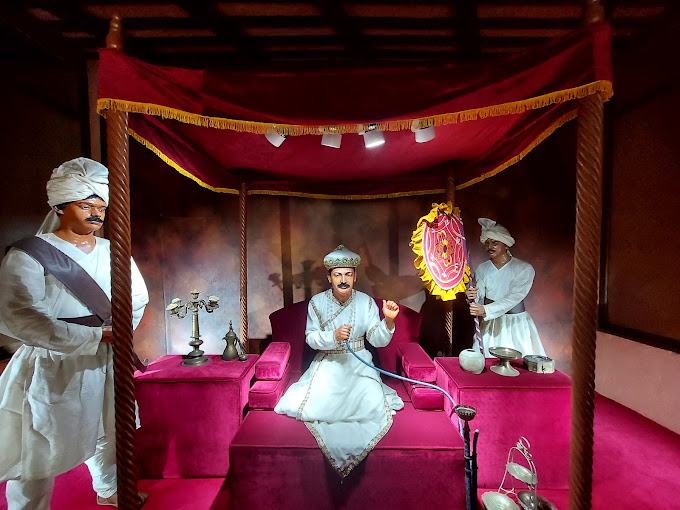
In his book Dhaka Sriti Bisritir Nagori, Muntasir Mamun says that Nimtali Palace or Nimtali Kuthi was built towards the end of the Mughal rule as a residence of the Naib-Nazim (Deputy-Governor) of Dhaka Province in 1765-66. The palace was part of the socio-religious life of the Dhakaites. Early 19th century paintings, now at the National Museum, depict that the Eid processions used to originate and terminate at the Nimtali Deuri. Another significant event was the flag music, played from the Deuri gallery.
It is said to be the first colonial building in Dhaka. In 1763, British Army officer Lt. Swinton stormed into Dhaka and occupied the ‘Fort’ as his residence in 1763. The Naib-Nazim, Nawab Jasarat Khan who resided in one of the Mughal palaces or Forts was not present in Dhaka.
The restoration process of Nimtali Deuri
As an architectural history and conservation enthusiast and a professional historical conservationist, Mostaque Ahmed thinks, “Historical conservation isn’t only about restoring a building – it’s almost reviving the history itself. And for that, we need to revive the materials and the craftsmanship.”
Starting from 2008, it took them four years to complete the restoration and the majority of the time was spent on research.
“To begin with, we had to study pictures, sketches, and many scattered documents and scriptures. It was almost like gathering puzzles and joining them,” as Mostaque Ahmed says.
According to the documents found, this somewhat lost palace occupied a considerable area on the northern side of the city between the modern Nimtali Mahalla and the High Court building and consisted of several separate buildings.
Judging from the extant west gateway (Deuri), it may be assumed, the Nimtali Palace was built after the usual Mughal palace designs. The kiosk shaped cupolas on the roof, the balconies, and mouldings in the parapet, and the polygonal shape of the gateway are largely Mughal in design.
According to Banglapedia, Bishop Heber visited the city in 1824. He left a graphic description of the palace, although most of it was then in ruins. He mentions, “A very handsome hall, an octagon, supported by gothic arches, with a verandah round it, and with high gothic windows. The Palace has an open gallery, where the ‘Nobut’, or evening martial music, is performed.”
n addition to what Heber mentioned, there was one chamber with 12 doors known as ‘Baraduari.’ It is said that the chamber was earmarked for the audience of the 12 Sardars (leaders) of mahallas of the city, who at the time used to enter the hall individually through the 12 doors.
This audience hall which once housed the Dhaka museum from about 1914 to 1983 is now a part of the teachers’ residential quarters of the Dhaka University, Anwar Pasha Bhaban.
The palace was an elaborate castle with four entryways or deuri. Mostaque Ahmed and his team restored the west gateway (Deuri) within the buildings of the Asiatic Society of Bangladesh.
At the first stage, archaeologists examined the foundation beneath the building. Through an elaborate excavation, they found the original floor level and did a chemical test of the soil layers. And from there the restoration began.
Manish Chakrabarty, a historical restoration expert from India gave the team some important guidelines.
“The final design came from a lot of feedback from the ministry, Manish and the committee,” as Mostaque Ahmed says, “for example, in an 1863 sketch by Frederick William de Fabeck, we found several pinnacles or small domes on the roof of the deuri. But on the actual site, we didn’t find any. So we decided to eliminate those from our actual design.”
A phase-wise research allowed the team to complete an authentic restoration. And that’s why Mostaque feels although it was a small scale restoration project, the impact is quite remarkable.
As he said, “Because after that, I worked on the Baro Sardar Bari in Sonargaon, it was almost 50 times larger than Nimtoli deuri. But it was comparatively easier for me now that I knew where to find the experts and the artisans.”
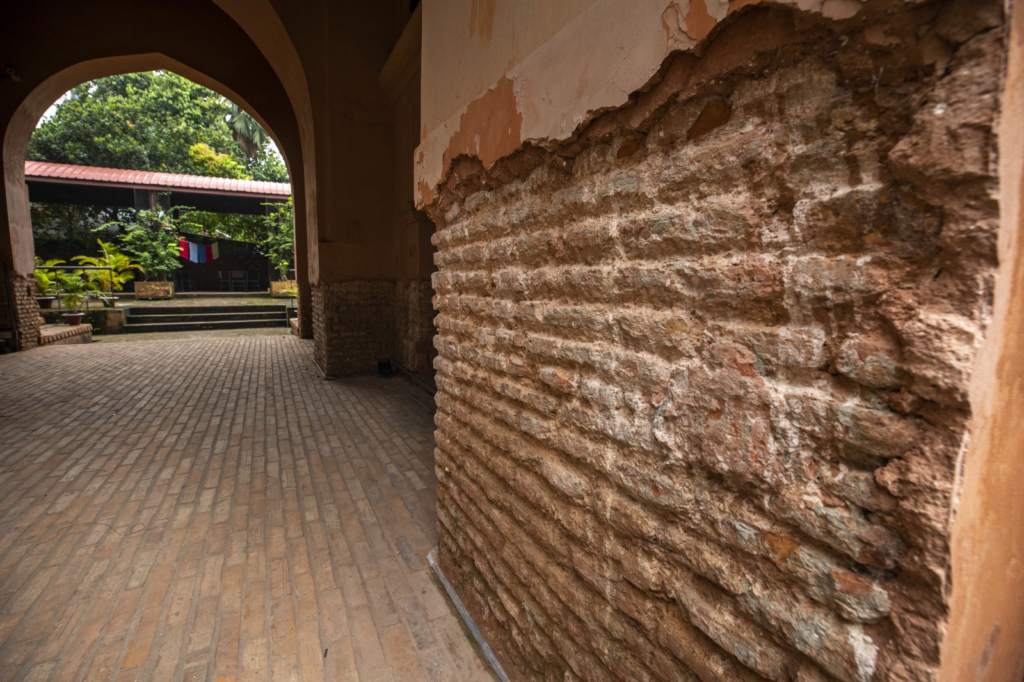
One of the main challenges was to find authentic materials and artisans, Mostaque Ahmed explains, “for example, instead of wall paints, the masons back then used Surki made of brick dust, lime and for good binding, they used natural sticky components like betelnut tannin, catechu, thickened date syrup or even black lentils. From the literature, we learnt about the components but we didn’t know the formula. So after several trial-and-error phases, we finally got the perfect ratio of components that we used.”
Again, they used soft bricks that are burnt for a lesser time so that the bricks can soak all the bindings and surki. That’s what they used, ‘number 3 brick,’ as Mostaque calls it.
But if we want to revive the traditional ancient craftsmanship, then we must nurture the artists, otherwise why would they continue the craft? That’s also one of the main goals of any conservation – to train the workers. Because we faced a huge challenge to find proper craftsmen. Nurturing these area-based small industries is crucial for any conservation.
And Bangladesh has many heritage sites that need to be reconstructed. But there is no academic course or institutionalised studies regarding historical heritage conservation in Bangladesh. That’s another thing we need to work on, as Mostaque Ahmed notes.
Source: Banglapidea , Wikipedia