
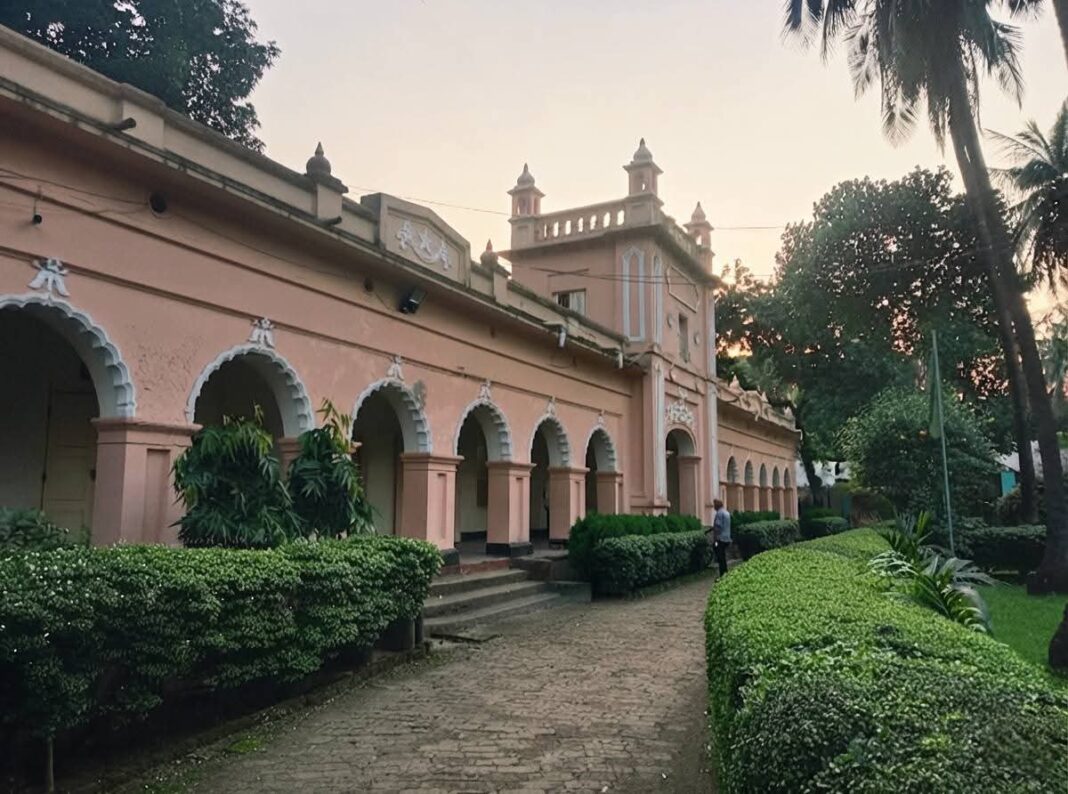

In the heart of old Dhaka, where centuries-old neighborhoods continue to preserve fragments of the city’s social and architectural history, stands an institution whose story is closely intertwined with the philanthropic legacy of the Dhaka Nawab family. Founded in 1909 by Nawab Sir Khwaja Salimullah, the Sir Salimullah Muslim Orphanage began as a modest initiative for orphaned children and gradually developed into one of the city’s most historically significant charitable institutions.
More than a century after its establishment, the orphanage remains associated with Azimpur, a part of Dhaka that has itself undergone enormous transformation. Its history encompasses philanthropy, education, vocational training, public support, financial crises, institutional reforms and even major legal disputes over its land.
The story of the Sir Salimullah Muslim Orphanage is therefore not simply the history of an orphanage. It is also a story about changing ideas of social welfare and education in Dhaka over more than a century.
The Beginning: Islamia Orphanage in 1909
The institution was founded in 1909 by Nawab Sir Khwaja Salimullah, one of the most prominent members of the Dhaka Nawab family.At the time of its establishment, it was known as the Islamia Orphanage. It began in a rented house in Kumartuli, close to Ahsan Manzil, the residence associated with the Dhaka Nawab family.The initiative reflected Salimullah’s broader interest in education and social welfare. Banglapedia records that he established the orphanage for disadvantaged Muslim children and also supported poor students and people in need through other charitable activities.
Salimullah personally provided a monthly endowment of 200 rupees to help operate the orphanage. At a time when organized social welfare institutions were far less developed than they are today, such sustained financial support was significant.As the number of children increased, the small rented premises became inadequate. In 1912, a committee was formed to manage the institution, marking an early step toward a more organized administrative structure. The following year, the orphanage was moved toward the Azimpur area, near Lalbagh Fort.
Lord Carmichael and the Move Toward a Permanent Home
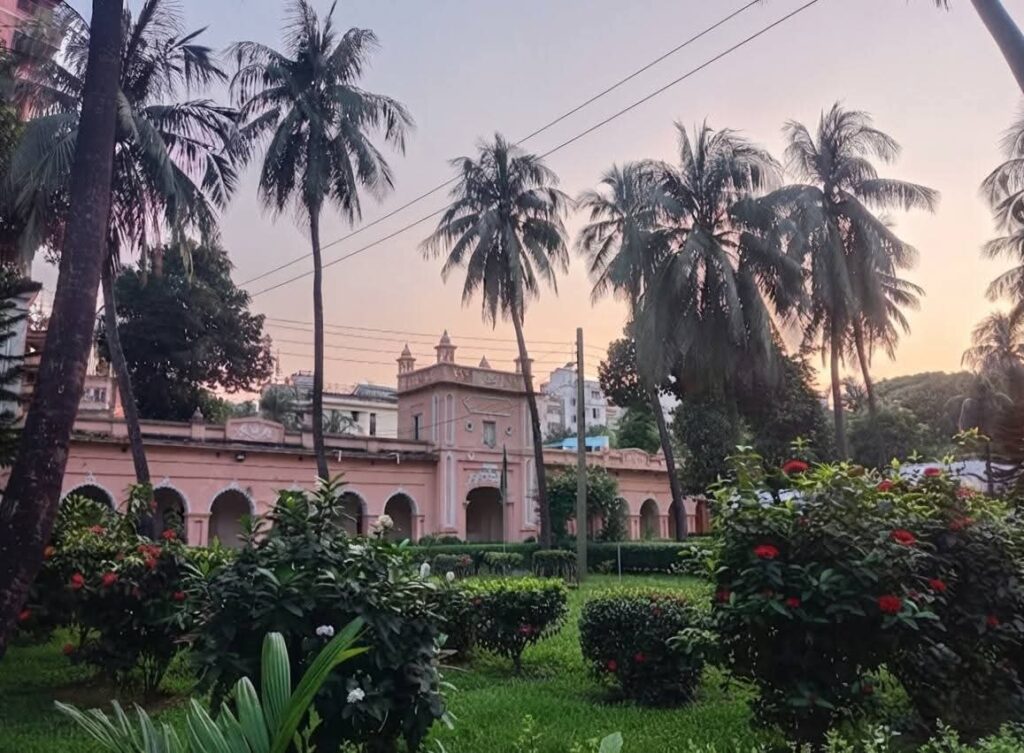
The orphanage soon attracted attention beyond Dhaka’s local community.In 1913, Lord Carmichael, then Governor of Bengal, visited the institution. He provided an endowment of 1,000 rupees for its operation and arranged for government land to be made available for construction of an orphanage building near the Gore Shaheed Mosque in the Amlapara area. Much of the cost of construction was borne by Nawab Sir Salimullah.The involvement of the colonial administration did not mean that the institution’s charitable character was replaced by government control. Rather, it illustrates how a private philanthropic initiative could attract public and official support when it became an established social institution.This period was important because the orphanage was moving beyond its original identity as a small charitable home and developing into a more permanent institution.
A Crisis After the Death of Sir Salimullah
The institution’s greatest early challenge came after the death of Nawab Sir Salimullah in 1915.Until his death, Salimullah had personally carried much of the financial burden of the orphanage. Once that support disappeared, the institution experienced serious financial difficulties.The crisis also revealed another important feature of the institution’s history: its survival depended not only on wealthy patrons but also on the wider community.People from Dhaka stepped forward with financial assistance to keep the orphanage functioning. During this period, the institution became increasingly associated with Salimullah’s name and came to be known as the Salimullah Orphanage.The story is significant because it shows how the institution gradually became a collective social responsibility rather than simply the personal charitable project of one member of the Nawab family.
Nawab Habibullah and a New Phase
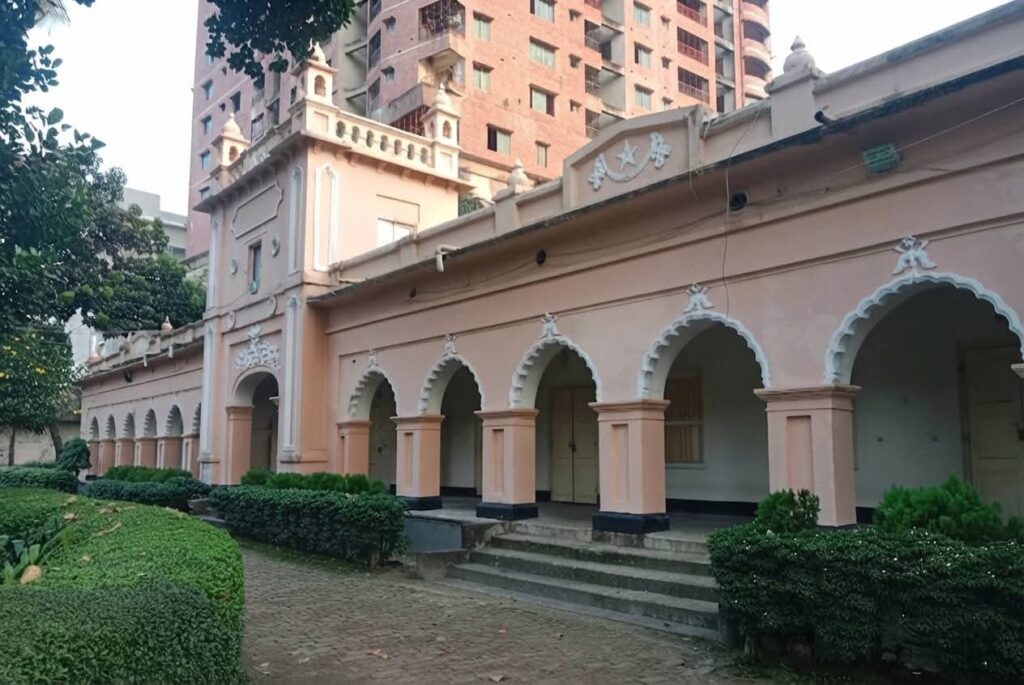
The institution continued to develop during the following decades.In 1916, Lord Carmichael visited the orphanage again and laid the foundation stone of the Nawab Habibullah Ward, named after Salimullah’s son and successor in the Dhaka Nawab family.Yet financial difficulties did not disappear.
In 1923, the orphanage faced another serious financial crisis. Its management committee was consequently reorganized, with Nawab Habibullah serving as chairman and Chowdhury Farid Uddin Ahmed Siddiqui as secretary. The new leadership was intended to strengthen the institution and help overcome its financial and administrative difficulties.This reorganization represented another turning point. The orphanage was increasingly becoming an institution that required formal administration, fundraising and long-term planning rather than dependence on a single benefactor.
Technical Education: Preparing Children for Life
One of the most interesting aspects of the orphanage’s history is its emphasis on vocational and technical education.
In 1926, Bengal Governor Lord Lytton visited the institution and donated 2,500 rupees. During the visit, he inaugurated a factory department intended to provide technical education to the orphans. In the same year, Syed Nawab Ali Chowdhury visited the institution and laid the foundation stone for an extension building.This was an important idea for its time.An orphanage could simply provide food and shelter. But the development of technical education suggested a broader vision: children should also acquire practical skills that could help them become economically independent adults.The institution’s later programs expanded this philosophy further.
The 1930s: Education, Training and New Buildings
The 1930s marked another important period in the development of the orphanage.
In 1931, Lady Jackson, wife of Bengal Governor Sir Stanley Jackson, visited the institution and inaugurated the Sir Ahsanullah Ward, a building constructed at a cost of 22,853 rupees. Nawab Ali Chowdhury contributed 10,000 rupees toward its construction, while the remaining amount was arranged through the government treasury under the involvement of the then Education Minister, Khwaja Nazimuddin.
Lady Jackson also unveiled the plaque of another building known as Jenana Mahal, intended as a female ward. The building cost 23,175 rupees, with Khwaja Salahuddin contributing 10,000 rupees and the remainder coming from government funds. The ward was subsequently associated with the name Nawab Begum Asmat-un-Nesa Ward.
The same period saw further expansion of vocational activities, including a weaving section.
By 1932, efforts were being made to strengthen the orphanage’s educational and vocational infrastructure. Training was arranged in areas such as tailoring, blacksmithing, weaving, masonry, government-related employment skills and gardening. Teachers were appointed for these programs, and some students later continued their education at institutions including Ahsanullah Engineering School and Srirampur Weaving School, according to historical accounts.
The emphasis is revealing.The institution was not merely trying to protect vulnerable children from hardship. It was attempting to equip them with knowledge and practical skills that could help them build independent lives.
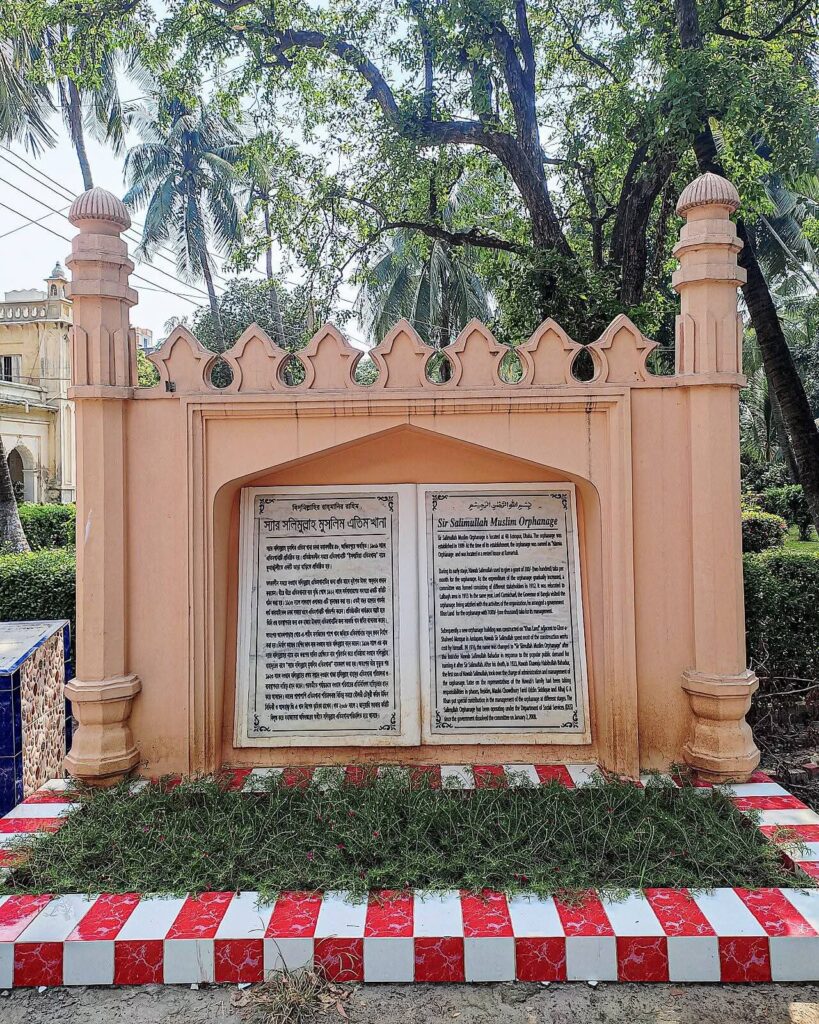
A Distinctive Architectural Landmark
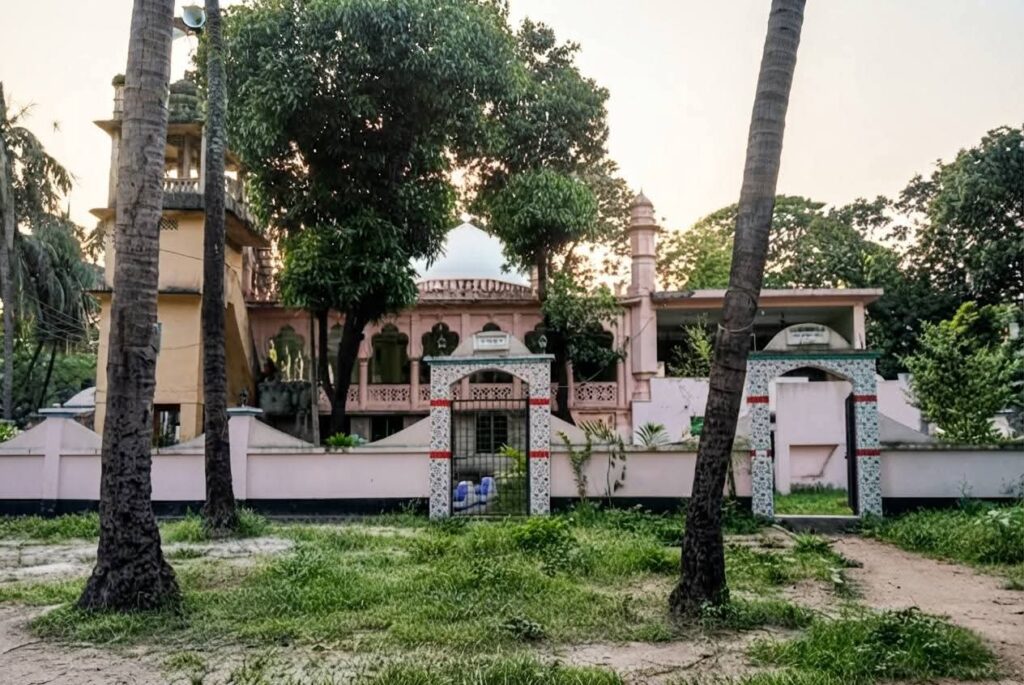
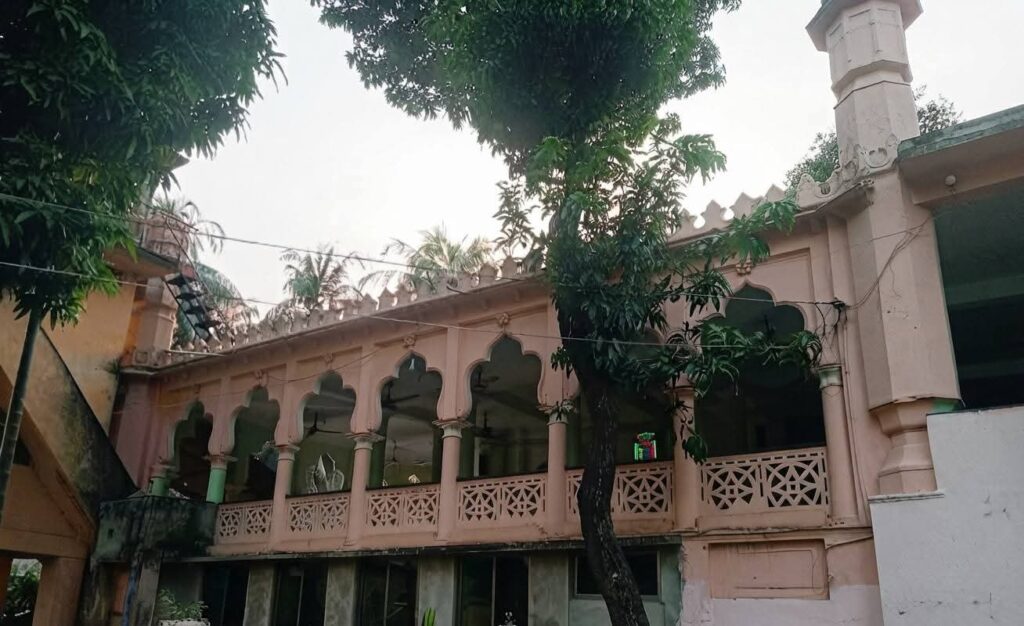
The Azimpur complex also became part of Dhaka’s architectural memory.A surviving building associated with the orphanage features a distinctive central dome. Photographic documentation identifies the historic building in Azimpur and records its inauguration by Lady Jackson in 1931.Its appearance has sometimes led observers to compare it visually with other monumental buildings of historic Dhaka. Yet its significance lies not only in its architecture.Unlike many grand buildings constructed for administrative or elite purposes, this complex was developed around a social mission: providing shelter, education and opportunities for orphaned children.That gives the site a distinctive place in Dhaka’s built heritage.
A Changing Institution in a Changing Dhaka
The history of Sir Salimullah Muslim Orphanage mirrors the transformation of Dhaka itself.When the institution was founded in 1909, Dhaka was still a very different city. The neighborhoods around Ahsan Manzil, Kumartuli, Lalbagh and Azimpur were closely connected to the city’s older social and residential landscape.Over the following decades, Dhaka expanded dramatically. Roads, institutions, universities, government offices and residential areas transformed the city’s physical environment.The orphanage survived these changes.Its continued existence for more than a century is itself a notable achievement. But survival did not always come easily.
Land, Management and Legal Controversies
The institution’s later history includes significant controversies concerning its land and management.In the early 2000s, a portion of the orphanage’s land became the subject of a major dispute involving a development company. According to reports, approximately two bighas of land were handed over to Concord Group through documents executed in the early 2000s. Four students of the orphanage subsequently became petitioners in a legal case concerning the property.
In September 2015, the Bangladesh High Court ruled that an 18-storey building constructed on the orphanage’s land by Concord Group had been built illegally. The court directed that the property be handed over to the orphanage and ordered the authorities to protect and preserve the institution’s assets. It also declared the relevant documents concerning the transfer of the land invalid.
The case was important beyond the immediate property dispute.For a century-old charitable institution, land is not simply a commercial asset. It is part of the physical foundation on which its educational and social mission depends.The legal controversy therefore highlighted a much broader question: how can historic charitable institutions preserve their assets and continue serving the communities for which they were established?
Government Involvement
Another major change came in 2008.According to historical records and contemporary accounts, on January 2, 2008, the government abolished the institution’s previous management committee and placed the management of the orphanage under the Department of Social Services.The change marked the end of a long period during which members of the Dhaka Nawab family and other prominent individuals played central roles in the institution’s management.At the same time, it represented a new chapter in the history of a century-old organization whose original charitable mission had outlived the social and administrative environment in which it was created.
More Than an Orphanage
Over the years, the institution’s activities have extended beyond accommodation alone.Government information describing the institution has associated it with boys’ and girls’ homes, schools, vocational training, religious education, a mosque, a library and healthcare services.This broader range of activities reflects the evolution of the concept of institutional care.A child who enters an orphanage needs more than a bed and meals. Education, healthcare, social development, practical skills and emotional security are equally important components of a meaningful childhood.The historical development of Sir Salimullah Muslim Orphanage shows that this idea was present in its institutional evolution long before modern discussions about child development became widespread.
The Legacy of Sir Salimullah
The orphanage also provides an important window into the philanthropic legacy of Nawab Sir Khwaja Salimullah.Salimullah was involved in several educational and social initiatives in Dhaka. Banglapedia records that he supported poor students, provided assistance to people in need and established the Islamia Orphanage in 1909.His philanthropy was not confined to charitable donations. Education was an important part of his social vision.The orphanage therefore represents one piece of a larger story: the effort of the Dhaka Nawab family to influence education, welfare and public life during a period of significant social change in Bengal.
Why the Orphanage Matters to Dhaka’s History
There are many famous monuments in Dhaka.Some are associated with rulers. Some with colonial administration. Others with political movements, education or architecture.The Sir Salimullah Muslim Orphanage belongs to a different category.Its historical importance comes from social welfare.For more than a century, it has been connected with the lives of children who required shelter, education and support. Generations of administrators, teachers, donors and students have passed through its history.That makes the institution a valuable record of how Dhaka’s society responded to poverty and orphanhood at different points in time.It also demonstrates how philanthropy, education and community participation could come together to create institutions designed to serve vulnerable sections of society.
A Living Piece of Dhaka’s Heritage
Historic buildings are often preserved because of their architectural beauty. But heritage can also exist in institutions whose greatest value lies in the human stories associated with them.Sir Salimullah Muslim Orphanage is one such place.Its story began in a rented house in Kumartuli in 1909. It survived the death of its founder, repeated financial crises, changes in management, institutional expansion, the transformation of Dhaka and serious disputes over its property.Through all these changes, the central idea remained remarkably consistent: to provide disadvantaged children with care, education and a path toward a better future.That continuity is what makes the institution historically significant.
Timeline of Sir Salimullah Muslim Orphanage
| Year | Event |
|---|---|
| 1909 | Nawab Sir Khwaja Salimullah establishes the Islamia Orphanage in a rented house at Kumartuli near Ahsan Manzil. |
| 1912 | A management committee is formed. |
| 1913 | The growing institution is moved toward Azimpur near Lalbagh; Governor Lord Carmichael visits and provides financial and land support. |
| 1915 | Nawab Sir Salimullah dies, leaving the orphanage facing serious financial difficulties. |
| 1916 | Lord Carmichael revisits the institution and lays the foundation stone of Nawab Habibullah Ward. |
| 1923 | Another financial crisis leads to the reconstitution of the management committee under Nawab Habibullah and Chowdhury Farid Uddin Ahmed Siddiqui. |
| 1926 | Lord Lytton donates 2,500 rupees and inaugurates a factory department for technical education. |
| 1931 | Lady Jackson inaugurates the Sir Ahsanullah Ward and unveils the plaque of Jenana Mahal. |
| 1932 | Vocational education and training programs are further developed. |
| 2003 | A major land dispute emerges over the transfer of part of the orphanage’s property to a developer. |
| 2008 | Management is placed under the Department of Social Services. |
| 2015 | The High Court orders an 18-storey development on the orphanage’s land to be handed over to the institution and directs protection of its assets. |
Frequently Asked Questions
When was Sir Salimullah Muslim Orphanage founded?
Sir Salimullah Muslim Orphanage was founded in 1909 by Nawab Sir Khwaja Salimullah. Its original name was Islamia Orphanage.
Where was the orphanage originally located?
It was initially established in a rented house at Kumartuli near Ahsan Manzil in Dhaka.
When did the orphanage move to Azimpur?
Historical sources agree that the institution moved toward the Azimpur area as it expanded, although accounts differ over the exact chronology of the moves. Banglapedia places the move to Azimpur in 1913, while other historical records describe subsequent development and relocation at the present site during the following years.
Who founded Sir Salimullah Muslim Orphanage?
The founder was Nawab Sir Khwaja Salimullah, a prominent member of the Dhaka Nawab family.
Why is the orphanage historically important?
It is significant because it has operated for more than a century as a charitable institution associated with orphan care, education and vocational training. Its history also reflects the philanthropic activities of the Dhaka Nawab family and the evolution of social welfare in Dhaka.
Did the orphanage provide vocational education?
Yes. In 1926, a factory department was inaugurated specifically for providing technical education to the orphans. Later programs included practical training in areas such as tailoring, weaving, blacksmithing, masonry and gardening.
What happened to the orphanage’s management in 2008?
On January 2, 2008, the government placed the institution’s management under the Department of Social Services, according to historical and government records.
What was the 2015 legal dispute about?
The dispute concerned land belonging to the orphanage that had been transferred to Concord Group for development. In September 2015, the High Court ruled that an 18-storey building constructed on the land had been built illegally and ordered its handover to the orphanage, while directing authorities to protect the institution’s assets.
A Heritage That Is Still Alive
The history of Sir Salimullah Muslim Orphanage cannot be reduced to a date, a building or the name of its founder.It is the history of an idea that began more than a century ago: that children deprived of parental care should not be deprived of education, dignity and opportunity.From the modest Islamia Orphanage established in Kumartuli in 1909 to the historic institution that developed in Azimpur, the organization has experienced enormous changes. It has received support from nawabs, governors, government authorities and ordinary citizens. It has survived financial crises and administrative transitions. It has expanded its educational and vocational programs and defended its institutional property through the courts.
Today, the buildings and grounds of the orphanage form part of the historical landscape of Azimpur. More importantly, its long institutional history preserves a chapter of Dhaka’s social history that might otherwise be forgotten.For a city as old and rapidly changing as Dhaka, places such as the Sir Salimullah Muslim Orphanage are more than surviving structures.
They are living archives of the people, values and social responsibilities that helped shape the city.