Home Blog Page 12

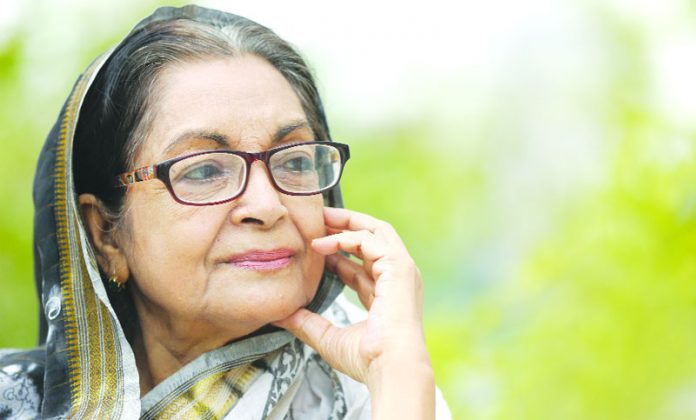
Dilara Zaman is an extraordinary actress

0
Dilara Zaman

Dilara Zaman is an extraordinary actress.

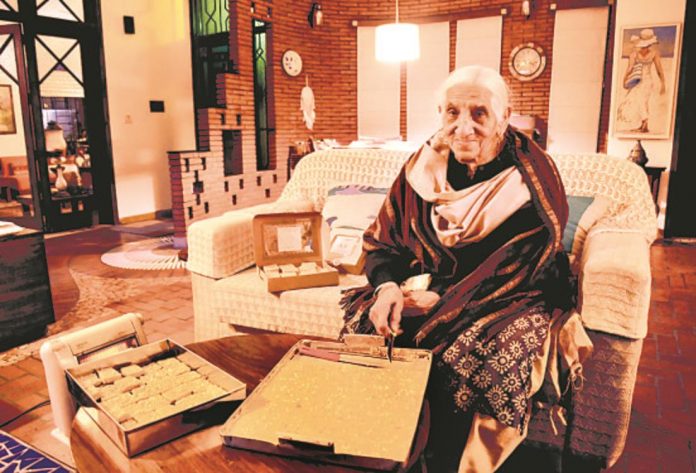
Dilara Zaman. Ekushey Padak winner Actress. She is one of the few talented actress in Bangladesh. The story of the life of this actress, who has starred in numerous TV dramas, is etched in the mind of the reader. She has seen the language movement, liberation war and other movements very closely. Her thoughts are ideal in consciousness.

Childhood period:

She was born on 19 June 1942 (Certificate 1943) in Burdwan, West Bengal, her father’s place of work. Dilara Zaman’s mother was only 16 years old then. The teenage mother did not know how to raise a child. Dilara Zaman’s mother contracted malaria shortly after her birth. Could not feed properly. Meanwhile, the Second World War. Those who used to keep cows have also fled. It was not possible to get cow’s milk. Somehow Dilara Zaman was saved by eating barley and rice starch.

The engineer’s father was transferred from Burdwan to Asansol, then to Jessore during the partition. Dilara started her education at Momen Garden School, now it is Jessore Government Girls School. She used to walk to and from school. She would pay two annas for a tiffin. She used to buy murki and eat it. She used to go back to play in the field next to the school.
Dilara Zaman is an extraordinary actress
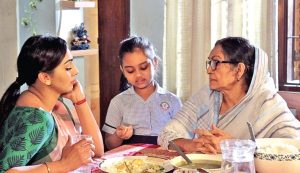
Dilara Zaman, Prova and Ariya Arittra

Dilara Zaman’s house was on the shostitala. When she heard the train’s whistle, she ran two minutes from home and stood by the railway line. When the train left, the frock was flying in the air. The porches of their houses were all red tiled. There were two coconut trees in front like a gate. After 65-7 years, she went to Jessore and found the shostitala, but she could not find the house anymore! All the huge buildings have become. When she was completely disappointed, a gentleman stopped the rickshaw while passing by and said, ‘Aren’t you Dilara Zaman?’ ‘Yes’. ‘Your nickname is Lily?’ ‘How do you know?’ ‘This house, this house …!’ The man said exactly where you were standing! He said, ‘This house was bought by my uncle. He always sees you on television and talks about your childhood, your father. ‘Dilara Zaman then sat down on the ground, crying. He took her inside the house. How many memories I remembered!

How was Dilara Zaman as a child?

When the storm came, she would run to the backyard to pick mangoes. The house next door was later the Chief Scientific Officer of the Atomic Energy Commission, scientist. M. Shamser Ali. When Dilara was four or five years old and he was seven or eight years old, one day she climbed a tree and planted guava. He went out and said, ‘Excluding studies and planting guavas? Naughty girl, wait, I will tie you to the wheels of the cart. ‘Little Dilara was very scared then. Thought he would really do it! His younger brother Tota was Dilara’s playmate.

Many years later, probably in the 1970s, he was once the chief guest at a Shishu academy in Dhaka, Dilara Zaman was the special guest. Dilara Zaman doesn’t notice him anymore. When he reminisced about it in his speech, Dilara Zaman shouted, “Brother Shanti!”

Once beaten in a procession!

Dilara Zaman Bara Khalu was the Deputy Magistrate. He had a house next to the ‘Tasbir Mahal’ cinema hall. The dialogues of the movie could be heard from home. Whenever she went to visit Khalu’s house, she would run to the cinema. Sitting in the VIP box for 10-15 minutes, she would run home again. When it comes to language movement. Parents have heard that students have been killed in Dhaka. She did not understand the meaning of the words.

One day after 21st February, a procession was passing in front of their house, ‘I want Bangla as the state language’. Little Dilara also went a long way with slogans behind the procession. When she returned, she found her mother standing at the gate. She was upset not to find her. Got a light beating with a hand fan!

Come to Dhaka and others

In 1953, her father moved to Dhaka. Dilara Zaman was admitted in class six in Banglabazar school. From there she passed matriculation in 1956. Then, while studying at Eden College, Sukant Bhattacharya’s poems filled her mind. Those who were more revolutionary, reading their poems and biographies, seemed to be a little like these struggling people! From then on writing started.

Her first poem was published in 1956, Ittefaq’s ‘Kachi Kanchar Asare’. This is the first time her name has been printed – Dilara Ahmed (Lily) after her father Rafiq Uddin Ahmed. But she used to write in secret. Parents were talking, before studying! At that time the only magazine for girls was ‘Begum’. She started writing stories there too.

Today’s Dhaka cannot be compared with the Dhaka of 1953. Then, if you went somewhere by rickshaw, you would be surrounded by a sari with a curtain around the rickshaw. There were not many cars on the road. Only the jeep of her father’s office used to come in front of the house. At that time the elite area of ​​Dhaka was Rankin Street. In 1962, when the New Market was being built, she would walk from home to see the big gate.

Introduction to drama

The first play on stage was in 1958, at Curzon Hall. University drama. Starring Mumtaz Lily Khan and Jahrat Ara, the heroine of ‘Mukh O Mukhosh’. Then she saw in amazement, the living people in a stage were talking, crying, laughing like them. This magical act of acting became a seed in her mind. That seed has germinated slowly in later times. That same year, she starred in a short play at the school’s matriculation farewell ceremony. Sarat Chandra Chattopadhyay’s story ‘Fruit of the Case/ Mamlar Fal’ was their text.

They acted in theatrical form. What acting did not know; She came like a storm and said dialogue, then went out like a storm. Then there was no makeup like now; The chalk powder brought from Shankharibazar was mixed with vermilion, they were smeared on the face, and the eyes were decorated with kajal. Dilara Zaman did not clean her face after the performance that day. On the bus from Banglabazar School to Lalbagh, she kept her face out of the window all the way, as if everyone could see that this girl had acted! She felt like a very proud woman, as if she had won something huge!

How were your college days?

Professor Rokeya Rahman Kabir was a very cultured and modern minded person. She used to guide their cultural programs. Dilara Zaman also acted in college plays. That is when she got acquainted with the present Member of Parliament Matia Chowdhury. She was the VP of Chhatrasangs, Dilara Zaman Literary Editor. In the student movement of 1962, they used to go out of the college by climbing over the walls. Curzon Hall of Dhaka University, Amtala Rashed Khan used to gather in those places and listen to the speeches of Menon and other student leaders with fascination. The blood was boiling. From then on, a tendency towards left politics was born.

In 1984-85, she was involved with the student union during her studies at Dhaka University. However, she was not such a great student leader. Lived in the back row. Apart from that, she became a regular writer. The story with pictures was published in the Eid issue of ‘Begum’. The office of ‘Azad’ newspaper was near their house. Poet Habibur Rahman used to work there. He and the poet Ahsan Habib loved her very much as a younger follower. She got acquainted with her life partner Fakhruzzaman Chowdhury through writing.

About 1984. At that time there was an afternoon literary session at the Bangla Academy. One day Dilara Zaman’s mother was ill and she immediately went to the hospital after reading a poem. Fakhruzzaman Chowdhury was then a Research Fellow of Bangla Academy. Dilara Zaman did not know him; Didn’t even hear the name. In that session of the Bangla Academy that day, he criticized one of her stories the writer is indifferent to writing ’and so on. Later, when others told Dilara Zaman about it, she thought, who is this man, I have to see!

Incidentally, his niece was studying with Dilara. The next day the girl also said, ‘Lily Apa, yesterday my mama criticized your writing. You probably haven’t heard. ’Dilara said,‘ Who is your mama? ’Said the name. She said, ‘Tell your uncle, I want to meet him. I will give him a strong answer. ‘Dilara Zaman was very angry.

As soon as the class was over, she went straight to Bangla Academy. As soon as she got off the rickshaw, she saw a gentleman coming from inside and saying, ‘Are you Dilara Ahmed?’ Dilara Zaman said, ‘Are you Fakhruzzaman Chowdhury?’ She went and sat down with him in the dark library below. He used to sit there and do research. She saw a man wearing glasses, who looked very wise. Dilara forgot all about Zaman’s preparations for the quarrel. She didn’t talk to him much that day. At one point he said, ‘Will you go home now?’ Dilara Zaman said, ‘No, I will go to the hospital. Patients who have no relatives, or who live alone — talk to them a little. Give a little food. When she told him about this, he was very surprised.

Dilara Zaman said, ‘No wonder. All people are lonely. A man can be lonely in a crowd of hundreds, even in the midst of noise. ‘He was fascinated to hear the words. Then he said, ‘Tonight at 10 o’clock I will read a story in the radio literature room. I could not find the plot of my story. Talk to you and keep up the good content. ” The man said I got a theme after listening to you. ‘

Then there was the small battery-powered radio. Dilara Zaman was listening to the radio with her head, he was reading the story. The name of the story is ‘Prahra’. A girl goes to the hospital and accompanies patients without relatives, her ‘sad conch-like eyes’! Dilara Zaman had never heard such an adjective in her life. He is describing it in stories. Quite thrilled. Dilara Zaman has just entered her youth. She studied Bangla in the university. He is also a former student of Bangla department. Dilara Zaman could not hear the end of the story; Fell asleep!

The next day she went to him again. Spoke. Gradually the relationship developed. Then she got married on February 24 of the same year. That was the journey of uncertainty for Dilara with him. Because he still doesn’t have a job. Get a scholarship of only two and a half hundred taka. She got married against everyone’s wishes. Later everyone agreed. 2014 marked the 50th anniversary of their marriage. He was very ill then. They came from America. He has to be kept with oxygen. After coming from America, her husband had to be taken to ICU six times in two years. You have to set it up at home just like in a hospital.

Dilara used to work a little then. She told everyone to leave her in the evening. There was a drama shooting near the house that day. She was called more than once from home. She came and saw many cars in front of the house. Her heart was pounding, maybe something had happened to him. I don’t know how he got up. The people in the house went and saw him. Earlier, when dhe left for America, she left all the things of her 45 years of life to the people. Didn’t think that would come back again. At the end of two years, the two of them came back because they were upset for the country. There too he was in the ICU twice.

However, when she returned home that day, she saw that his two daughters had arranged a wedding anniversary. That was the last wedding anniversary of Dilara Zaman’s life. Her husband died on June 12 of that year.

University life:

Dr. University. Munir Chowdhury, Dr. Nilima Ibrahim, Dr. Anisuzzaman, Dr. Moniruzzaman, head of the Bengali department. Abdul Hai got them. Everyone loved her very much. At the end of the class she would go to Sadarghat via Nawabpur and Islampur in a procession; She used to return in procession again. Cultivation, the seed that was sown to nurture culture in mind; And the woman who loved drama, acting, literature, was born in her — it was at this time.

So university days are the best time of her life. Back then, boys and girls did not play together. Boys dress up as girls, while girls dress up as boys. In 1973, for the first time in the university, boys and girls acted together. ‘Mayabi Prahor’ written by poet Alauddin Al Azad. Abdullah Al Mamun of the history department, the science student. Enamul Haque — they also acted. Dilara Zaman said, ‘I don’t know if dad will give permission or not.’ Hearing this, Munir Sir wrote a letter to her father. At that time Dilara Zaman’s mother’s distant brother Shahid Mofazzal Haider Chowdhury was also a teacher of Bangla department. But did not dare to tell him. Since Munir Sir is involved in the drama, Dilara Zaman’s father did not agree with his letter.

Acting life:

The first television came in December 1974. The experimental broadcast lasted for a few hours from evening. DIT had a television station. Studio in a small room. The dialogue had to be memorized like reading an exam. The rehearsal lasted for five-six days. On the day of the evening drama, she had to go to the DIT by 2 pm. Live broadcast. Fear of being out-of-frame as soon as one hand moves. In this way, it was necessary to act like a battlefield. Dilara Zaman made her television debut in early 1985. Munir Chowdhury’s wife Lily Chowdhury was her mother in the play ‘Tridhara’ produced by Mohammad Zakaria.

There is no account of how many TV dramas she had acted in! In their time, at least until the 1990s, they didn’t even think about taking acting as a profession. Especially girls have to do something other than acting to make a living. Making a living from acting as a profession has been a gradual development since independence. Just as Mancha Nat has undergone a revolution in the post-independence period, so now there are so many TV channels that she calls it becoming an industry.

With so many channels, so many people are making a living and taking acting as a profession. Not just acting, thousands of people are able to make a living from being involved in various fields of drama production. Dilara Zaman used to teach, and used to take time out to act. However, acting has been her profession for the last 18 years.

Teaching stories …

Sher-e-Bangla School and College was then known as Narishiksha Mandir. After marriage, the family could not run on the husband’s scholarship of two and a half hundred taka. The house had to be rented for two hundred taka. At that time she used to do one drama every four or five months on radio and television. So she started teaching in Nari Shiksha Mandir. From there, she went to Mymensingh in 1966 and passed B.Ed, M.Ed besides teaching in kindergarten.

Went to Mymensingh for her husband’s job. Unable to continue, he no longer submitted his PhD dissertation; He took a job in the government’s information department (later he was the director of the administration department of Bangladesh Television). The war of liberation started while Dilara was in Mymensingh. They fled to the village. She was kept hidden behind the Golaghor so that no one would understand that a young woman had come here.

After independence she returned to Mymensingh. Then the husband was transferred to Chittagong. She became the first mother on July 20, 1983. Television could not be seen in Chittagong then. She used to do dramas on the radio. That same year, she joined the Arindam Natyagosthi. Every Sunday she rented a Muslim Hall (now Chittagong Public Library) and performed plays. She also rented the halls of St. Mary’s School on holidays. What is now art is a one-story building; Like a library.

They used to rehearse in the field or on the verandah. At that time, every year a drama festival was organized with the participation of theater groups representing the whole country. They went on for three or four years. Dilara Zaman’s performance in Brecht’s play ‘Mother’ in the context of the Vietnam War was highly praised.

She moved to Dhaka in 1970. She was called by many theater groups in Dhaka, but after that she could not do any more plays. Because then the girls are younger, go to school; They had to give time. Of course, now she wants to do a play again. But the body does not give in.

When she came to Dhaka,  She used to teach at Meherun Nesa School in Bhooter goly, near their house. From there taught in BAF Shaheen school for many years. then taught at Vikarunnisa Noon School, and retired in 2000. There have been many conflicts with acting while teaching. She never skipped school. However, She have heard harsh words from some people in the school. If she had been as generous as she is now, she might have done more.

When she was teaching in Shaheen school, a foreign serial called ‘Dallas’ was shown on television. Its heroine’s name was Sue Ellen. The students used to call her ‘Sue Ellen Madam’. She has so many students, maybe she remembers looking at them in primary school; But now they have grown up, She can’t recognize them. Once on her way to America, she lost an important token at Doha airport. Suddenly a boy came and said, ‘Madam, I am your student.’ She seemed to found straw in the sea. The boy works for that airline. He made alternative arrangements.

Meanwhile, last year, students held a reunion at Chittagong Public School with former teachers. Gave a reception. Even on the streets, when someone says, ‘I was your student’ — she thinks this is a great achievement as a teacher.

If you make a mistake, you can do it again this is the advantage of shooting. It is as good as it is bad. Rehearseling many times to master the dialogue, assimilating a character — this attention has decreased a lot. It is also seen that an actor-actress is working on two or three plays on the same day. Then there would be dramas one or two days a week; After all, everyone in the neighborhood was sitting around a television set. Speaking of that play, the characters would stir the audience.

Now that television dramas have become mere entertainment, we seem to have lost the ability to think about society, life’s problems and words as we did then. The artist has a social responsibility. When Dilara Zaman works, she thinks that this dialogue, this character will have an effect on someone’s mind. As a result, you have to think and understand a lot of things. She could not play many roles before because she used to teach. Wondering if there is a negative impact on students?

Acting in movies:

She has acted in several films including ‘Aguner Parashamani’ (1994), ‘Monpura’ (2009), ‘Halda’ (2016). Chandragrahan (2006) won the National Film Award.

Literary composition:

Story books Astraag (1982), Arshi Ami (198), Mrigaya Sharabiddha (198) and Golpasamagra (2010); The novel ‘Many Blue in the Sky’ (1974) and the memoir ‘Dilapidated Leaf Falling’ (2011).

 

Winner’s list of Photography

0

Winner’s list of Photography

“A photograph is a secret about a secret. The more it tells you the less you know.”

— Diane Arbus

Category- DSLR:

Here is the Winner’s list of “Photography ” category- DSLR. Congratulation to all the winners and runners up , we look forward to see more great things from them. Thank you to all for sharing their unique talent with us.As a tribute to their talents, “Teenagers” magazine will be publishing their works.

  • Ariful Islam ALif,Daffodil Internation College. (Winner)
  • Muhammad Ullah Mahi, Udayan Uchcha Madhyamik Bidyalaya. (1st Runner Up)
  • Faysal Ahmed, Southeast University. (2nd Runner Up)

Category- Mobile:

Here is the Winner’s list of “Photography ” category- Mobile. Congratulation to all the winners and runners up , we look forward to see more great things from them. Thank you to all for sharing their unique talent with us.As a tribute to their talents, “Teenagers” will be publishing their works.

  • Md Kawsar Ahmed,Royal University of Dhaka. (Winner)
  • Sadmanuddin Ahmed,Udayan Uchcha Madhyamik Bidyalaya.(1st Runner Up)
  • Iffat Tajreen Ema,Udayan Higher Secondary School and College. (2nd Runner Up)


Regards,
Vinnorup Team from ” Vinnroup presents Caza De Talento 1.0″

Winner’s list of Inked Solace

0

Winner’s list of Inked Solace

“But I, being poor, have only my dreams;
I have spread my dreams under your feet;
Tread softly because you tread on my dreams.”

—He Wishes for the Cloths of Heaven, W.B. Yeats

Poetry Primary:

Here is the Winner’s list of “Inked Solace” category- Primary. Congratulation to all the winners and runners up , we look forward to see more great things from them. As a tribute to thier brilliance, “Teenagers” magazine will be publishing your poem.

  • Kazi Ebtisum Nashim, Feni Girls Cadet College.(Winner)
  • Ahmed Ibn Masud, Jhalakathi Govt High School. (1st Runner up)
  • Suhana Hossain, Viqarunnisa Noon School and College (2nd Runner Up)

Poetry Secondary:

Here is the Winner’s list of “Inked Solace” category- Secondary. Congratulation to all the winners and runners up , we look forward to see more great things from them. As a tribute to thier brilliance, “Teenagers” magazine will be publishing your poem.

  • Lulu II Maktum (Winner)
  • Tanvir Hossain (1st Runner Up)
  • Nahian Nawar (2nd Runner Up)

Poetry Higher Secondary and University:

Here is the Winner’s list of “Inked Solace” category- Higher Secondary and University. Congratulation to all the winners and runners up , we look forward to see more great things from them. As a tribute to thier brilliance, “Teenagers” magazine will be publishing your poem.

  • Bikram Aditya Das (Winner)
  • Ali Siddique Ovi (1st Runner Up)
  • Usrat Fatima (2nd Runner Up)

Arranged by:
Vinnorup Team from ” Vinnroup presents Caza De Talento 1.0″


Tiktok Generation and Crime Psychology

0

Tiktok Generation and Crime Psychology.Recently, there has been a lot of talk about teen gangs and the use of Tictok and Like apps. Earlier this year, a number of our national newspapers published investigative reports in the form of a series on the crimes of juvenile gangs and their reckless activities.

Last year and this year, our media reported that hundreds of juvenile gangs were involved in criminal activities in Dhaka and Chittagong. Members of the juvenile gang have been charged with using and carrying illegal weapons, using and selling drugs, terrorism and extortion. Most of the juvenile gangs are reported to be directly involved in other crimes at the local level, including drug use.

Reviewing the crime statistics of Bangladesh over the past few years, it can be seen that our children and adolescents under the age of 18 are involved in various types of crime. Almost every day, teenagers are reported to be involved in crimes such as murder, rape, extortion, robbery, drug use and drug trafficking. Even some events are very thrilling and scary.
For some time now, there has been widespread criticism of the use of TikTok and Like apps in Bangladesh. TikTok: Gen Z's Unmatched Art Form | The Cornell Daily Sun

Usually teenagers and young adults use these apps to express their feelings and various activities online through videos. Recently, those apps are becoming very popular in India as well as Bangladesh. Many people are trying to earn star fame and money by using those apps. Recently arrested tiktok star Apu (known as Apu Bhai) is being widely criticized for his activities and videos.

As can be seen from his video, Apu has gained a reputation as a ‘tickling star’ through the use of obscene language, obscene dialogue, distorted body language and the use of irrelevant words. His millions of followers can be seen on TickTok and Like. A few days ago, the authorities fired Apu from Tiktok and Laiki. Apu and his teenage gang friends blocked the road and when they asked him to leave the road while making a ticktok video, they beat him severely and seriously injured the two.Tiktok Generation and Crime Psychology

The last few days I have been watching social media and YouTube and a number of tickling and liking videos, which are inconvenient and tasteless. These videos are created and uploaded just to gain cheap popularity by using perverted gestures and obscene words and sex. About 80 percent of those who make TickTok and Like videos are teenagers. They are seen blocking the road and recording their videos everywhere through their mobiles.

The reviews of their videos show that millions of people have already watched such distorted and obscene videos. Making videos and its popularity indicates that our society is deteriorating and negative work is rapidly gaining popularity. Parents and educational institutions are failing miserably in educating their children.

The Government of Bangladesh enacted and implemented the Children’s Act in 2013. According to the United Nations Convention on the Rights of the Child 1979 and the Children’s Act 2013, all children up to the age of 18 are children. The trial and investigation of their crimes will be in accordance with the Children Act-2013. There are currently juvenile courts in every district to try juvenile offenders.

The Tribunal for the Suppression of Violence against Women and Children is an additional responsibility of the Juvenile Court. About 50,000 cases are pending in the juvenile courts in the country at present. According to the Children’s Act, 2013, there are several guidelines for the trial of children and their representation in court.

The district social service office, probation officer and the officer in charge of the children’s desk in each police station have different responsibilities in the light of the law. There are several safe homes and juvenile development centers for child offenders to work. The child accused are mainly punished in those development centers till bail. The activities of the centers in the mental development of the accused are not satisfactory. The government must take concerted efforts to improve the mental development of children and turn them away from crime.

In the above discussion, it is clear that the crime rate of children and adolescents in Bangladesh has increased a lot. The easy use of mobile phones, Facebook, Twitter, tiktok addiction and acquaintances with others, involvement in immature relationships, political intrigue and drug use are misleading teenagers and young people. If we do not take the right steps now, our future generations will be in danger.

Written by: Md. Zakir Hossain
Member of Bangladesh Judiciary and Senior Judicial Magistrate, Feni

Murtaja Baseer in a wide range

0

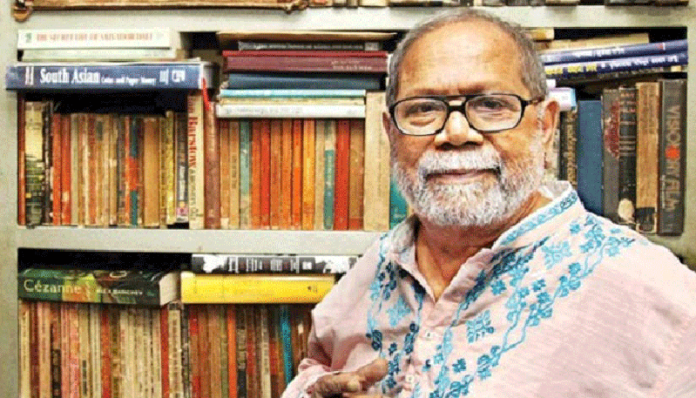
Murtaja Baseer in a wide range.We will not forget this virtue of aesthetics. Such a genius is not born all the time. He is our pride and arrogance.

The scope of his work is so wide that in one way or another we can feel his presence through work. We lost him in the crisis. I have deep respect for him. I can say without hesitation that this man with a colorful life will shine in the mirror of our memory. I think the government also needs to take special initiative to preserve his memory.

Born on 18 August 1932, died on 15 August 2020. During this long period, Murtaja Baseer, the treasure of our pride, a man of very large size, possessed a multi-dimensional industry, was gradually developed. It would not be an exaggeration to say that he was one of our most talented people.

On the one hand, he was the bearer of the latest paintings or artistic ideas of Bangladesh; On the other hand, a writer of large size. Professor Anisuzzaman left us a few days ago. Kamal Lohani has also passed away. If you write the name in this way, more names will come. The news of the eternal departure of Murtaja Baseer once again left me speechless as I mourned the loss of these loved ones.

Murtaja Baseer in a wide range
Murtaja Baseer

It is very difficult for me to describe how many times I stopped writing about Professor Anisuzzaman at the same time, how I managed to finish writing with tears in my eyes. Today I sat down to write about Murtaja Baseer but I fell into the same situation. I too am now numb with the weight of age.
Almost everyone of our time is leaving one by one, and I sit down and cry and write about each of them. How much more to write. I really can’t mourn anymore. August is the month of our mourning. Painter and writer Murtaja Baseer, who was born this August, passed away this month. I know him as much as I know him as a painter, as much as I know him as a writer.
His accent was also very nice. And that is why he is multidimensional. These areas of Murtaja Baseer had their own characteristics which will always be remembered.
Murtaja Baseer has left us in his old age. But even if some death or passing away is a hundred years old, it seems like nothing. He needed more of the country-society.
This also applies to Murtaja Baseer, whose physical presence for a while was very much needed for our overall needs. His father was a linguist. Muhammad Shahidullah: We are the children of the sun, the pride of the nation. Murtaja Baseer, the worthy son of a worthy father, was enlightened in many ways including his education.
Murtaja Baseer shone in his student life. The same glory has spread in his career. This radiance is only noticeable when evaluating him as a perfect human being. His wide range floated before his eyes. He was involved in the democratic-cultural movement of the country. He was an active member of the language movement. At one point he had to spend several months in prison in a case in the fifties. Although in the end proved innocent.

On August 15 (our National Day of Mourning) 2020, he passed away forever. Two days later was his 7th birthday. A few days ago, I heard about various complex symptoms of the lungs. There were also complications in the kidneys. In the end he was attacked by Corona. The Corona disaster has not only tarnished the world image, it has also created mountains of pain.
In addition to the loss of life, this disaster has caused a lot of wounds almost all over the world; Wounds that do not dry easily. We are not out of it either. In our society, in the economy, in the workplace, it has had a profound adverse effect. This epidemic has left its mark on the world of extreme misery, fear and panic.
We don’t know where it ends. But I believe that man will overcome this epidemic with his innovative energy and efforts. But until then, whatever the damage is going to be. Losing lives. Losing livelihood. There is a huge loss of various possibilities. The biggest loss is in life, which is nothing to feed.

Murtaja Baseer has won many medals, awards and honors including Ekushey Padak and Swadhinata Puraskar. The limits of his fame as a poet and researcher are no less wide. Despite his age, his voice was youthful. Whose voice was really unique. Many have already said that his life philosophy should be followed. Known as the screenwriter of stories, novels, poems, films, I have heard and learned a lot about his creative role even in the set design of plays.
In such a context, it seems difficult to say how many other equivalents in the world of fine arts like him. It is not easy for me at this moment to describe how many memories are floating around the impossibly lively, generous, gossipy Murtaja Baseer. Again, in the month of mourning, we lost the legend Mortaza Bashir. He has created his own industrial world.
As I wrote earlier, after the death of a person who died at the age of one hundred, it seems that he needed to live a few more days. Murtaja Baseer’s physical emptiness must be felt deeply in many ways, in many cases. But he will live among us for a long time because of his fame and creation. His keen vision has made a unique impression in every aspect of his creation. Beauty prevailed in everything she did.
This sense of beauty comes from the family. It was very natural for him to grow up in a beautiful family. He loved the people and culture of the country immensely. The overall situation of the country and society has come up in his paintings. The endless pull of the industry has made him run after work all the time. He also gave special importance to literary work.

One of my many
memories surrounding him is very much remembered at the moment. Many previous events. I was then involved in teaching at Rajshahi University. At that time our Vice Chancellor was Khan Sarwar Murshid. Next to the Shaheed Minar of Rajshahi University, there is a pillar like ‘Eiffel Tower’. There is a wall behind it. It is surrounded by gardens and some relics of the liberation war.
There are also works by artists Aminul Islam, Qayyum Chowdhury, Kamrul Hasan. Murtaja Baseer has a great job going beyond the wall. He applied white cement to the walls with his own hands and created a painting with burnt bricks. I was an eyewitness to it and I lived with him almost all the time. I think it has become unique among his countless works. I wanted to know a lot by asking him detailed questions during that work.
I also received threats for this. He used to say that the artist does not have to reveal everything. The viewer has to understand. Even then he gave me an artistic explanation of this work of art. He is about six years older than me; But the heart was very deep between the two.
Absolutely like peers or friends. Would blend in very closely. His great beauty- he was very childish. His simplicity, generous response was ingrained in people’s minds. He is rooted in me with the same respect.

Many have said that he is one of the pioneers of modern fine arts or art. According to media sources, a fund will be set up in the Asiatic Society on behalf of the family to protect his memory. They are also considering financial assistance for poor and meritorious students of fine arts. Undoubtedly, all this is a good initiative and thought. Murtaja Baseer will live among us for his deeds.

There is no doubt about it. We will not forget this virtue of aesthetics. Such a genius is not born all the time. He is our pride and arrogance. The scope of his work is so wide that in one way or another we can feel his presence through work. We lost him in the crisis. I have deep respect for him.

I can say without hesitation that this man with a colorful life will shine in the mirror of our memory. I think the government also needs to take special initiative to preserve his memory. I hope that the responsible quarters of the government will be active in this regard.

Hasan Azizul Haque
Educator and novelist

Zahir Raihan is a proverbial man in Bengali films

0

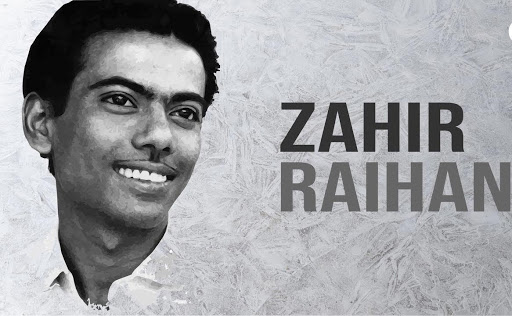
Zahir Raihan is a proverbial man in Bengali films.Zahir Raihan was a Bangladeshi novelist, writer and filmmaker. He is most notable for his documentary Stop Genocide (1971), made during the Bangladesh Liberation War. He was posthumously awarded Ekushey Padak in 1977 and Independence Day Award in 1992 by the Government of Bangladesh.

He was born on this day in 1935 in Feni, Noakhali. Different cultural and social organizations will celebrate the day through various events. These include discussions on the life and work of Zahir Raihan, documentaries and film exhibitions made by him.

Filmmaker. Zahir Raihan was one of the first group of 10 to break Section 144 on February 21, 1952. He was also directly involved in the mass uprising of 1969. At that time he was also active in various programs with the camera in hand.

He first worked with Pakistani filmmaker Zardari in 1958. The first picture is in Urdu ‘Jago Hua Sabera’. In 1964, he made Pakistan’s first color film, Sangam. His first cinemascope film ‘Bahana’ was released in 1975. In ’71, he made the black documentary ‘Stop Genocide‘.

Zahir Raihan’s other films are ‘Sonar Kajal’, ‘Kacher Deyal’, ‘Anwara’, ‘Behula’, ‘Jwalate Suruj Niche’ and ‘Jeevan To Neya’. The work of ‘Let There Be Light’ could not be completed. Published novels include ‘Last Afternoon Girl’, ‘For a Thousand Years’, ‘Another Falgun’, ‘Ice River’ and ‘How Long’. Zahir Raihan is a proverbial man in Bengali films

In recognition of his outstanding contribution in these fields, he has been awarded numerous prizes and honors, including the ‘Nigar’ Film Award, the Adamji Literary Award and the Posthumous Literary Award of the Bangla Academy. On January 30, 1972, Zahirr Raihan went missing in search of Shahidullah Kaiser, a veteran journalist and intellectual. It was later learned that he was martyred in Mirpur by the anti-liberation forces. His body was not found.

4 Bangladeshi youths have been recognized as real life heroes

0

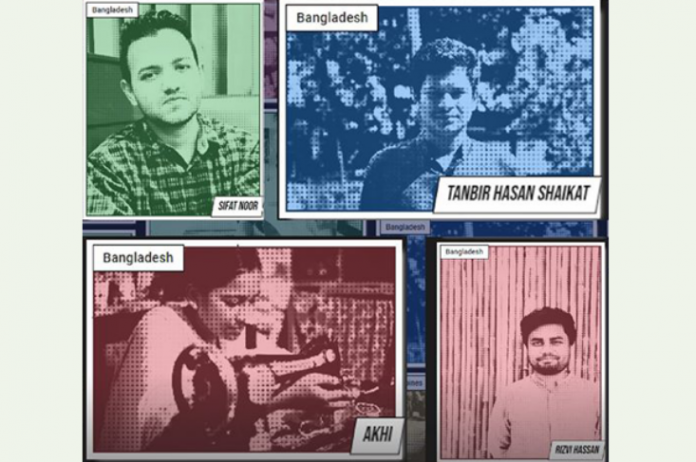
4 Bangladeshi youths have been recognized as real life heroes. On the occasion of ‘World Humanitarian Day’, the United Nations has put a number of people from all over the world on the list for their special contribution in the service of art and humanity in the current situation.


The UN website has a picture of Bangladeshi Rizvi Hasan and the context of service work for Rohingya refugees in Cox’s Bazar.Note that August 19 was declared ‘World Humanitarian Day’ by the United Nations. Recognizing the people who have volunteered to serve humanity in this special situation before him is expected to inspire others.

Dhaka University student Tanvir Hasan Saikat, BRAC engineer Rizvi Hasan, translator Sifat Noor and Ankhi Biral received the honor for not being under house arrest to save their lives like others during the Corona epidemic, but for being by the side of the victims and helping the helpless. The United Nations believes that each of them has a unique role to play in humanitarian work.4 Bangladeshi youths have been recognized as real life heroes

According to the UN website, the beach began helping marginalized people from campus when other university students left campus and went home in the wake of the Corona epidemic. After 117 consecutive days of activities since the beginning of April, when the outbreak of corona subsided, he went to Sunamganj and helped the flood-hit people. The beach continues these activities with financial support from friends and well-wishers.

Another Bangladeshi Ankhi Biral recognized as a real life hero.Ankhi (17), a teenager from Rupsha Char in Bagmara of Khulna’s Rupsha Upazila, dropped out of school due to poverty. Her family was devastated by the coronavirus epidemic. The girl was recognized by the United Nations as a ‘real life hero’ for making a mask against corona and selling it to the poor at low prices. At one time, like many other children in Bangladesh, the private development organization ‘World Vision’ helped to rehabilitate the children engaged in child labor. Although she could not return to school due to her age, the company trained her as a tailor. The company later gave her a sewing machine and some clothes. From there she dreamed of building her own garment factory.

Ankhi now runs her own business with the help of her mother and older sister. If the coronavirus is infected in Bangladesh, there is a mask crisis. And then she started making masks. She sells these masks at low prices among the poor people in the neighborhood.

Rizvi Hasan, another UN-recognized Bangladeshi, grew up in Dhaka. After studying architecture, Rizvi started working for the private development agency BRAC. He got the job of building a cyclone center for the Rohingya camp in Cox’s Bazar. That’s when he saw various charities trying to provide low-cost housing for Rohingya fleeing violence in Myanmar. In this situation, she began to build safe places at low cost to provide services to women victims of gender-based violence. In these places, women of Rohingya camps are given training to develop various skills including counseling. BRAC and UNICEF are providing safe services and training to many women through these exceptional installations.

Another young Bangladeshi, Sifat Noor, has been recognized by the United Nations as a real-life hero for his translation work. The United Nations believes that people need information and communication just like food, water and shelter in any crisis. All this information and communication has to be in their own language. And this is where the work of a translator becomes important.

The United Nations says Sifat is a hero of humanity. Because, he has translated many important, life-saving important information into Bengali.

He has translated more than 115,000 words into Bengali since he started working for Translator Without Borders in March 2020. He has been able to deliver life-saving information to more people by translating these words on behalf of important organizations like IFRC and UNHCR Bangladesh. Many people have been able to keep themselves and their family members safe through his recent translation work on Kovid-19.

Why children and teenagers will be in jail?

0

Why children and teenagers will be in jail?Children are as sacred as flowers. Sukanta Bhattacharya wrote, “The new baby has arrived, he has to be given a place.” But can we do that?

Somewhere around us today, children and teenagers are no longer safe. They are suffering from insecurity on the way to school and even at home. And as a result, they may be increasingly involved in crime. We should blame ourselves before blaming them for this. If we could ensure a beautiful environment for them, they would not be involved in crime.

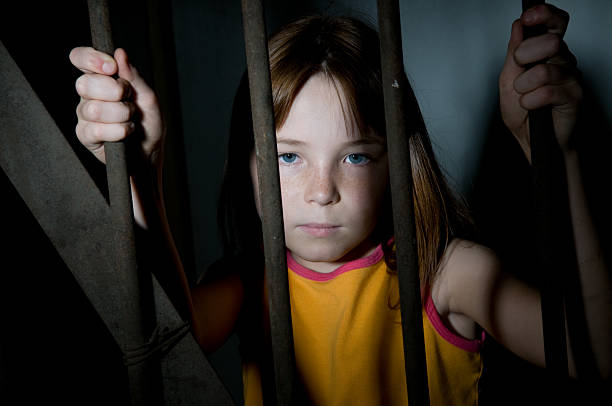
338 children are living in different prisons of the country without being criminals. They have been kept with the mothers who are imprisoned for various crimes. However, their mental development is being hampered by living in captivity. In this case, the experts think that it is necessary to create a separate society inside the prison for these children and their mothers and take training and treatment measures.PROJECT FOR ACTION - RISE Education with SHINE FOR KIDS - Graduate Women -  New South Wales

According to the information received from the Department of Prisons, 338 children are lodged in 6 prisons of the country. These children are with the mothers who are imprisoned for various crimes. Each of them is less than six years old. As a rule, any child inside the prison is handed over to relatives outside when he is over six years of age. And those who do not have any relatives, they are handed over to the concerned people of the Ministry of Social Welfare. They keep the child in a government child family.

Concerned people also said that the children under the age of six who are in jail with their mothers are taken care of by the jail authorities. The name of the child who first came to the prison is included in the registrar. If the child needs to be sent to day-care, he is sent there. Arrangements are made to provide food and nutrition to the child as per the advice of an Assistant Surgeon. In addition to children’s meals, clothes, sports equipment and treatment are provided in a child-friendly environment. A deputy of the district supervises these matters round the clock.

Colonel Iqbal Hasan, Additional Inspector General of the Department of Prisons, told the Bengali Tribune that there were 3,063 women prisoners in jails across the country till Thursday. There are 337 children in jails with them. After the age of six, the children are handed over to their next of kin or to the Ministry of Social Welfare.He said there are 1,049 women prisoners in Dhaka Division, 546 in Rajshahi Division, 26 in Rangpur Division, 696 in Chittagong Division, 106 in Sylhet Division, 320 in Khulna Division and 95 in Barisal Division. . None of them are above six years of age. And juvenile delinquents under the age of 18 are sent to juvenile correctional facilities. No children between the ages of six and 18 are kept in prison.

Asked if the mental development of these children was being hampered, Additional Inspector General Colonel Iqbal Hasan said, “Only mothers who want to keep their children are kept.” In this case, we have nothing to do. But we are always vigilant so that the children can live in a beautiful environment and play. ‘

Asked if the mental development of children in prisons is being hampered, Sultana Algin, an associate professor in the Department of Psychiatry at Bangabandhu Sheikh Mujib Medical University Hospital, told the Bengali Tribune: Growing up in a criminal environment early in life can have an impact; Which may remain in later life. We have to consider whether a separate schooling and society can be built for them. After getting out of jail, they have to be treated properly. ‘

The ten jobs that pay the most

0

The ten jobs that pay the most

Do you know which is the highest paid job in the world? Especially in America and other developed countries, these ten jobs have the highest salaries.


Surgeon

According to the employment website CareerCast, surgeons are the highest paid in 2015. The average annual salary of a doctor is 3 lakh 52 thousand US dollars.

Psychologist

Psychologists are in the second position in the list of Forbes Their average annual salary is 1 lakh 61 thousand US dollars However, in order to get this salary, they have to have a ‘Doctor of Medicine’ certificate

Physician (General Practitioner)

The demand for General Practitioners or GP Physicians is increasing all over the world Their average salary in the United States is 1 lakh 60 thousand US dollars Improvement in this job is also possible quickly

Corporate executive

The ten jobs that pay the most

In multinational companies, the average corporate executive is paid an average of 173,000. There are a lot of stress and new challenges in this job

Dentist

If you want to be a good dentist, you have to take specialized training And many of them work hard However, if the annual salary is 1 lakh 46 thousand US dollars, that hard work can be done

Petroleum Engineer

Petroleum Engineer 7 is at number six in the list of Forbes The list is based on the US job market The average annual salary of a petroleum engineer in that country is 130,000 US dollars.

Orthodontist

Orthodontists are most in demand in areas where there is dental insurance Their average annual salary is 1 lakh 29 thousand US dollars

Data Scientist

The demand for data scientists is growing rapidly However, there are not enough job seekers in this sector as per the demand So if you are interested, start a course quickly The average annual salary is 1 lakh 24 thousand US dollars

Air traffic controller

Kids experienced the challenges of working in an air traffice control environment as the tried out the ATC similator. (U.S. Air Force Photo/Don Peek)


Demand for air traffic controllers is declining Demand for this specialty has grown significantly as a result of recent corporate scandals and the need for automation. However, the average annual salary of those who are still doing this job is 1 lakh 22 thousand US dollars


Pharmacist

The average annual salary of pharmacists is 1 lakh 21 thousand US dollars Their demand is also increasing gradually Deutsche Welle

Ask yourself four questions to redefine life

0
porimoni
Porimoni

Ask yourself four questions to redefine life.
Depression can sometimes overwhelm life. But despair is not the end of life. It has to be overcome. It is very important to keep trying to make life new. If you want to redefine your life, then ask yourself the four questions given in this article.


1. What should you think about?

There are some issues that will get complicated the more you think about it. So there is no need to worry about everything. Positive thinking, which encourages creativity, is the only thing that should be kept in mind. Get rid of the thoughts that provoke negativity in your mind. For this, first of all you need to pay a little attention to your thoughts. Find out what is on your mind by thinking a little quietly. Are you afraid of anything? Constantly thinking of a subject? Is there anything unusual in your thinking? If it is possible to diagnose these issues, it will be easier to get rid of unnecessary thoughts from your mind.
Ask yourself four questions to redefine life
2. Who are you listening to?

Are you being influenced by someone’s words? If so, consider how important it is or should be. Your personal relationships, lifestyle or professional matters should always be under your control. In this case, if you want to take someone’s advice, think about whether he has that qualification or not. Determine if you have a habit of being influenced by someone else’s words, not the right person. If this affects your life, try not to let it happen again.
3. How was your first reaction?

Notice how your first reaction is in any unforeseen situation. Do you do anything unusual compared to others? Do you have a tendency to run away from the situation rather than to handle it? Find out if your response is emotionally responsive. These reactions can include things like anger, anxiety and frustration. In your initial response, many things can be understood about how much you have accepted different things. No matter how bad the situation, you should accept it. This will allow you to handle the situation. So find out how your initial reaction is to handle the situation. Correct yourself if necessary.Teenagers

4. How do you accept others?

You will have the same attitude and attitude towards other people and others will have the same attitude towards you. That’s why you need to know your own point of view. Is your attitude towards people depressing? Do you keep an eye on strangers? Or are you stuck in your own circle? It is very important to know these issues. If you look at others well and welcome everyone, it will boost your confidence a lot. This will create a better understanding of others with you.

Why are children’s films declining?

0

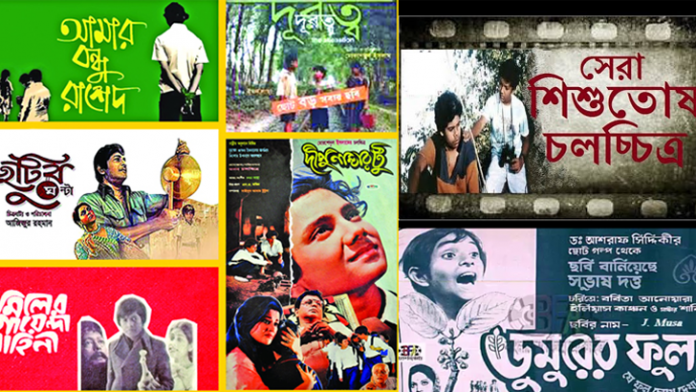
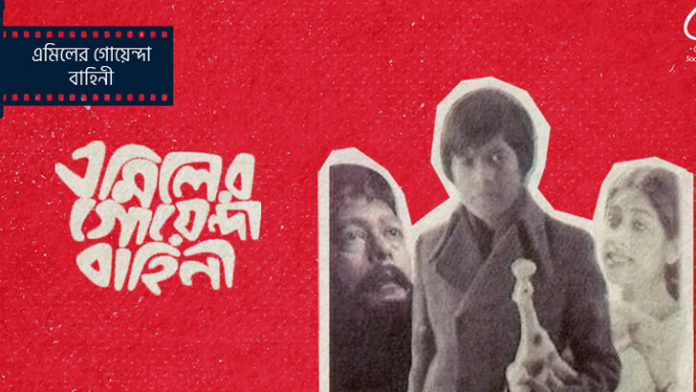
Why are children’s films declining? Fleeing from home, Gupi Gain Bagha Bain, Chutir Ghonta, Emiler Goenda Bahini or Sonar Kella – the colorful days of childhood float in these films. There are also Movies like Home Alone, ET The Extra Terrestrial. These Movies are made with child mind, imagination and the world around.


Films or animated films like the Harry Potter series are in Hollywood with children’s healthy entertainment in mind. But the picture of Bangladesh is quite disappointing.There have been countless films for children here since independence. At present no more Movies are made for children than one a year in grants.

Why are children's films declining?
Dipu Number two


The film has a worldwide reputation for entertaining, educating and educating children. However, children’s films are declining day by day in search of ‘adult language’ of film in South Asia, especially in Bangladesh. The statistics of the last few years say so.

Although only a handful of films have been made, they are out of reach of children due to lack of proper publicity. In all the countries of the world where the production of children’s films is increasing, the amount is gradually declining in Bangladesh. Film buffs are expressing concern over this.

Even this year, after the producers Faisal Raddi and Manik’s ‘Pathshala’, Mrittika Guna’s ‘Kalo Megher Vela’ and Jean-Nesser Osman’s ‘Panchasangi’ have been aired on various festivals and on TV, there has been a lot of discussion. Velo and Panchasangi are two films made with government grant. Although low in number, no one has any objection to the quality of these films.

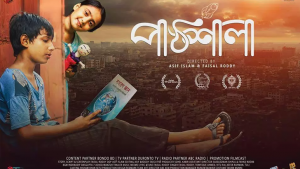
Pathshala


‘Pathshala’ shows the indomitable story of winning the life of a talented street child. Manik, a ten-year-old child, was forced to drop out of school in his childhood due to the difficult reality of life. He came to Dhaka in search of livelihood. Works in a car workshop. Manik worked there all day, did inhuman work, but Manik did not give up his dream of going to school.

At one point, another eight-year-old child, Chumki, came forward to fight for the fulfillment of his dream. Manik dropped out of school prematurely in Bangladesh. The film ‘Pathshala’ is about the message of assurance of education of all such Maniks in the country. The main slogan of the film is ‘I want school for all Manik’. And ‘Vela of Black Clouds’ shows the sad story of a nine year old. Whose job is to carry the goods of the train passengers.

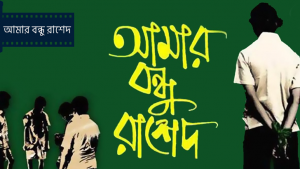
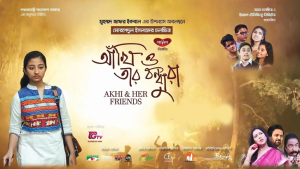
The two films have garnered a lot of praise since their release. However, if we look at the history of the past, there is no shortage of viewers of children’s films in the country. Dipu Number Two, released in 1997, Autumn ’71 in 2000, Distance in 2004, Puppet Marriage in 2010, My Friend Rashed in 2011 and ‘Akhi O Her Friends’ in 2016 are great examples.

These movies have been commercially successful as well as influential in society as a whole. Even then, for various reasons, many people are discouraged from making children’s films. There is no stronger way to develop children’s psychological perceptions, feelings and beliefs.

Meanwhile, the filmmakers are concerned about the reluctance to produce even after having a audience in the children’s film.

While the average number of adult movies released every year is half a hundred, the number of children’s films stands at four to five. As a result, a large number of children in the country are moving towards foreign culture. Generation after generation of Hollywood movies like ‘Kungfu Panda’, ‘Trolls’, ‘Jungle Book’, ‘Beauty and the Beast’, ‘Cinderella’, ‘Peter’s Dragon’, ‘Harry Porter’ or ‘Boss Baby’.

With foreign culture entering the minds of children. Some people believe that the reins should be pulled now.

Some timeless children’s films in Bangladesh

0

Some timeless children’s films in Bangladesh. We generally understand a film that is suitable for the child’s mind as a children’s film. We also call such films as children’s films.

In fact, by watching children’s films, we get an idea of ​​children’s minds, their surroundings, their problems, feelings, beliefs and understandings. That is why it is said about children’s films that films made with the aim of providing them with mental development and pure pleasure by understanding the different aspects of child psychology can usually be included in this category (children’s).
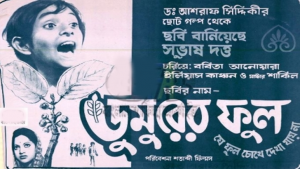
Dumurer Ful
Some timeless children's films in Bangladesh
Dumurer Ful


Dumurer Ful is a Bangladeshi Bengali language children’s film directed by Subhash Dutt. It is based on the story of the boy named Ashraf Siddiqui. Babita, Ilyas Kanchan, Shakil, Syed Hasan Imam, Sirajul Islam and others have played the lead roles in it. The film won three awards at the 1989 National Film Awards.
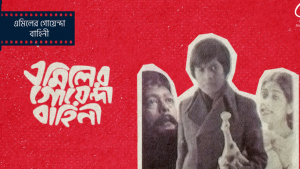
Emiler Goenda Bahini (1980)


Emiler Goenda Bahini is the first children’s film of independent Bangladesh released in 1970. It is based on the teenage detective novel Emile’s Intelligence Team (1929) by German author Erich Kastner. The film is scripted and directed by Badal Rahman. [1] Starring Golam Mostafa, Sara Jaker, ATM Shamsuzzaman, Sharmili Ahmed, Master Perth, Shiplu, Tiptip and others.Puroshkar (1983)

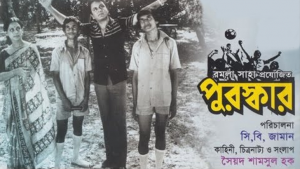
Puroskar

Puroshkar Bangladeshi Bengali language children’s film released in 1973. The film is directed by CB Zaman with story, dialogue and screenplay by Syed Shamsul Haque. Sumon, Shakil, Bulbul Ahmed, Jayshree Kabir and others have played the lead roles in it. The film won five awards, including Best Film at the 1973 National Film Awards. In addition to winning national awards, it was screened internationally at the Goa Film Festival in India, the Delhi International Festival and the Tashkent Film Festival in Russia.

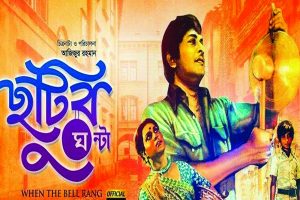
Chutir Ghonta (1970)

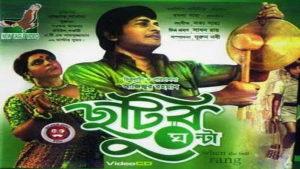
Chutir Ghonta


Chutir Ghonta is a Bangladeshi children’s film released in 1970. The film is directed by Azizur Rahman. On the day of Eid holiday announcement, a 12-year-old student was locked in the school bathroom without anyone knowing. And this tragic scene depicts how an innocent young face fell into the lap of death after enduring 10 days of inhuman suffering in the heartbreaking events and the idea of ​​liberation in the wake of the end of a long 11-day holiday in a locked bathroom.


The film stars child artist Sumon in the lead role and Raj Razzak, Shabana, Sujata, Shawkat Akbar and ATM Shamsuzzaman in other roles.
Durotto (2004)

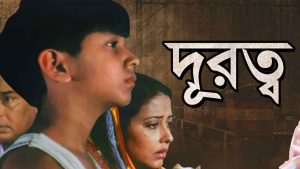
Durotto


Durotto is a 2004 Bangladeshi children’s film. Directed by Morshedul Islam, the film is made under the banner of Impress Telefilm and is based on a novel by Humayun Ahmed. The film stars Humayun Faridi, Subarna Mustafa, Raisul Islam Asad, Hakim Ferdous, Akhtar Hossain, Delwar Hossain, Wahida Mallick Jolly, Shahidul Alam Sachchu and Tania in the lead roles. The film won the 2004 National Film Award.

Pathshala (2018)

Pathshala


Manik’s story will reveal the harsh truth of social reality. Will move the people of the society in perception. The producer told the story of the film, a 10 year old boy Manik. She has no father, mother is ill. Due to this his studies were also stopped. The responsibility of the family is on his shoulders. One of the villagers went to Dhaka and advised him to work. Manik moved to Dhaka.

Works in car garage. Children her age go to school when she works in the garage. Seeing this, Manik will study with a broken heart. That’s why he works all day and tries to read books by himself at night. At one point he succeeds. His success story is told. Habib Arinda, Ima Akhter, Farhana Mithu, Taufiqul Islam Emon, Amirul Islam and many others have acted in the movie.

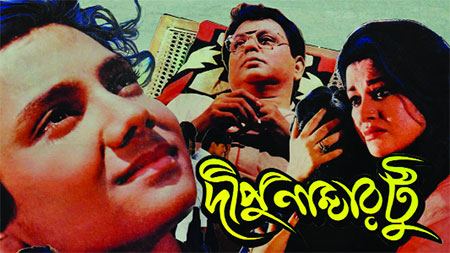
Dipu Number Two (1997)

Dipu Number two


Dipu Number Two is a 1996 Bangladeshi film. The film is directed by Morshedul Islam and is based on Muhammad Zafar Iqbal’s 1974 teenage novel of the same name. Arun has played the title role in the film. Bulbul Ahmed, Babita, Abul Khair, Golam Mustafa, Shubhashish and many others have also acted in different roles.

Amar Bondhu Rashed (2011)

Amar bondhu rashed


Amar Bondhu Rashed is a Bangladeshi war based film released in 2011. The film is based on a children’s novel of the same name written by Muhammad Zafar Iqbal and directed by Morshedul Islam with a grant from the Government of Bangladesh. The film is produced by Mamon Films and Impress Telefilm.

The film stars Chowdhury Javata Afnan in the lead role, Raisul Islam Asad, Piyush Bandyopadhyay, Enamul Haque, Humaira Himu, Wahida Mallick Jolly, Arman Parvez Murad in the lead roles, Ryan Ibtesham Chowdhury, Kazi Raihan Rab in the lead roles. Fayaz bin Zia, Rafayet Jinnah Kawsar Abedin. The story reveals how some teenagers from Mofasbal got involved in the liberation war in 1971.

Ankhi o Tar Bondhura (2016)

Akhi o tar bondhura
It was created by the popular novelist. Based on Muhammad Zafar Iqbal’s ‘Ankhi o Tar Bondhura’, produced by Manon Films and Impress Telefilm Limited, has been produced with government grant. Child artist Jahin Nawar Haque Isha has acted in the title role of the film. Surbana Mustafa, Tariq Anam Khan, Al Mansoor and many others have also acted in other roles.

Why so reluctant to make children’s films?

0
Dipu Number Two
Dipu Number Two

Why so reluctant to make children’s films? Children’s films are now neglected in our country. Everyone in the society, starting from the creator, thinks that it is not an important job.

The Prime Minister directed to include the issue of making a children’s film one by one in the grant film. But later this issue was not emphasized anymore. Now the children’s film made in Dhaka is neglected.
Fazlul Haque, the editor of the monthly ‘Cinema’, took the initiative to make the first film for children and teenagers. He created ‘Sun of Pakistan’ based on the story of his wife Rabia Khatun.
After the independence of the country, Syed Salauddin Zaki produced the film ‘Ankur’ produced by the Film and Publication Department under the supervision of the Film Parliamentarian and Pune Film Institute. He later made another children’s film ‘Galpa Dadur Galpa Kotha’ produced by Shishu Academy.
Then in 1980 another filmmaker Badal Rahman made ‘Emil’s Intelligence Force’ with government grant. The film won the National Film and Bacchus Award for Best Picture and in various categories. Later, Khan Ataur Rahman also produced ‘Danpite Chele‘ in the production of Shishu Academy.
This film also won the National Film Award. After independence, when the government took the initiative to make children’s films, it was decided that one of the three government-funded films must be children’s films.
Why so reluctant to make children's films?
Chutir Ghonta
In the late seventies. Subhash Dutt made the children’s film ‘Fig Flower’ based on Ashraf Siddiqui’s story ‘The boy on the side of the street’. Later, Azizur Rahman’s ‘Uneducated’, ‘Holiday Hour’, CB Zaman’s ‘Prize’ children’s films also garnered various honors including national awards and praise from people of all walks of life.
In the seventies and eighties, children’s films were made in Bangladesh on a par with other countries in the Indian subcontinent.
Regrettably, our children’s filmmaking has come to a standstill since the nineties when the quality of Indian films has gradually increased to the point of competing with Hollywood. Although such a picture has been made in Kalevadra, its number is disappointing.
The country’s first children’s digital film ‘Durbin’ was made in 2009. Director Zafar Feroze won the Best Film Director award in the international category from the Mumbai Film Academy for the film, which was made in the light of Shirshendu Mukherjee’s novel Durbin.
Emil and the detective
Among Bangladeshi producers, Morshedul Islam has shown the most success in making children’s films. His productions ‘Dipu Number Two’ (1997), ‘Distance’ (2004) and ‘Amar Bandhu Rashed’ (2011), ‘Ankhi O Her Friends’ (2016) became very popular among children and teenagers.
Sadly, Bangladesh Shishu Academy, established in 1986, has so far produced only about 20 children’s films, both full-length and short-length. With the rapid development of information technology and the globalization of the whole world, naturally the high-tech children’s movies made in the developed world are now attracting a lot of children and parents.
An animated movie called “Montu Mia Expedition” was made in 2000. It is broadcast on Ekushey TV. Three episodes of it were built. Apart from this, there is no information about making any other children’s animation movie in Bangladesh. All in all, children’s films have been neglected in Dhaka for a long time.

Which is really frustrating. Renowned filmmaker Azizur Rahman said that children and teenagers must have their own world. They have their own style. Their films should be on the scale of their individuality. That is why children’s films deserve a special importance.

Finding Dory
Finding Dory
The impact of digital media in the techno age is undeniable. And that’s why talkative films are the most effective tool of the time in shaping a child’s mind. At one time comics and fairy tale books were the food of children’s fiction.
Hollywood continues to regularly present every favorite comic and fairy tale character of children on the digital screen. Children and teenagers are being attracted. Trade is also plentiful.
The director-producer does not have to think about investing in making children’s films. But the difference is going on in our country. Despite receiving government grants, in most cases, the production of such films remains elusive. Children’s films can now be said to be almost neglected here. Which is also sad.

The first children’s film of independent Bangladesh

0
Emil and the detective

The first children’s film of independent Bangladesh ‘Emil’s Detective Force or Emiler Goenda Bahini’ was released in 1970.

However, the most talked about topic was that the producer of this film, Badal Rahman, came from Pune, India with training in film and started making the film. He also got government grant. Although the main story of the film ‘Emil’s Detective Force or Emiler Goenda Bahini’ is by Erich Kastner, the screenplay was written by Badal Rahman himself.

Even after foreign stories, the social reality of one’s own country was presented in an extraordinary way. The story of the film was also changed drastically. The main character is Emil. Emil himself, who played a great role as a petty detective, is now a mystery. He was not seen again after his debut film. Where is Emil, the child who starred in the country’s first children’s film? Are you still interested in espionage like the screen? Or everything has changed in the opening! Such questions are on the minds of many viewers. The real name of that notorious detective named Emil is Riaz Shahid.

He currently resides in Jahar Bahru, Malaysia. Prior to that, he worked as Head of IT at the American International School in Dhaka. Malaysia came in 2016. There, too, he is working as an IT director at St. Mary’s Forest City International School, an American school.

Bangladesh’s first government-funded children’s film ‘Emil’s Detective Force’. The whole story of being involved in this film was great. Film director Badal Rahman went to study at Pune Film Institute on a scholarship during 63/64. Many others went with him. There, Badal Rahman returned to the country in 6/7 with a diploma in film editing.

Salahuddin Zaki was also with him. Both received government grants to make the film. Badal Rahman got for ‘Emil’s Intelligence’ and Saladin got Zaki for ‘Ghuddi’. Both are very nice stories. At that time Riaz Shahid i.e. today’s Khude Emil is very small. But he knew then and there that these two pictures had received grants.

196 Riaz Shahid is studying in Udayan School, Class Six. Their family had a connection with Badal Rahman. Riaz Shahid, that is, Emil’s aunt, often came to the house to chat. Suddenly he called one day and said, “When will your final exam end?”The first children's film of independent Bangladesh

Riaz Shahid told him that the exam would end at the end of November. Even then he did not know anything about the film. Then one day he sat down and said, “I’m making a movie about Emil’s intelligence.” I want you to play the main character. ”

Before that, Riaz Shahid had no experience of standing in front of Emil’s camera. Although his family was in the cultural sphere. The late Alamgir Kabir became his uncle. This means that many of their families had and still have a lot of contact in this area. But he will make a movie himself, he will stand in front of the camera – all this did not come to his mind.

But after saying that he was very surprised. What aroused the most curiosity was when Badal Rahman said, “We will shoot in Khulna.”

If you watch the movie, you will know that Emil is the son of Khulna. He was in Khulna till he came to Dhaka. Going there was like an adventure then. Badal Rahman himself had a great time in Khulna as a child. In the city he attended St. Joseph’s School. Also shown in the movie, Emil is a student of Khulna St. Joseph’s School.

Emil’s mother, Riaz Shahid’s mother, was not unhappy after getting a chance in the movie. Was a little worried. However, there were not many problems. Everyone encouraged. Because, it is going to be the first children’s film in independent Bangladesh. That was the big deal for them. Riaz Shahid did not understand any of this at that age. But he only knew that he would go to Khulna. The shooting took place in Khulna for 15 days.

The film was released in 1970. Shooting started in 8. Then the middle was off. Then it started again in 7. However, most of the shooting took place in ’69. Most of the shootings took place from January to July of that year. For example, inside the Intercontinental, chasing a thief, Sakura is there. Then it took until January 1970 to finish everything including dubbing and editing. The movie was released in September 1970.

Money is a big issue. The shooting of the movie was stopped for about 6-7 months due to lack of funds. Badal Rahman received a grant of three lakh rupees or a little more for the production of this movie. Then it had to be made entirely from Badal Rahman’s initiative. It is true that he got the grant, but when it comes to making a picture, he has to do it with special technical arrangements like mind, with good craftsmen, but it does not become with that money.

For this, donations were collected from different places. He has even spent a large part of his own pocket. Another issue was that no crew was paid for this film. Except the revered Golam Mostafa Saheb, none of the actors got paid. Riaz Shahid and other children including Emil did not understand what was happening. Among others, the late Anwar Hossain, a friend of Badal Rahman and a cinematographer, did not take any remuneration. But he was an internationally acclaimed cinematographer at the time. He was also working on ‘Surya Dighal Bari’ at that time.

The child Emil was touching the teenager while shooting. Looking at the movie, it can be seen that there is a difference between Emil from Khulna and Emil from Dhaka. Emil’s voice changed. It started at the end of class six. Then when the shooting stopped and started again, it was in the middle of class seven. Emile’s voice was changing at that time. The height also increased a little. Critics, however, did not notice much.

There was no feeling in the film that little Emil had acted in. The main thing was adventure. They are kids, everyone is the same age. This is the first plot in Bangladesh for children. Still the only plot of that movie was for kids.

When the film was released, Emil lived in the cantonment with his family. At that time in 1970 flood waters entered many places in Dhaka city. Water also flooded the houses of Riaz Shahid and Emils. So at that time they were at his aunt’s house in Maghbazar for some time. Where Badal Rahman used to come. When the movie came to the Cantonment Cinema Hall, many people in the area did not know that the boy who played the role of Emil was in the Cantonment itself. After watching the movie, everyone in the neighborhood was surprised to see it. Riaz Shahid had a lot of fun hearing this.

The role of Emil was thrilling to him that he had acted in a movie, showing it in a cinema hall. On the day it was released, I think Riaz Shahid was in class nine. Bangla teacher  Jamila suddenly came to the class and said, ‘Today, the first children’s film of Bangladesh is being released on Friday. Here our student Riaz has played the lead role. This is what we will celebrate. Congratulate him all. ‘Everyone applauded then.

Another thing is that many of the people who were with Emil in different roles in ‘Emil’s Intelligence Force’ are students of Udayan. Such as- Shiplu, then Imran. Imran is his classmate. That was the big news of the school at that time. When he walked on the street, everyone would show him that Emil was going. At first I was very ashamed to get everyone’s attention. Many people would ask outside, isn’t this Emil? He was ashamed and said, yes, I am Emil.

That little Emile has grown up now. His children know that he has acted in a historical film of Bangladesh. A few years ago he went to Canada with his daughter to be admitted to university. There are also many friends of the big Emil. After going to Canada, everyone was invited to a friend’s house. There, a friend said the matter in front of everyone in the middle of the invitation.

The small actors were very happy to make the film because Badal Rahman left everything to the child artists. For this reason, they did not understand that the small artists are performing. Everything was very natural. He never told others who were there, such as Golam Mostafa, Sara Zaker, Benu Zaman, what to do. I mean, he didn’t force anything. He explained the situation and gave a small idea of ​​the character. As a result, the film is well portrayed.

There are many dialogues in the film that were not in the script. All this has been improved on the spot. Badal Rahman never forced a child to come out naturally in terms of how he speaks and behaves.

Another thing is that about 10-15 children have worked. Managing them is not a trivial matter. He never bothered. The child artists were all the same age. It could be seen during the shooting that everyone started playing after going to the spot. Before shooting any scene, Badal Rahman called, “Come on, all of you.” Emils would then run and shoot. At the end of the shoot, he would run again and go to play. All the children were in the whole commotion. Had a wonderful time.

The audience still wonders what would have happened if the second episode of Emil’s intelligence had taken place? I mean, the Emils have all grown up now. Now it wouldn’t be bad if there was a movie about their intelligence work. An Emil has taken place in the hearts of the audience with his performance. That’s why he is in people’s hearts even when he is away from movies. Even after acting in many films, some people cannot take place in the hearts of the people, but by acting in only one film, he has been in the hearts of people for ages. Emil’s intelligence is still intact.


Murtaja Baseer is an example for artists

0
Murtaja Baseer
Murtaja Baseer

Murtaja Baseer is an example for artists.

Murtaja Baseer is one of the brightest stars of Bangladeshi art. The legendary artist passed away yesterday after being infected with coronavirus. He breathed his last at 9:10 am yesterday while undergoing treatment at Evercare Hospital in the capital. According to the artists, a chapter came to an end with his departure.


Murtaja Baseer was at the forefront of the Bayanna language movement, the liberation war of 1971 and the anti-authoritarian movement and protests of the nineties. He took an active part in the language movement of 21 February 1952. He drew the picture on Linocote in 1952 under the title ‘Bloody 21st’ on February 21.

According to the Asiatic Society, ‘Bloody 21st’ is considered to be the first painting on the language movement. He was one of the leaders in the ‘Swadhinata’ procession organized by the Council of Arts and Craftsmen in Bangladesh from Shaheed Minar to Bahadur Shah Park on March 17, 1971.

‘Walls’, ‘Martyr Title’, ‘Kalema Taiyeba’, ‘Fan’ are notable series painted by artist Murtaja Baseer. He is the promoter of an art form called ‘Abstract Reality’. He has also put his signature of individuality in the East-West match in figurative work. Murtaja Baseer received the Swadhinata Padak in 2019, the Ekushey Padak in 1970 and the Shilpakala Academy Medal in 1985 for his contribution to painting.

He wrote the story and screenplay for the 1973 Urdu film Karoyan. He was the screenwriter, art director and chief assistant director of Humayun Kabir’s ‘Rivers and Women’ in 1984. In 1975, he was the art director of the Urdu film Kayase Kahu.Murtaja Baseer is an example for artists

Among the story books published by Murtaja Baseer are ‘Glass Bird Song’, ‘Story Complete’. The books of poetry include ‘Trasarenu’, ‘Tomakei Shudhu’, ‘Eso Phire Anusuya’, ‘Saday Eliji’. Novels ‘Ultramarine’, ‘Four Evenings with Mita’, ‘Amitrakshara’. Selected essays include ‘Tangible and Abstract’, ‘My Life and Others’. ‘The Abyssinian Sultan of Bengal and the Society of the Time in the Light of Coins and Inscriptions’ is a research work by the artist.

He also published a number of research papers on pre-Mughal coins in the Journal of the Newmastic Society of India, University of Benares, India. Legendary artist Murtaja Baseer’s death has been commemorated by his close and dear ones.

His death is a great loss for us

Alok Roy, Professor (Retd.), Department of Fine Arts, University of Chittagong

I was very close to Murtaja Baseer. As an artist he was extraordinary. Mixing with him, it could be understood that he had a child-like mind. Impossibly arrogant people. He used to tell very good stories. He was interested in various subjects. He was in Italy. At first he worked in cubic style. His figures were linear. Later he started doing abstract work. However, it cannot be called abstract. People have done things that are not there.

He did some work by looking at the plaster on the walls that had fallen off. The walls have done the series. It works very exceptionally. He used to say, ‘I can’t draw pictures from the mind, I need to see something.’ He saw stones and drew some pictures called epitaphs. These are his most important works. He died in adulthood. Yet his death is a great loss for us.
A chapter ended with his departure

Gautam Chakraborty, artist and gallery co-director

I got him very close. He was at the opening of Kaya Gallery in 2004. I did my first exhibition in 1992. He was still present. He inaugurated it. She has been in daily contact with him since 2004. In 2006 I had the opportunity to do my first exhibition at Gallery Kaya. Since then he has done all his exhibitions in Gallery Kaya. About four exhibitions.

Murtaja Baseer was the last among the artists of this generation including Qayyum Chowdhury and Jahangir. A chapter ended with his departure. Murtaja Baseer will be 6 years old tomorrow. He left before her. He always told me, ‘I want to live after my death.’ That is through work. He left a huge treasure trove of work.

At the beginning of his life, one of his most famous works was ‘Bloody 21st’. He was also present in the procession on 21 February 1952. Protests are not just political and social. It has a cultural background. He was in procession, the bullet could have hit his body too. I would say this feeling, this consciousness was his driving force.

The deep connection between the artists and the cultural workers and the emotional pastures of the artists and cultural workers was one of the great inspirations behind the events of 1971. And these are the things that have come into their pictures, writings, etc.

Murtaza Bashir is an example for artists

Wakilur Rahman, artist and curator of Kalakendra

Murtaja Baseer is one of the art personalities. We have seen many series directly in his drawing. He was extremely social. In various fields, especially literary practice, he had close contact with writers. He also studied literature. The expression of his thoughts could be found in the writing. At first he was involved with the film. He later wrote novels. He is an ideal artist, who can be followed. He had many hobbies. As he collected coins from different countries, he had a lot of stamps.

All in all, he had a very colorful life, and he was very tidy. He has arranged all his practices very precisely. So the next generation

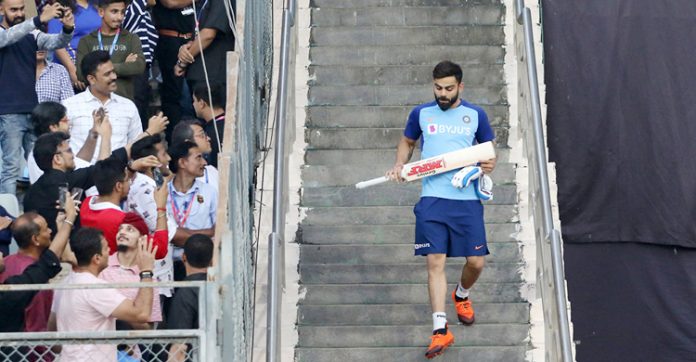
That is why Virat Kohli is the best of the best

0
Virat Kohli
Virat Kohli

That is why Virat Kohli is the best of the best.

Match 417, Innings 460, Runs 21901, Average 58.15, Century 60, Half Century 104 – These figures are enough to show the greatness of Indian cricket team captain Virat Kohli. Kohli has so far scored nearly 22,000 runs and scored 60 centuries in international cricket in all three formats.


Not only that, he has averaged more than 56 runs. He is the only batsman in the world to average more than 50 in all three formats. Kohli (59.33) is the highest average among the batsmen who have scored at least 5,000 runs in ODI cricket.

Whatever the format, Kohli’s bat has not stopped flowing at all. In the meantime, he is breaking Sachin Tendulkar‘s record of scoring a century by scoring 60 centuries. He has scored 43 centuries in ODIs and 26 centuries in Tests. Although he did not score a century in T20, he has crossed fifty five times in just 7 innings.

There is a lot of hard work and dedication behind Kohli’s batting success. Beyond that is the urge to outdo oneself and to be number one according to one’s own merits while respecting others. Kohli prefers to rise above one’s own merits rather than to bring someone down to the top.

The secret of the Indian captain’s success has been revealed by his teammate Hardik Pandya. In an interview to Sports Tak, Pandya said, “I was talking to Virat two days ago. I asked him, ‘What is the reason behind your success?’That is why Virat Kohli is the best of the best

Pandya kept saying, ‘Then Virat replied to me, your mentality is good, everything else is fine. Just one thing to keep in mind, consistency. You always have to have the appetite to be number one from the right path. The goal should be to be number one with one’s own hard work and talent, not by pulling someone down. ‘

Pandya has learned a lot from Kohli’s words. According to him, Kohli, Dhoni or Rohit Sharma have never been number two, but with their own hard work, they have regained the number one position. This is the key to their success.

Pandya said, ‘Now I know how Kohli is so consistent. Players like Rohit Sharma and MS Dhoni never want to be number two. They are never worried, even if they are number two. With their own qualifications, with the proof of ability, they started the process of becoming number one again. ‘

Useful tips for starting an online business

0

Useful tips for starting an online business. Are you interested in starting a profitable business in Bangladesh? But do not understand how to do? Then this article is for you.


Online business is very popular in Bangladesh nowadays. There is a lot of work involved in running online business. You have to choose the best way to run your online business. There are no shortcuts and you have to study a lot before you start.

Here you will find some basics to start an online business or e-commerce, such as: Plan Fixed Resolution Hard Work Great Business Plan Profit Possibility If you have a plan in mind to start an online business in the near future then this article is for you. Another thing to be clear to yourself and your buyer is why would they buy from you? Here are some tips to help you do your homework. Here are some tips to help you get started:

Consider your interest:

You just have to be more discriminating with the help you render toward other people. You need more than luck to succeed in affiliate business. You need more than luck to succeed in affiliate business. You need JavaScript enabled to view it. If there is more demand for it then you are more likely to succeed.Verifying Online Market Competition:

Guide to Starting an Online Business

Your online business is more likely to be successful if your product has more demand and less competition. Business needs to be presented in an attractive way. Creating an Effective Business Plan Starting an online business is easier than starting a traditional brick and stone business. However, this does not mean that you will not take advantage of your effective business plan. You need to have a good business plan before starting an online business as it can determine the success or failure of your business.

Check the validity:

In some countries, you need to get a license before starting an online business. You have to do the legal work in your area so that you do not break any law.

Advertising method:

You need more than luck to succeed in affiliate business. You need more than luck to succeed in affiliate business. You need more than luck to succeed in affiliate business.

Business Schedule:

There should be a regular time for your business. Think of your business as a source of income, not a hobby. You should follow all the rules of the business, especially when it comes to business time.

Contact address:

You should provide a contact address so that your customers can easily communicate with you. Nowadays, it is very easy to find a place on Google Maps and people believe it. Open your Google Plus account now and give your address without any worries. It will be very easy for you to find you. You can also provide some more means of communication.

Such as: 1 / Phone number 2 / Email 3 / WhatsApp

Written by: Tanhim Rahman

Bangabandhu Sheikh Mujibur Rahman University of Science and Technology, Gopalganj.

You can become an entrepreneur at the age of 90

0

You can become an entrepreneur at the age of 90

A 90-year-old woman has stunned the world as a woman entrepreneur. Her name is Harbhajan Kaur and she lives with her daughter-in-law and granddaughter in a town in Chandigarh, Punjab. From the beginning, Harbhajan Kaur’s cooking was appreciated.

Whenever there was a ceremony at home, the responsibility of preparing food was given to her. Each time, the guests were acclaimed for their versatile cooking. Harbhajan, who is shy by nature, never came in front of the guests even after getting this praise. The family has gone in silence and secrecy. Has fulfilled his responsibilities. She never said the deepest latent desire of the mind.  You can become an entrepreneur at the age of 90
She spent most of her time in the kitchen, just like her mother and aunts. In addition to cooking, she was skilled in making all kinds of sweets and many kinds of delicious pickles. Harbhajan Kaur’s daughter Rabina says she is so good at cooking that when we were little we never had to think about what to eat, she always made something for us. Such as- sweets, chocolate, sherbet etc.
Rabina added that every winter, the mother would make besan ice for the whole family, which would be spread all over the table. And the ice of this basin was the famous and well-known special sweet of the mother which is full of uniqueness.
One day Rabina asked this old mother who lives with her daughter-in-law and granddaughter if she has any unfulfilled desires in her life. In answer to this question, she said, I could never earn it myself. If I could, this unfulfilled wish would be fulfilled.
94-year-old Harbhajan Kaur is fulfilling her dream of earning ...
The girl was very impressed by the mother’s words and wondered if anything could be done. She didn’t have to worry too much. She got her mother’s special weapon, made some food to check her mother’s cooking and took it to the next market and earned two thousand rupees that day. Rupee is the first earning of Harbhajan Kaur’s life. A new journey began, an open path appeared.
From then on, the 90-year-old entrepreneur started making tuk-tuk sweets and pickles which gradually became popular. Receive orders for 15-20 kg of sweets every week, which Harbhajan Kaur is able to make by hand and deliver on time.
She has set up an organization called ‘Harbhajan’ and the tag line of this organization is ‘I will remember when I was young’. Now Harbhajan Kaur is 94 years old. Yet this old woman is working hard. Has gained huge popularity in the last 4 years.
Made about 500 kg of sweets. At her granddaughter’s wedding, her granddaughter wanted to make all the sweet grandmothers in the wedding, she made about 200 kg of sweet grandmothers alone and once again everyone was surprised to see the indomitable will power of this 94 year old woman.
The spread of ‘Harbhajan’ took place even more widely when Mahindra Group Chairman Anand Mahindra called Harbhajan Kaur the Entrepreneur of the Year on his microblogging site Twitter. In addition, said.
Madhu Tichakandani shared a video of Harbhajan Kaur. Over time, Harbhajan’s orders have grown and so has Harbhajan Kaur’s daughter Rabina. The 94-year-old woman’s unfulfilled wish has been fulfilled and she has proved that ‘old age is not in the body’.

Story of Bicycle girls who move forward

0
cycle girl

Story of Bicycle girls who move forward. Students of Charteki Girls’ High School and College in Kishoreganj cycle to their favorite educational institution.


No obstacle can stop them now. They are ruthless. Overcoming all obstacles, they are moving forward. Their name is ‘Cycle Girl’. They are students of Charteki Girls High School and College in the remote area of ​​Pakundia upazila of Kishoreganj. Almost all the students of the institution ride bicycles from home to their favorite educational institution. That’s why everyone calls their bicycle girl.

But in the beginning the path was not so smooth for them. They had to endure various harsh words, obstacles and insults from various people. The school is located at Charteki village, about 6 km from Pakundia upazila headquarters. The school was established in 1993 by some educationists in the area to spread women’s education in the area. Mizanur Rahman, a senior assistant teacher at the school, said that in the beginning, the girls had to spread sacks on the floor as there were no benches or tables.

The teachers did not have chairs to sit on. The school has come to this position of glory today due to the sincere efforts of teachers, guardians and all. Without government allocation, the school has built a semi-finished building with its own funds, an open stage has been constructed. The school currently has more than four hundred students. College activities were also started with the school in 2011. There are more than 50 students at the college level. All the students from far away except the students in the neighborhood travel to school by bicycle.

Headmaster Aminul Haque said the students do not have to pay any salary at the school. Only once a year session fee and examination fee has to be paid. You don’t have to study privately outside of them. When the school was established in 1993, Samia Ferdousi Kali, daughter of Keramat Ali of Joybishna village in Sukhia Union, was admitted in the sixth class. From that first house he started coming and going to school by bicycle. Seeing him, many more students learned to ride bicycles and started going to school. Story of Bicycle girls who move forward

He added that in the beginning, many people did not simply accept that girls could come to school by bicycle. Some people used to look with crooked eyes. And there was a quarrel on the road. However, due to the dedicated efforts of teachers, parents, local people’s representatives and the administration, all obstacles were removed at once. Samia Ferdousi Kali, who came to school on her first bicycle, is currently teaching at a private university, teachers said.

Not only that, five students from this school have become doctors. 10 students are currently studying in different medical colleges. After leaving this school, many students are studying in almost all public universities of the country. Last year, 8 students passed the SSC examination from this school. Eight of them got GPA-5. Ayesha Jannat Mim, an eighth-grader at the school, said she learned to ride a bicycle when she was in first grade at a kindergarten school. His father, Shahidul Haque Genghis, a Saudi expatriate, bought him a bicycle and encouraged him to ride it.

At first, while learning to ride a bicycle, he fell down and got severe pain in his legs. Even then, his enthusiasm for cycling did not diminish. His home is in Char Kaona Madhyapara village. Now he rides a bicycle from home to school, about six miles [6 km] away, every day. As the road is unpaved, it is very difficult to ride a bicycle in the rainy season. The wheel got stuck in the mud and fell for a long time and the clothes were ruined. Afshana Jahan Tamanna, a 10th class student, said she cycled about 8 km from Char Tertekia village to school.

Afia Humaira, an eighth grader, Anika Tabassum, a tenth grader, Shanta Islam Maumi and many others said they feel comfortable cycling. This reduces the waste of time and also does physical exercise. Parents and teachers encourage students to ride bicycles. The teachers of the school said that the students here are equally proficient in sports and other social and cultural activities besides education. They excel in various competitions. The school is known for its distinctive features as the students travel by bicycle. That is why they are all proud.

Written by: Saifuddin Ahmed Lenin, Kishoreganj

A wonderful teenager who travels around the country on foot

0
Tammat
Tammat

Tammat bin Khair A wonderful teenager who travels around the country on foot.

The 17-year-old has established himself as one of the country’s top athletes. This time we talked about the various achievements that have been added to the bag, including the record of 64 district trips by bicycle or walking from Teknaf to Tentulia.

Tammat was then 12 years old. On the screen of BTV, etc., he saw an old man traveling 64 districts on a bicycle. From then on, the intoxication of setting such a record came to Tammat’s head. One day he took a deposit from his father and asked for a bicycle. Baba Neyamat Ali, a retired police officer, did not buy a bicycle due to his studies. Due to which, the dream of the seventh grade student Tammat remains. Finally, in 2016, he saved his tuition money and bought a bicycle.

Tammat Bill Khair entered the world of cycling with a bicycle through a cycling community group in the port city. He is currently graduating from Chittagong Government City College with a degree in Mathematics. From April 9, 2017 to May 3, 2016, this teenager from Chittagong set a record of traveling by bicycle for the first time in 64 districts of the country in just 24 days. He did not stop there. He has crossed the borders of the country and participated in various international competitions and snatched the highest victory. And more than 50 honors of those victories are hanging on the yellow wall of Tammat’s house as a witness to all his successes. A wonderful teenager who travels around the country on foot

Tammat said that during his first trip to 64 districts, he left at midnight with his bicycle and travel equipment without informing anyone at home. Because Tammat’s family did not consent to these sports. Then the whole family became selfish in the dream journey of their youngest child due to one skyrocketing success after another. In fact, the most achievable thing is that I now have a festive atmosphere in my home before and after participating in various competitions. My family is proud and happy with this year’s 64 district tour. He also said that the whole matter is instructive.

Most recently, from October 8 to November 25, he traveled to 64 districts in just 15 days, breaking his own record. For Tammat’s overall support, he had a support team on a bike during the ride in 64 districts. He also said that the cycling rides were broadcast live on his own page called Tammat Bill Khayer. Describing his experience of 64 district rides, Tammat said, “I have been able to come up with this much inspired by the athletics.” And the most amazing thing is that when I was on the 64 District Ride, people from different districts met me there. The guest also did. Many times they used to provide me accommodation in their own homes. All in all, the whole countrymen enjoyed the matter very much.

The last land in the south of the country – about 1000 km from Shahpari Island in Teknaf, the last land in the north – Tentulia’s Banglabandha Zero Point (from Teknaf to Tentulia) was reached in just 24 days on foot. With such success, he presented himself in a unique way among the whole country. Tammat did not limit himself to cycling or setting various records. He has reached every district with a message of awareness on every trip.

He is working to create awareness by installing emergency sanitary napkin boxes in every school of the country through the campaign of cycling to prevent child marriage and travel to 64 districts in 2019, including encouraging every person to walk 2 km regularly from Teknaf to Tentulia in 2016. His goal now is Ironman! After countless achievements and successes of record boy Tammat, he has decided to participate in the International Ironman International Competition in Malaysia in 2020.